
母源 EED 的缺失导致产后过度生长。
Loss of maternal EED results in postnatal overgrowth.
机构信息
Centre for Reproductive Health, Hudson Institute of Medical Research and Department of Molecular and Translational Science, Monash University, Clayton, Victoria, 3168, Australia.
Monash Biomedicine Discovery Institute, Monash University, Clayton, Victoria, 3800, Australia.
出版信息
Clin Epigenetics. 2018 Jul 13;10(1):95. doi: 10.1186/s13148-018-0526-8.
BACKGROUND
Investigating how epigenetic information is transmitted through the mammalian germline is the key to understanding how this information impacts on health and disease susceptibility in offspring. EED is essential for regulating the repressive histone modification, histone 3 lysine 27 tri-methylation (H3K27me3) at many developmental genes.
RESULTS
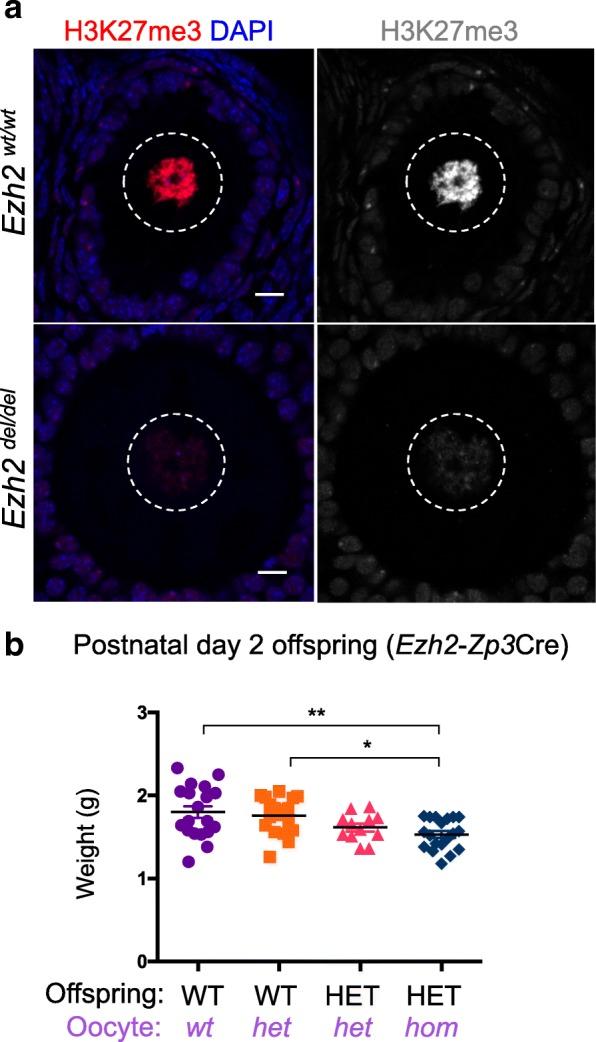
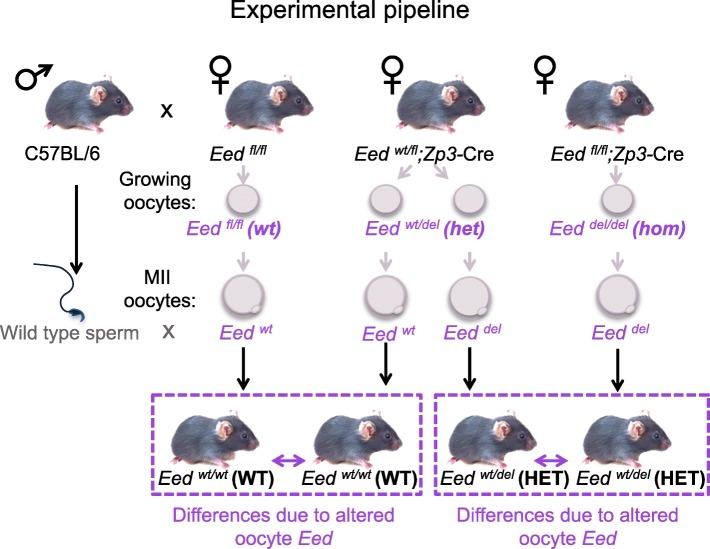
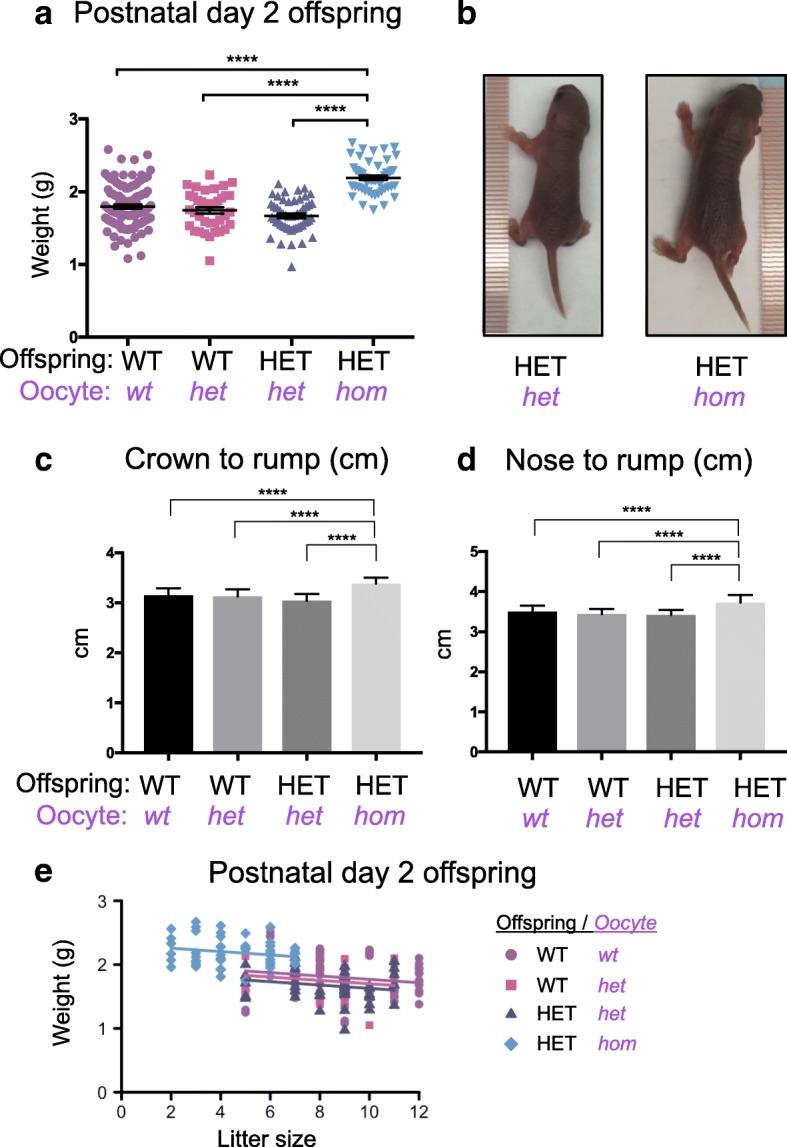
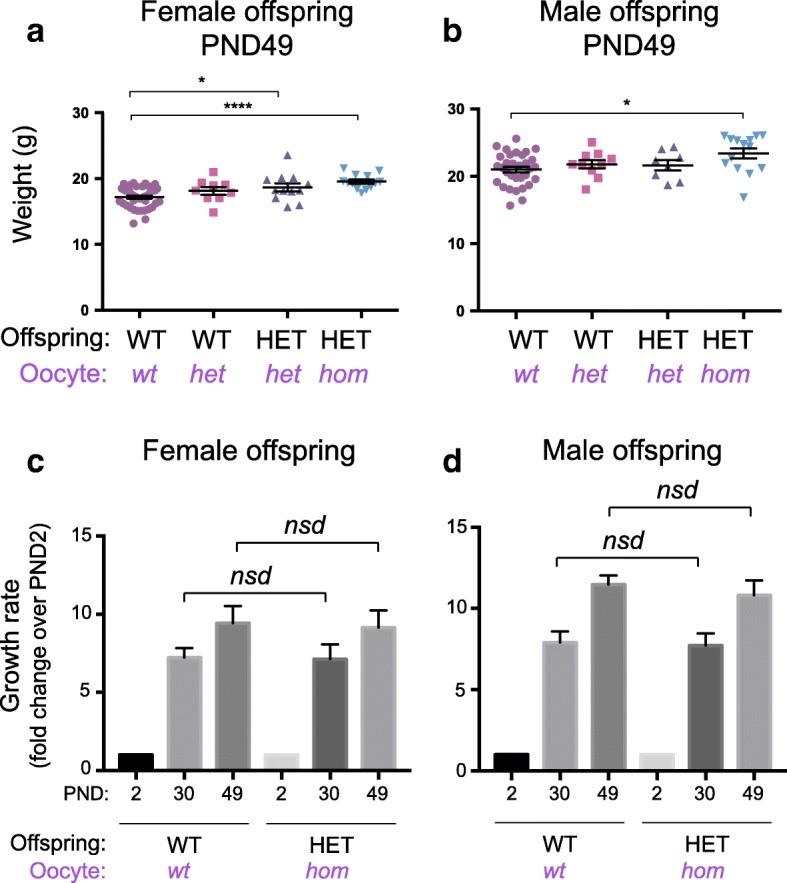
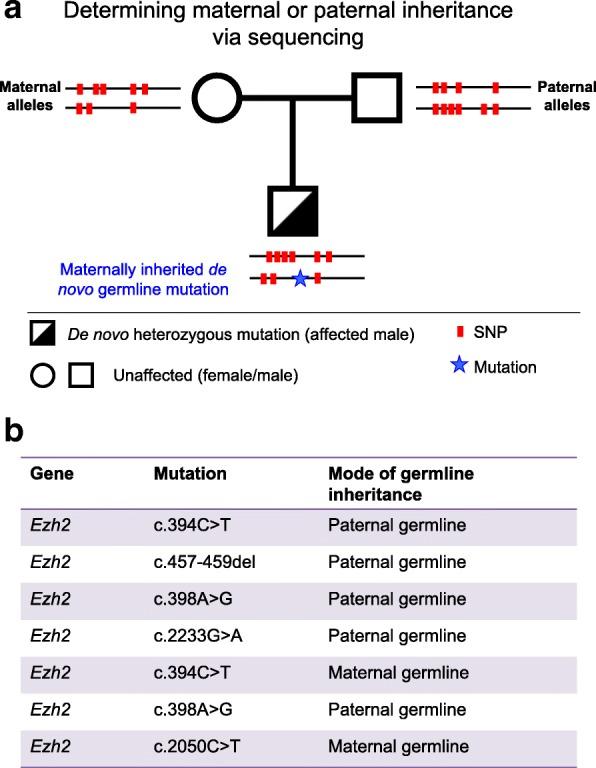
In this study, we used oocyte-specific Zp3-Cre recombinase (Zp3Cre) to delete Eed specifically in mouse growing oocytes, permitting the study of EED function in oocytes and the impact of depleting EED in oocytes on outcomes in offspring. As EED deletion occurred only in growing oocytes and females were mated to normal wild type males, this model allowed the study of oocyte programming without confounding factors such as altered in utero environment. Loss of EED from growing oocytes resulted in a significant overgrowth phenotype that persisted into adult life. Significantly, this involved increased adiposity (total fat) and bone mineral density in offspring. Similar overgrowth occurs in humans with Cohen-Gibson (OMIM 617561) and Weaver (OMIM 277590) syndromes, that result from de novo germline mutations in EED or its co-factor EZH2, respectively. Consistent with a role for EZH2 in human oocytes, we demonstrate that de novo germline mutations in EZH2 occurred in the maternal germline in some cases of Weaver syndrome. However, deletion of Ezh2 in mouse oocytes resulted in a distinct phenotype compared to that resulting from oocyte-specific deletion of Eed.
CONCLUSIONS
This study provides novel evidence that altering EED-dependent oocyte programming leads to compromised offspring growth and development in the next generation.
背景
研究表观遗传信息如何通过哺乳动物生殖细胞传递是理解这些信息如何影响后代健康和疾病易感性的关键。EED 对于调节许多发育基因的抑制性组蛋白修饰,即组蛋白 3 赖氨酸 27 三甲基化(H3K27me3)至关重要。
结果
在这项研究中,我们使用卵母细胞特异性 Zp3-Cre 重组酶(Zp3Cre)特异性删除小鼠生长卵母细胞中的 Eed,从而能够研究卵母细胞中 EED 的功能以及卵母细胞中 EED 的耗竭对后代结局的影响。由于 EED 的缺失仅发生在生长卵母细胞中,并且雌性与正常野生型雄性交配,因此该模型允许在没有改变宫内环境等混杂因素的情况下研究卵母细胞编程。生长卵母细胞中 EED 的缺失导致明显的过度生长表型,这种表型持续到成年期。重要的是,这涉及到后代脂肪量(总脂肪)和骨矿物质密度的增加。具有 Cohen-Gibson(OMIM 617561)和 Weaver(OMIM 277590)综合征的人类也会出现类似的过度生长,这分别是由于 EED 或其共因子 EZH2 的新生种系突变引起的。与 EZH2 在人类卵母细胞中的作用一致,我们证明在一些 Weaver 综合征病例中,EZH2 的新生种系突变发生在母体生殖细胞中。然而,与卵母细胞特异性缺失 Eed 相比,Ezh2 在小鼠卵母细胞中的缺失导致了截然不同的表型。
结论
这项研究提供了新的证据,表明改变 EED 依赖性卵母细胞编程会导致下一代生长和发育受损。


 Zotero 插件