
DISC1 在突触可塑性中作用的机制。
Mechanisms underlying the role of DISC1 in synaptic plasticity.
机构信息
Neurospychiatric Genetics, Trinity Center for Health Sciences and Trinity College Institute of Neuroscience (TCIN), Trinity College Dublin, Dublin, Ireland.
School of Biosciences, Museum Avenue, Cardiff University, Cardiff, UK.
出版信息
J Physiol. 2018 Jul;596(14):2747-2771. doi: 10.1113/JP274330.
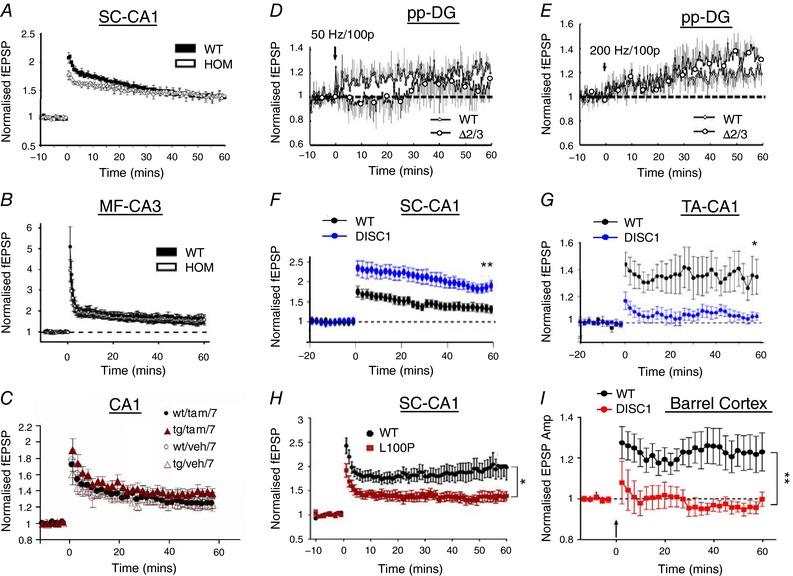
Disrupted in schizophrenia 1 (DISC1) is an important hub protein, forming multimeric complexes by self-association and interacting with a large number of synaptic and cytoskeletal molecules. The synaptic location of DISC1 in the adult brain suggests a role in synaptic plasticity, and indeed, a number of studies have discovered synaptic plasticity impairments in a variety of different DISC1 mutants. This review explores the possibility that DISC1 is an important molecule for organizing proteins involved in synaptic plasticity and examines why mutations in DISC1 impair plasticity. It concentrates on DISC1's role in interacting with synaptic proteins, controlling dendritic structure and cellular trafficking of mRNA, synaptic vesicles and mitochondria. N-terminal directed mutations appear to impair synaptic plasticity through interactions with phosphodiesterase 4B (PDE4B) and hence protein kinase A (PKA)/GluA1 and PKA/cAMP response element-binding protein (CREB) signalling pathways, and affect spine structure through interactions with kalirin 7 (Kal-7) and Rac1. C-terminal directed mutations also impair plasticity possibly through altered interactions with lissencephaly protein 1 (LIS1) and nuclear distribution protein nudE-like 1 (NDEL1), thereby affecting developmental processes such as dendritic structure and spine maturation. Many of the same molecules involved in DISC1's cytoskeletal interactions are also involved in intracellular trafficking, raising the possibility that impairments in intracellular trafficking affect cytoskeletal development and vice versa. While the multiplicity of DISC1 protein interactions makes it difficult to pinpoint a single causal signalling pathway, we suggest that the immediate-term effects of N-terminal influences on GluA1, Rac1 and CREB, coupled with the developmental effects of C-terminal influences on trafficking and the cytoskeleton make up the two main branches of DISC1's effect on synaptic plasticity and dendritic spine stability.
精神分裂症相关蛋白 1(DISC1)是一种重要的连接蛋白,通过自身聚合形成多聚体复合物,并与大量的突触和细胞骨架分子相互作用。DISC1 在成年大脑中的突触位置表明其在突触可塑性中起作用,事实上,许多研究发现各种不同 DISC1 突变体存在突触可塑性损伤。本综述探讨了 DISC1 作为参与突触可塑性的重要连接蛋白的可能性,并研究了 DISC1 突变为何会损害可塑性。它集中探讨了 DISC1 与突触蛋白相互作用、控制树突结构和 mRNA、突触小泡和线粒体的细胞内运输的作用。N 端定向突变似乎通过与磷酸二酯酶 4B(PDE4B)的相互作用,从而影响蛋白激酶 A(PKA)/GluA1 和 PKA/cAMP 反应元件结合蛋白(CREB)信号通路,损害突触可塑性,并通过与 kalirin 7(Kal-7)和 Rac1 的相互作用影响脊柱结构。C 端定向突变也可能通过改变与无脑回蛋白 1(LIS1)和核分布蛋白 nudE 样 1(NDEL1)的相互作用而损害可塑性,从而影响发育过程,如树突结构和脊柱成熟。参与 DISC1 细胞骨架相互作用的许多相同分子也参与细胞内运输,这增加了细胞内运输受损影响细胞骨架发育的可能性,反之亦然。虽然 DISC1 蛋白相互作用的多样性使得很难确定单一的因果信号通路,但我们认为,N 端对 GluA1、Rac1 和 CREB 的即时影响,加上 C 端对运输和细胞骨架的发育影响,构成了 DISC1 对突触可塑性和树突棘稳定性影响的两个主要分支。


 Zotero 插件