
美国人群中预先存在的针对CRISPR相关核酸酶Cas9的抗体的流行情况。
Prevalence of Pre-existing Antibodies to CRISPR-Associated Nuclease Cas9 in the USA Population.
作者信息
Simhadri Vijaya L, McGill Joseph, McMahon Shane, Wang Junxia, Jiang Haiyan, Sauna Zuben E
机构信息
Hemostasis Branch, Division of Plasma Protein Therapeutics, Office of Tissues and Advanced Therapeutics, Center for Biologics Evaluation and Research, U.S. Food and Drug Administration, Silver Spring, MD 20993, USA.
Editas Medicine, Cambridge, MA 02141, USA.
出版信息
Mol Ther Methods Clin Dev. 2018 Jun 15;10:105-112. doi: 10.1016/j.omtm.2018.06.006. eCollection 2018 Sep 21.
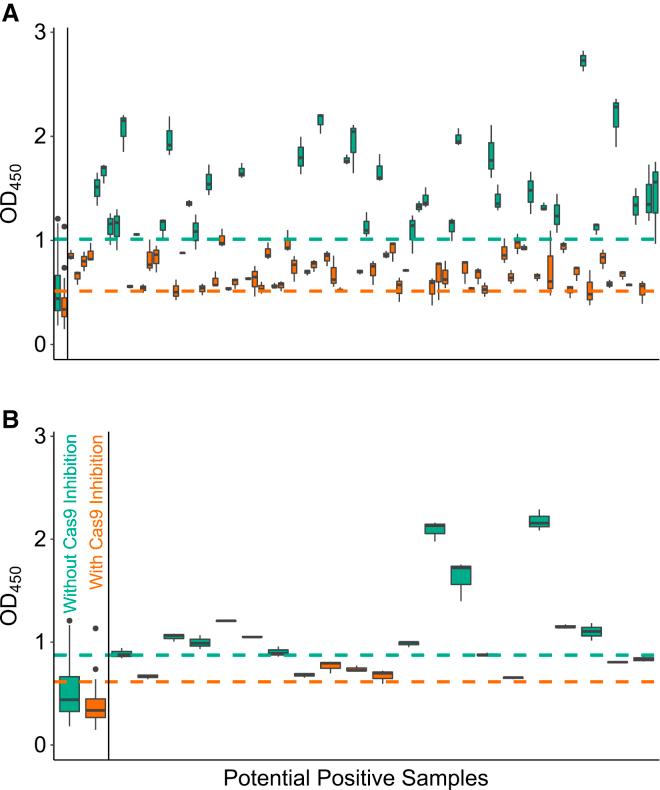
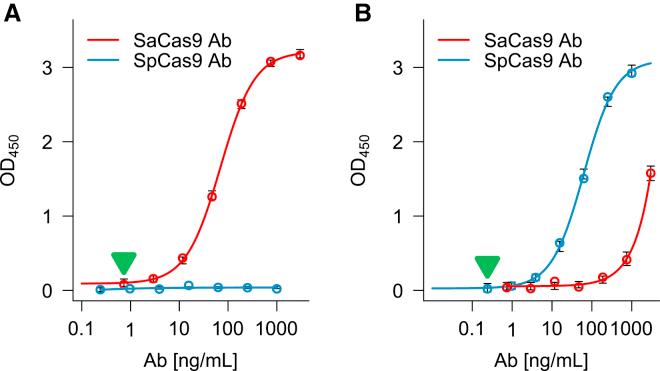
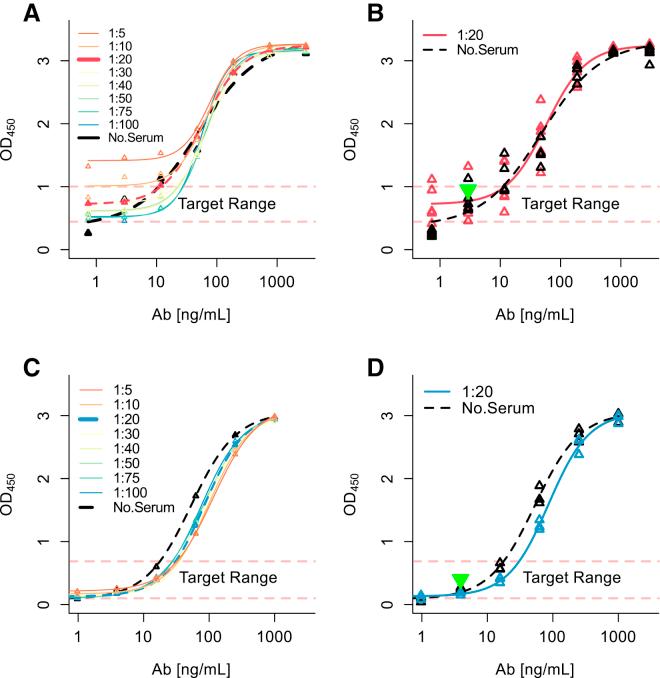
The repurposing of the CRISPR/Cas microbial adaptive immune system for gene editing has resulted in an exponential rise in new technologies and promising approaches for treating numerous human diseases. While some of the approaches being currently developed involve editing by CRISPR/Cas9, many more potential applications will require editing. The use of this technology comes with challenges, one of which is the immune response to Cas9, a protein of microbial origin. Thus, the prevalence of pre-existing antibodies to Cas9 could also be a relevant parameter. There are many avenues for how CRISPR/Cas9 technologies will be applied , including the mode of delivery. These may be expected to invoke different immunological pathways. Nonetheless, as with all protein therapeutics, it may be desirable to monitor for anti-Cas9 antibodies during clinical development. This will require the development of robust and reliable assays. Here, we describe ELISA-based assays that are capable of detecting antibodies to Cas9 from (SaCas9) and (SpCas9) in human sera. Furthermore, using these assays to screen for pre-existing antibodies in 200 human serum samples, we found the prevalence of anti-SaCas9 and anti-SpCas9 antibodies to be 10% and 2.5%, respectively.
将CRISPR/Cas微生物适应性免疫系统用于基因编辑,已使治疗多种人类疾病的新技术和有前景的方法呈指数级增长。虽然目前正在开发的一些方法涉及CRISPR/Cas9编辑,但更多潜在应用将需要进行编辑。这项技术的应用带来了挑战,其中之一是对Cas9(一种微生物来源的蛋白质)的免疫反应。因此,预先存在的针对Cas9的抗体的流行情况也可能是一个相关参数。CRISPR/Cas9技术的应用途径有很多,包括递送方式。这些可能会引发不同的免疫途径。尽管如此,与所有蛋白质疗法一样,在临床开发过程中监测抗Cas9抗体可能是可取的。这将需要开发强大而可靠的检测方法。在这里,我们描述了基于酶联免疫吸附测定(ELISA)的检测方法,这些方法能够检测人血清中针对来自金黄色葡萄球菌(SaCas9)和化脓性链球菌(SpCas9)的Cas9的抗体。此外,使用这些检测方法对200份人血清样本中的预先存在的抗体进行筛选,我们发现抗SaCas9和抗SpCas9抗体的流行率分别为10%和2.5%。


 Zotero 插件