
新型基于吖啶的硫代氨基脲作为用于选择性识别氟离子的“开启型”化学传感器:光谱和理论研究
Novel acridine-based thiosemicarbazones as 'turn-on' chemosensors for selective recognition of fluoride anion: a spectroscopic and theoretical study.
作者信息
Isaac Ibanga Okon, Munir Iqra, Al-Rashida Mariya, Ali Syed Abid, Shafiq Zahid, Islam Muhammad, Ludwig Ralf, Ayub Khurshid, Khan Khalid Mohammed, Hameed Abdul
机构信息
H. E. J. Research Institute of Chemistry, International Center for Chemical and Biological Sciences, University of Karachi, Karachi 75270, Pakistan.
Department of Chemistry, Forman Christian College (A Chartered University), Ferozepur Road, Lahore, Pakistan.
出版信息
R Soc Open Sci. 2018 Jul 4;5(7):180646. doi: 10.1098/rsos.180646. eCollection 2018 Jul.
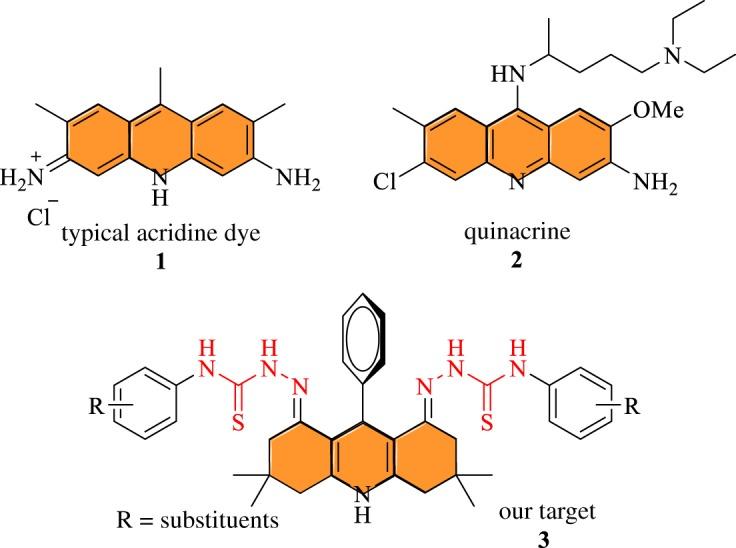
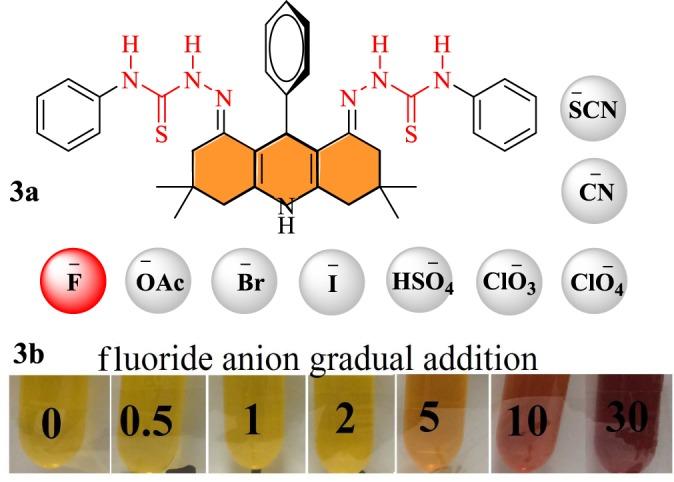
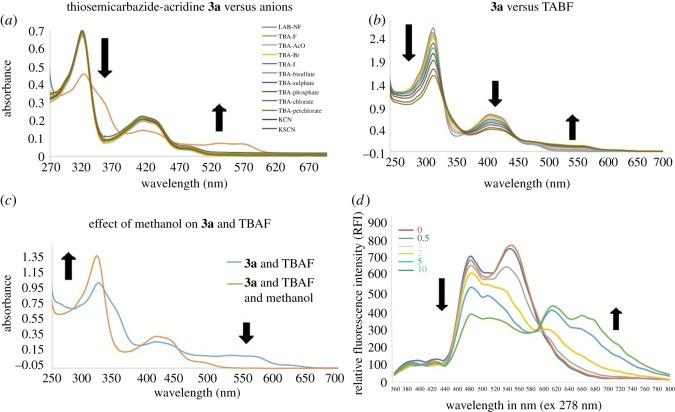
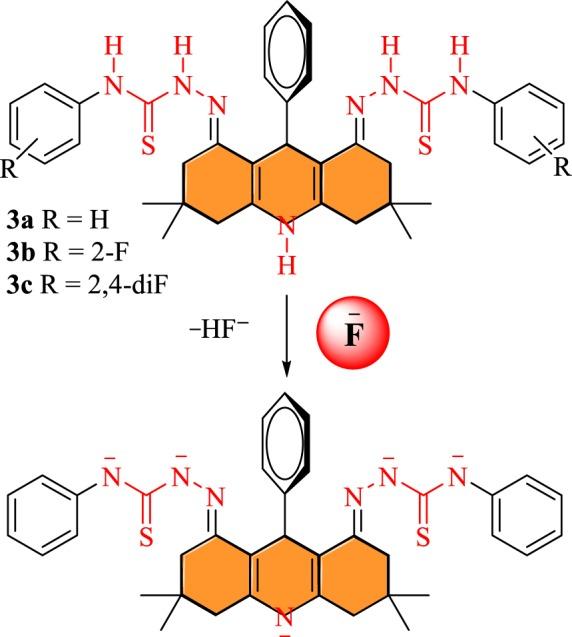
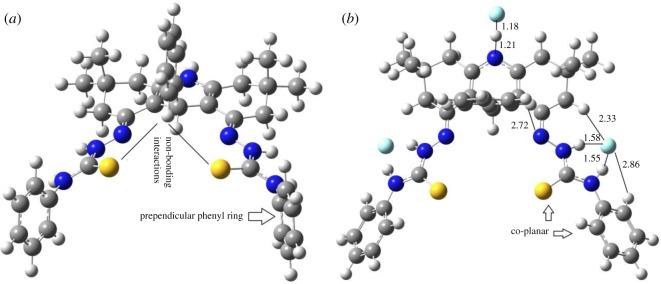
New thiosemicarbazide-linked acridines were prepared and investigated as chemosensors for the detection of biologically and environmentally important anions. The compounds were found selective for fluoride (F) with no affinity for other anions, i.e. OAc, Br, I, HSO, SO, PO, ClO, ClO, CN and SCN. Further, upon the gradual addition of a fluoride anion (F) source (tetrabutylammonium fluoride), a well-defined change in colour of the solution of probes was observed. The anion-sensing process was studied in detail via UV-visible absorption, fluorescence and H-NMR experiments. Moreover, during the synthesis of acridine probes nickel fluoride (NiF), a rarely explored transition metal fluoride salt, was used as the catalyst. Theoretical studies via density functional theory were also carried out to further investigate the sensing and anion (F) selectivity pattern of these probes.
制备了新型硫代氨基脲连接的吖啶,并将其作为化学传感器用于检测生物和环境中重要的阴离子。发现这些化合物对氟离子(F⁻)具有选择性,对其他阴离子如醋酸根(OAc⁻)、溴离子(Br⁻)、碘离子(I⁻)、硫酸氢根(HSO₄⁻)、硫酸根(SO₄²⁻)、磷酸根(PO₄³⁻)、高氯酸根(ClO₄⁻)、次氯酸根(ClO⁻)、氰根(CN⁻)和硫氰根(SCN⁻)没有亲和力。此外,在逐渐加入氟离子(F⁻)源(四丁基氟化铵)时,观察到探针溶液颜色有明确的变化。通过紫外可见吸收、荧光和¹H-NMR实验详细研究了阴离子传感过程。此外,在吖啶探针的合成过程中,使用了一种很少被研究的过渡金属氟化物盐氟化镍(NiF₂)作为催化剂。还通过密度泛函理论进行了理论研究,以进一步研究这些探针的传感和阴离子(F⁻)选择性模式。




 Zotero 插件