
它会形成凝胶吗?利用物理化学性质和分子指纹对肽类凝胶剂进行成功的计算预测。
Will it gel? Successful computational prediction of peptide gelators using physicochemical properties and molecular fingerprints.
作者信息
Gupta Jyoti K, Adams Dave J, Berry Neil G
机构信息
Department of Chemistry , University of Liverpool , Liverpool L69 7ZD , UK . Email:
出版信息
Chem Sci. 2016 Jul 1;7(7):4713-4719. doi: 10.1039/c6sc00722h. Epub 2016 Apr 13.
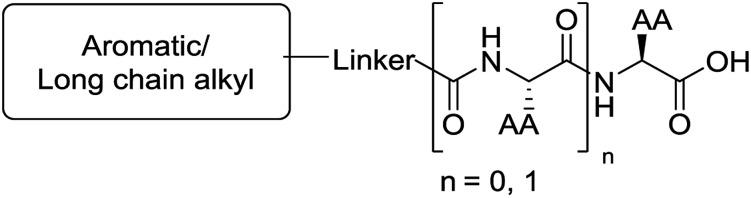
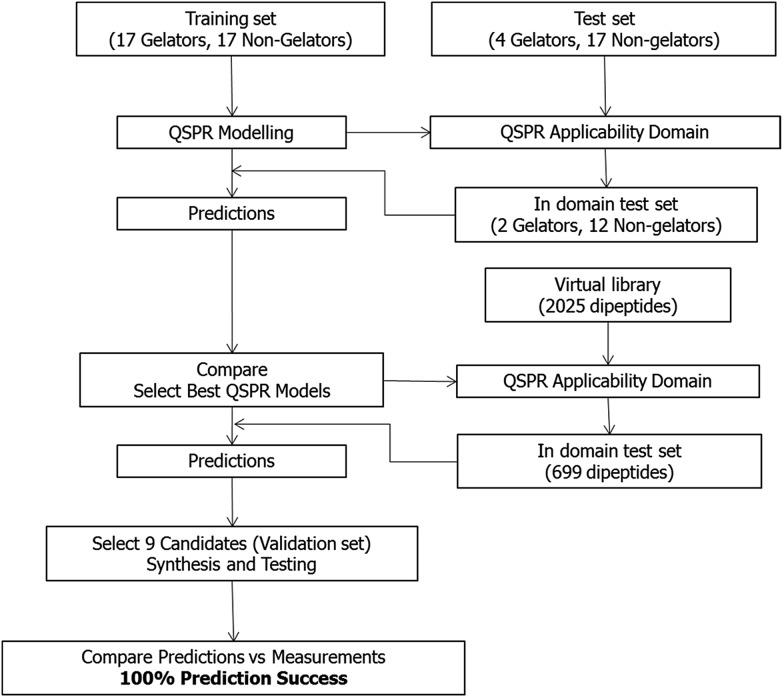
The self-assembly of low molecular weight gelators to form gels has enormous potential for cell culturing, optoelectronics, sensing, and for the preparation of structured materials. There is an enormous "chemical space" of gelators. Even within one class, functionalised dipeptides, there are many structures based on both natural and unnatural amino acids that can be proposed and there is a need for methods that can successfully predict the gelation propensity of such molecules. We have successfully developed computational models, based on experimental data, which are robust and are able to identify dipeptide structures that can form gels. A virtual computational screen of 2025 dipeptide candidates identified 9 dipeptides that were synthesised and tested. Every one of the 9 dipeptides synthesised and tested were correctly predicted for their gelation properties. This approach and set of tools enables the "dipeptide space" to be searched effectively and efficiently in order to deliver novel gelator molecules.
低分子量凝胶剂自组装形成凝胶在细胞培养、光电子学、传感以及结构化材料制备方面具有巨大潜力。凝胶剂存在着巨大的“化学空间”。即使在一类中,即功能化二肽,基于天然和非天然氨基酸也能提出许多结构,因此需要能够成功预测此类分子凝胶化倾向的方法。我们基于实验数据成功开发了计算模型,该模型稳健且能够识别可形成凝胶的二肽结构。对2025种二肽候选物进行的虚拟计算筛选鉴定出9种二肽,对其进行了合成和测试。合成并测试的9种二肽中的每一种的凝胶化性质都被正确预测。这种方法和工具集能够有效且高效地搜索“二肽空间”,以提供新型凝胶剂分子。

 Zotero 插件