
3270名中国成年人的空气质量与久坐时间之间的关联:一种用于姿势判定的新技术的应用
Association between Air Quality and Sedentary Time in 3270 Chinese Adults: Application of a Novel Technology for Posture Determination.
作者信息
Ma Yiqun, Yuan Bing, Fan Shuhui, Luo Yizhou, Wen Xu
机构信息
Department of Sport & Exercise Science, College of Education, Zhejiang University, Hangzhou 310028, China.
Information Technology Center, Zhejiang University, Hangzhou 310028, China.
出版信息
J Clin Med. 2018 Sep 6;7(9):257. doi: 10.3390/jcm7090257.
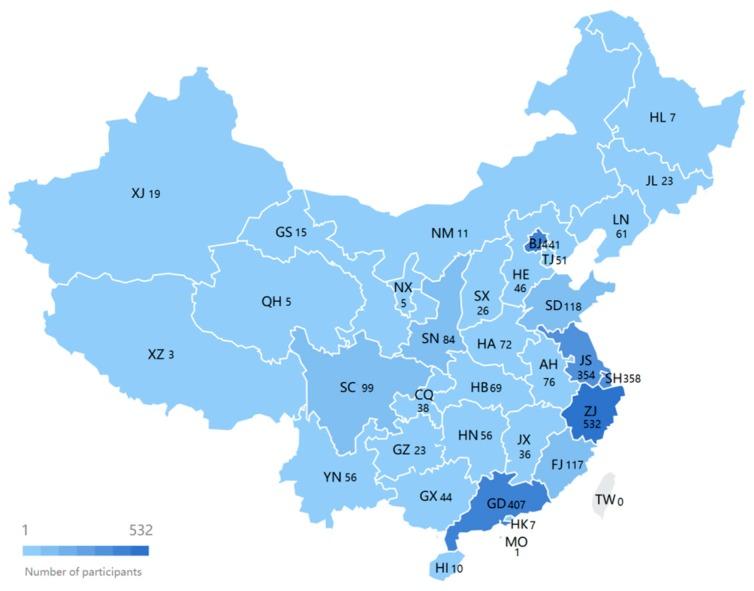
This study investigated the association between ambient air quality and sedentary time in Chinese adults. The participants were 3270 Chinese users (2021 men and 1249 women) of wrist-worn activity trackers. The data of participants' daily activities were collected from July 2015 to October 2015. A novel algorithm based on raw accelerometer data was employed to determine sedentary time. Personal data, including sex, age, weight and height, were self-reported by the participants. Data of air quality, ambient temperature and weather were collected from the data released by the China National Environmental Monitoring Centre and the China Central Meteorological Observatory and matched in accordance with the Global Positioning System and time information. Multilevel regression analyses were conducted to investigate the association between air quality and sedentary time and adjusted for gender, age, region, body mass index, weather, temperature, weekday/weekend and monitored wake time per day. Better air quality index levels and lower concentrations of fine particulate matter were significantly associated with approximately 20 and 45 min reduction in sedentary time, respectively. Poor air quality appears to be an independent factor associated with prolonged sedentary time in Chinese adults.
本研究调查了中国成年人环境空气质量与久坐时间之间的关联。参与者为3270名佩戴腕式活动追踪器的中国用户(2021名男性和1249名女性)。参与者的日常活动数据收集于2015年7月至2015年10月。采用一种基于原始加速度计数据的新算法来确定久坐时间。个人数据,包括性别、年龄、体重和身高,由参与者自行报告。空气质量、环境温度和天气数据从中国国家环境监测中心和中国中央气象台发布的数据中收集,并根据全球定位系统和时间信息进行匹配。进行多水平回归分析以研究空气质量与久坐时间之间的关联,并对性别、年龄、地区、体重指数、天气、温度、工作日/周末以及每天监测的清醒时间进行了调整。更好的空气质量指数水平和更低的细颗粒物浓度分别与久坐时间减少约20分钟和45分钟显著相关。空气质量差似乎是与中国成年人久坐时间延长相关的一个独立因素。
 Zotero 插件