
整合蛋白质组学和生物信息学预测使疟原虫中的质体蛋白组具有高度可信度。
Integrative proteomics and bioinformatic prediction enable a high-confidence apicoplast proteome in malaria parasites.
机构信息
Department of Microbiology and Immunology, Stanford University School of Medicine, Stanford, California, United States of America.
Department of Biochemistry, Stanford University School of Medicine, Stanford, California, United States of America.
出版信息
PLoS Biol. 2018 Sep 13;16(9):e2005895. doi: 10.1371/journal.pbio.2005895. eCollection 2018 Sep.
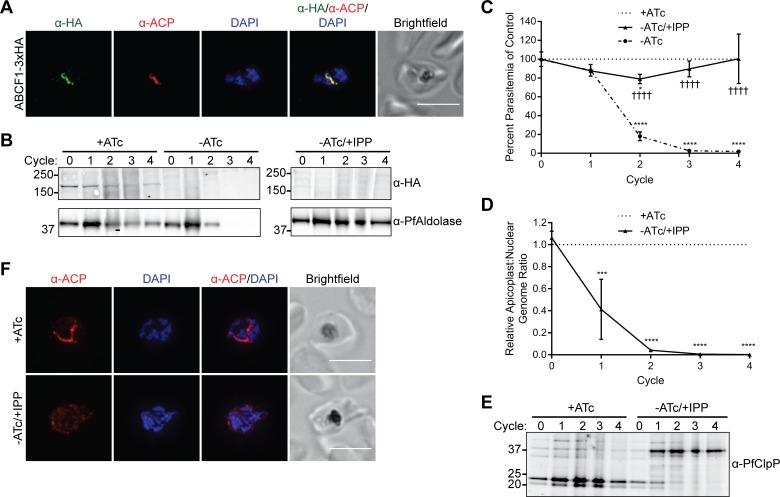
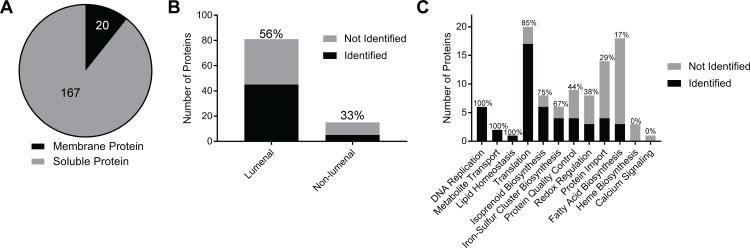
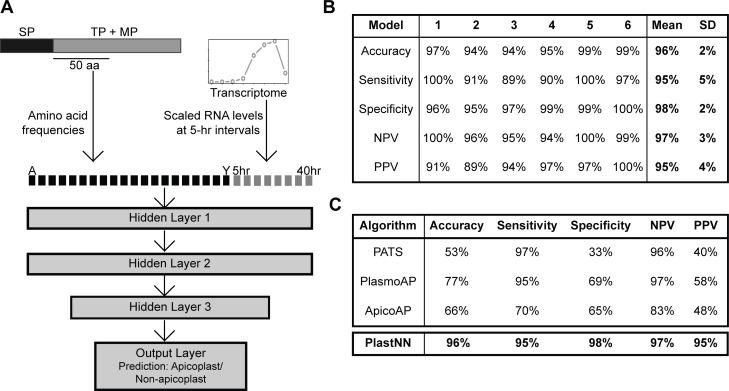
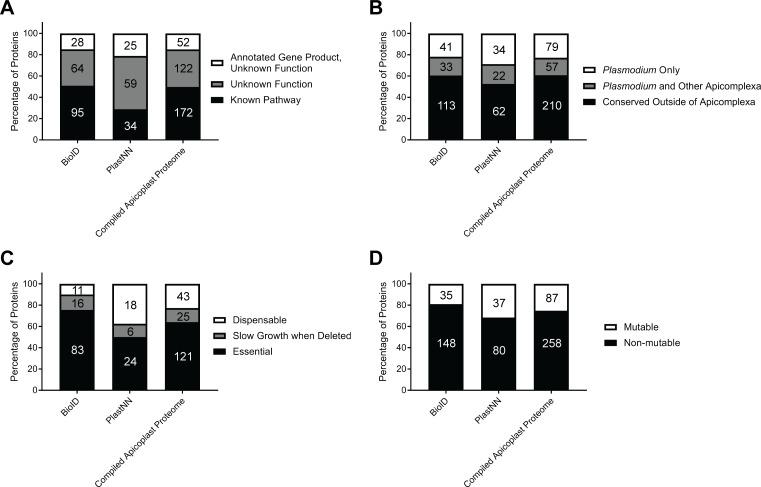
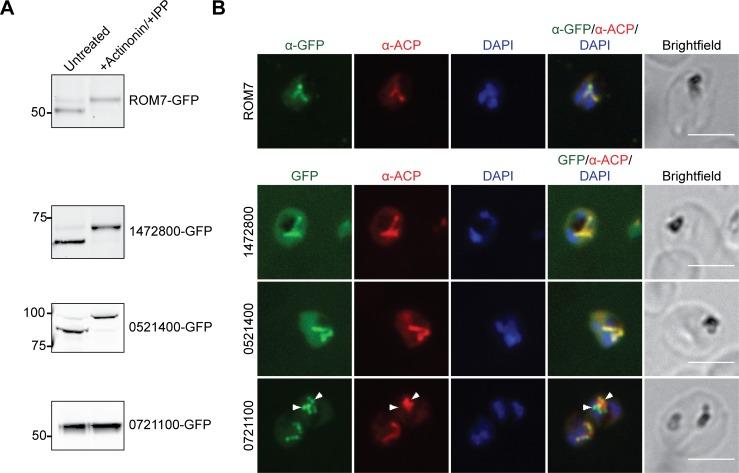
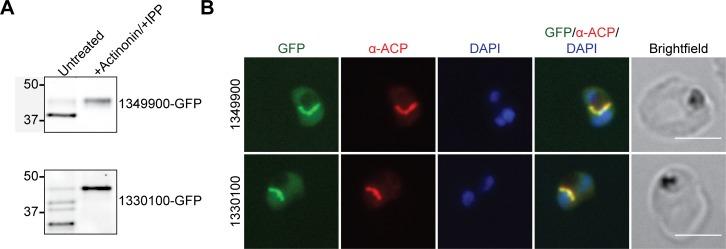
Malaria parasites (Plasmodium spp.) and related apicomplexan pathogens contain a nonphotosynthetic plastid called the apicoplast. Derived from an unusual secondary eukaryote-eukaryote endosymbiosis, the apicoplast is a fascinating organelle whose function and biogenesis rely on a complex amalgamation of bacterial and algal pathways. Because these pathways are distinct from the human host, the apicoplast is an excellent source of novel antimalarial targets. Despite its biomedical importance and evolutionary significance, the absence of a reliable apicoplast proteome has limited most studies to the handful of pathways identified by homology to bacteria or primary chloroplasts, precluding our ability to study the most novel apicoplast pathways. Here, we combine proximity biotinylation-based proteomics (BioID) and a new machine learning algorithm to generate a high-confidence apicoplast proteome consisting of 346 proteins. Critically, the high accuracy of this proteome significantly outperforms previous prediction-based methods and extends beyond other BioID studies of unique parasite compartments. Half of identified proteins have unknown function, and 77% are predicted to be important for normal blood-stage growth. We validate the apicoplast localization of a subset of novel proteins and show that an ATP-binding cassette protein ABCF1 is essential for blood-stage survival and plays a previously unknown role in apicoplast biogenesis. These findings indicate critical organellar functions for newly discovered apicoplast proteins. The apicoplast proteome will be an important resource for elucidating unique pathways derived from secondary endosymbiosis and prioritizing antimalarial drug targets.
疟原虫(Plasmodium spp.)和相关的顶复门病原体含有一种非光合质体,称为顶质体。顶质体来源于一种不寻常的二次真核-真核内共生体,是一种引人入胜的细胞器,其功能和生物发生依赖于细菌和藻类途径的复杂融合。由于这些途径与人类宿主不同,因此顶质体是新型抗疟药物靶点的绝佳来源。尽管其具有重要的医学意义和进化意义,但由于缺乏可靠的顶质体蛋白质组,大多数研究仅限于通过与细菌或原质体同源性识别的少数几种途径,从而限制了我们研究最新型顶质体途径的能力。在这里,我们结合基于邻近生物素化的蛋白质组学(BioID)和一种新的机器学习算法,生成了一个由 346 种蛋白质组成的高可信度顶质体蛋白质组。至关重要的是,该蛋白质组的高精度显著优于以前基于预测的方法,并超越了其他独特寄生虫区室的 BioID 研究。鉴定出的蛋白质中有一半具有未知功能,77%的蛋白质被预测对正常的血期生长很重要。我们验证了一组新蛋白质的顶质体定位,并表明 ABCF1 是一种 ATP 结合盒蛋白,对血期生存至关重要,并且在顶质体生物发生中发挥了以前未知的作用。这些发现表明了新发现的顶质体蛋白的重要细胞器功能。顶质体蛋白质组将是阐明源自二次内共生的独特途径和优先考虑抗疟药物靶点的重要资源。


 Zotero 插件