
力的扰动:线粒体网络的细胞应激感知
A Disturbance in the Force: Cellular Stress Sensing by the Mitochondrial Network.
作者信息
Gilkerson Robert
机构信息
Departments of Biology, The University of Texas Rio Grande Valley, Edinburg, TX 78539, USA.
Clinical Laboratory Sciences, The University of Texas Rio Grande Valley, Edinburg, TX 78539, USA.
出版信息
Antioxidants (Basel). 2018 Sep 22;7(10):126. doi: 10.3390/antiox7100126.
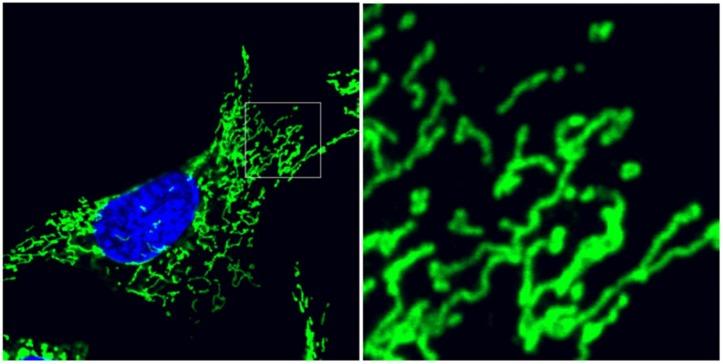
As a highly dynamic organellar network, mitochondria are maintained as an organellar network by delicately balancing fission and fusion pathways. This homeostatic balance of organellar dynamics is increasingly revealed to play an integral role in sensing cellular stress stimuli. Mitochondrial fission/fusion balance is highly sensitive to perturbations such as loss of bioenergetic function, oxidative stress, and other stimuli, with mechanistic contribution to subsequent cell-wide cascades including inflammation, autophagy, and apoptosis. The overlapping activity with -AAA protease 1 (OMA1) metallopeptidase, a stress-sensitive modulator of mitochondrial fusion, and dynamin-related protein 1 (DRP1), a regulator of mitochondrial fission, are key factors that shape mitochondrial dynamics in response to various stimuli. As such, OMA1 and DRP1 are critical factors that mediate mitochondrial roles in cellular stress-response signaling. Here, we explore the current understanding and emerging questions in the role of mitochondrial dynamics in sensing cellular stress as a dynamic, responsive organellar network.
作为一个高度动态的细胞器网络,线粒体通过精细平衡裂变和融合途径来维持其细胞器网络状态。细胞器动态的这种稳态平衡在感知细胞应激刺激中越来越显示出起着不可或缺的作用。线粒体裂变/融合平衡对诸如生物能量功能丧失、氧化应激和其他刺激等干扰高度敏感,对随后包括炎症、自噬和凋亡在内的全细胞级联反应有机制性贡献。与线粒体融合的应激敏感调节剂——-AAA蛋白酶1(OMA1)金属肽酶以及线粒体裂变调节剂动力蛋白相关蛋白1(DRP1)的重叠活性,是响应各种刺激塑造线粒体动态的关键因素。因此,OMA1和DRP1是介导线粒体在细胞应激反应信号传导中作用的关键因素。在这里,我们探讨了目前对线粒体动态作为一个动态、响应性细胞器网络在感知细胞应激中的作用的理解以及新出现的问题。

 Zotero 插件