
细胞分化和增殖的变化导致用 DNA-组蛋白复合物治疗 EAE 小鼠产生 abzyme。
Changes in cell differentiation and proliferation lead to production of abzymes in EAE mice treated with DNA-Histone complexes.
机构信息
Institute of Chemical Biology and Fundamental Medicine, Siberian Branch of the Russian Academy of Sciences, Novosibirsk, Russia.
Institute of Fundamental and Clinical Immunology, Siberian Branch of the Russian Academy of Sciences, Novosibirsk, Russia.
出版信息
J Cell Mol Med. 2018 Dec;22(12):5816-5832. doi: 10.1111/jcmm.13850. Epub 2018 Sep 28.
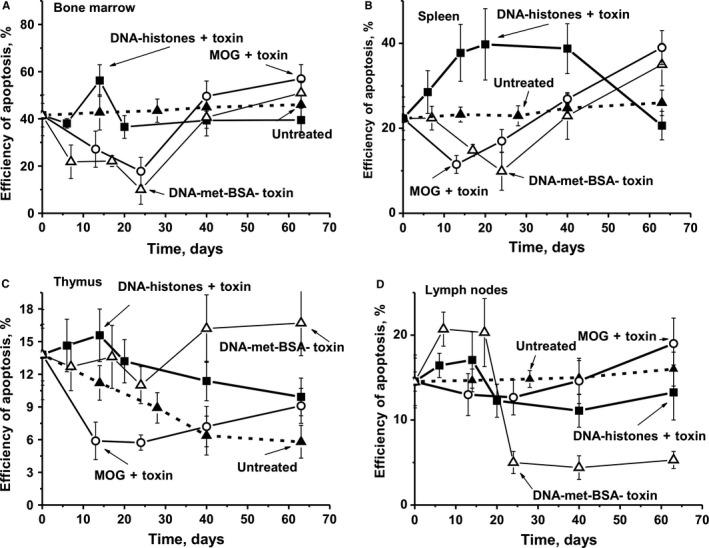
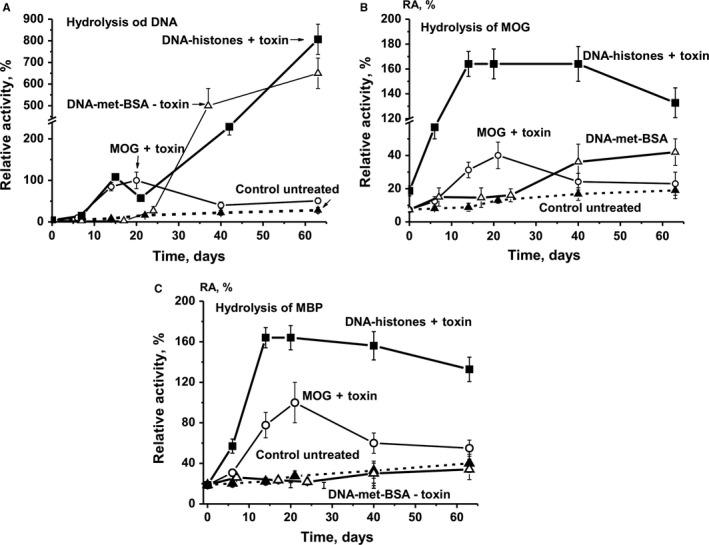
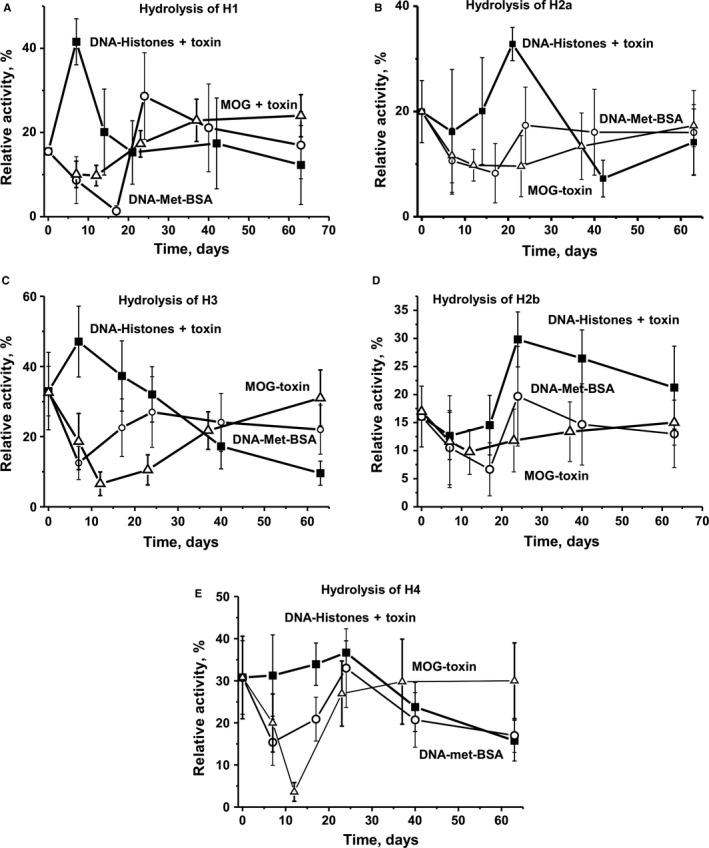
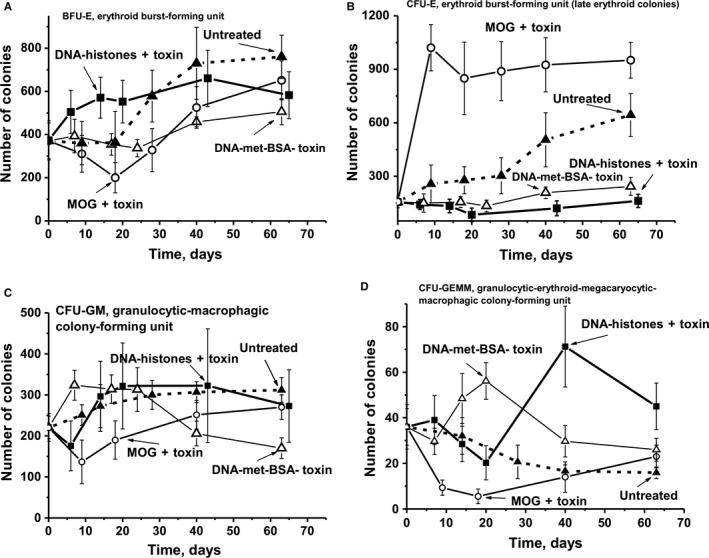
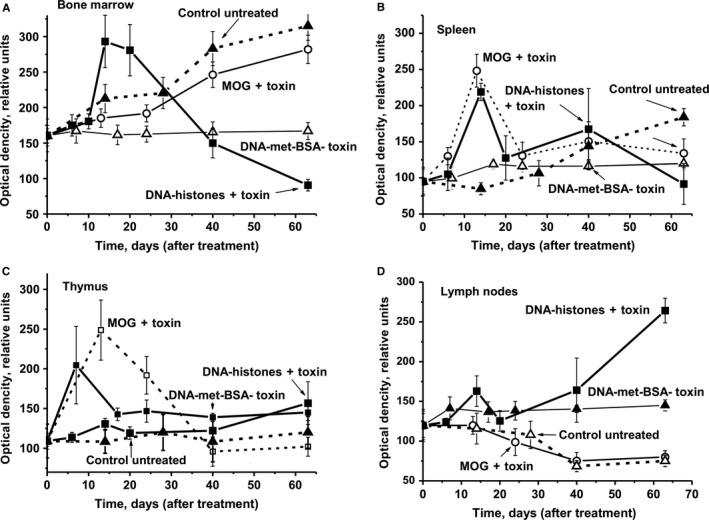
Experimental autoimmune encephalomyelitis (EAE)-prone C57BL/6 mice are used as a model of human multiple sclerosis. We immunize mice with myelin oligodendrocyte glycoprotein (MOG), DNA-histone and DNA-methylated bovine serum albumin (met-BSA) complexes to reveal different characteristics of EAE development including bone marrow lymphocyte proliferation and differentiation profiles of hematopoietic stem cells. Immunization of C57BL/6 mice with MOG results in the acceleration of EAE development. Anti-DNA antibodies are usually directed against DNA-histone complexes resulting from cell apoptosis. During the acute EAE phase (7-20 days after immunization), catalytic antibodies efficiently hydrolysing myelin basic protein (MBP), MOG and DNA are produced with parallel suppression of antibodies hydrolysing histones. We could show that in contrast to MOG, immunization with histone-DNA results in a reduction of proteinuria, a significant increase in anti-DNA, anti-MBP and anti-MOG antibody titres, as well as an increase in their catalytic activities for antigen hydrolysis, but slightly changes the concentration of cytokines. Contrary to MOG, DNA-histone and DNA-met-BSA only stimulated the formation of anti-DNA antibodies hydrolysing DNA with a long delay (15-20 days after immunization). Our data indicate that for C57BL/6 mice immunization with DNA-met-BSA and DNA-histone complexes may have opposing effects compared to MOG. DNA-histone stimulates the appearance of histone-hydrolysing abzymes in the acute EAE phase, while abzymes with DNase activity appear at significantly later time-points. We conclude that MOG, DNA-histone and DNA-met-BSA have different effects on numerous bone marrow, cellular, immunological and biochemical parameters of immunized mice, but all antigens finally significantly stimulate the development of the EAE.
实验性自身免疫性脑脊髓炎 (EAE)-易感 C57BL/6 小鼠被用作人类多发性硬化症的模型。我们用髓鞘少突胶质细胞糖蛋白 (MOG)、DNA-组蛋白和 DNA-甲基化牛血清白蛋白 (met-BSA) 复合物免疫小鼠,以揭示 EAE 发展的不同特征,包括骨髓淋巴细胞增殖和造血干细胞分化谱。用 MOG 免疫 C57BL/6 小鼠会加速 EAE 的发展。抗 DNA 抗体通常针对细胞凋亡产生的 DNA-组蛋白复合物。在急性 EAE 期(免疫后 7-20 天),产生高效水解髓鞘碱性蛋白 (MBP)、MOG 和 DNA 的催化抗体,同时抑制水解组蛋白的抗体。我们表明,与 MOG 相反,用组蛋白-DNA 免疫会导致蛋白尿减少、抗 DNA、抗 MBP 和抗 MOG 抗体滴度显著增加,以及其对抗原水解的催化活性增加,但略微改变细胞因子的浓度。与 MOG 相反,DNA-组蛋白和 DNA-met-BSA 仅在免疫后 15-20 天延迟后刺激形成水解 DNA 的抗 DNA 抗体。我们的数据表明,与 MOG 相比,用 DNA-met-BSA 和 DNA-组蛋白复合物免疫 C57BL/6 小鼠可能具有相反的效果。DNA-组蛋白在急性 EAE 期刺激组蛋白水解酶的出现,而具有 DNA 酶活性的酶在明显更晚的时间点出现。我们得出结论,MOG、DNA-组蛋白和 DNA-met-BSA 对免疫小鼠的许多骨髓、细胞、免疫和生化参数具有不同的影响,但所有抗原最终都显著刺激 EAE 的发展。

 Zotero 插件