
全球未来耕地扩张预测到 2050 年及对生物多样性和碳储存的直接影响。
Global projections of future cropland expansion to 2050 and direct impacts on biodiversity and carbon storage.
机构信息
Institute of Biological and Environmental Sciences, University of Aberdeen, Aberdeen, UK.
PBL Netherlands, The Hague, The Netherlands.
出版信息
Glob Chang Biol. 2018 Dec;24(12):5895-5908. doi: 10.1111/gcb.14459. Epub 2018 Oct 24.
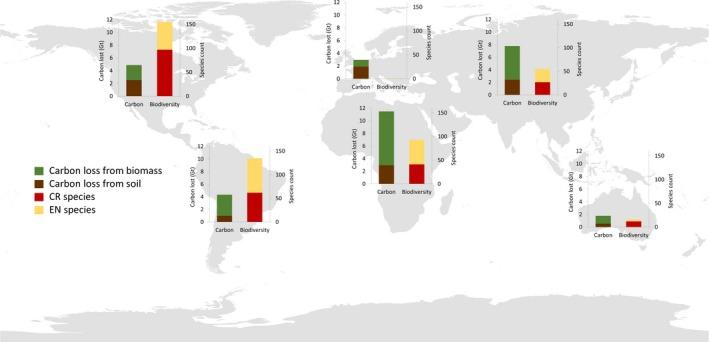
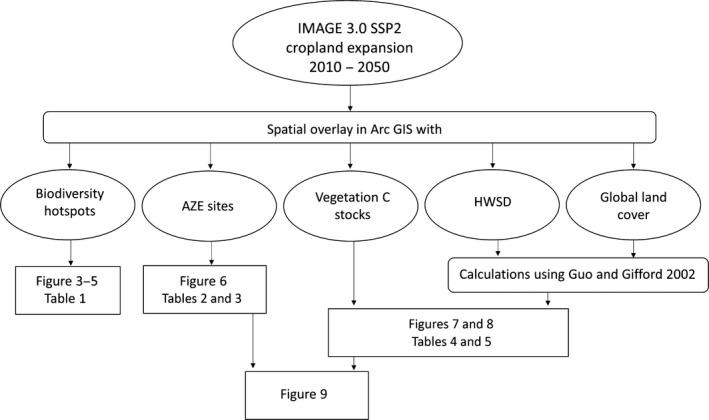
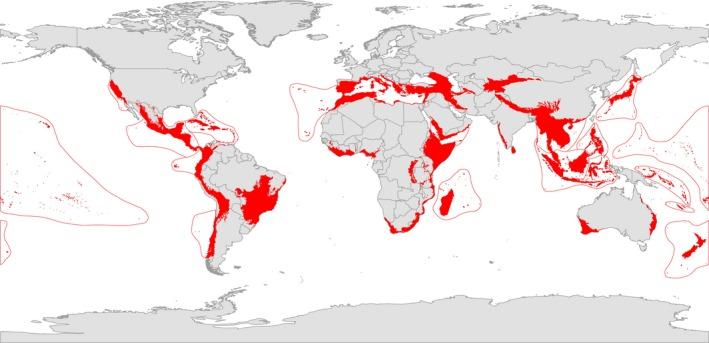
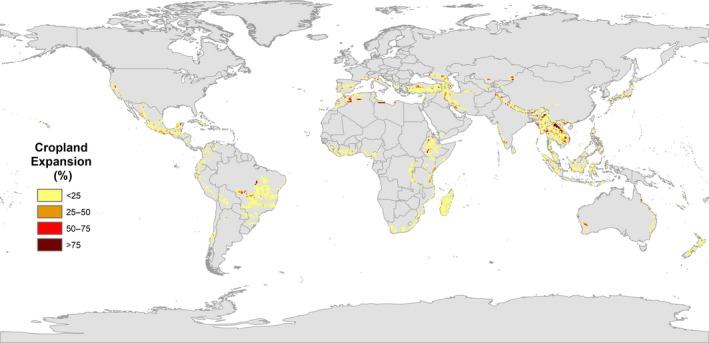
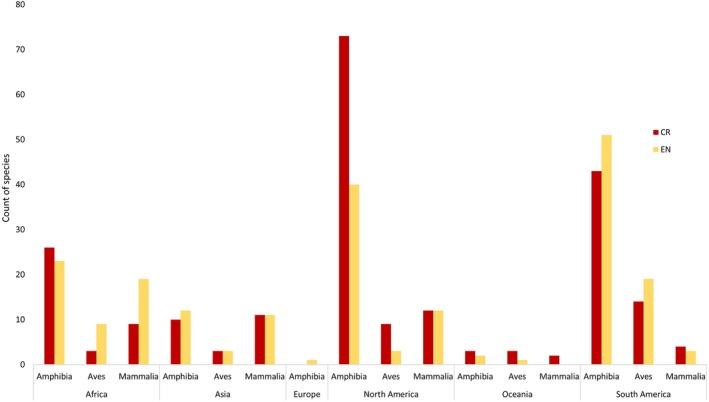
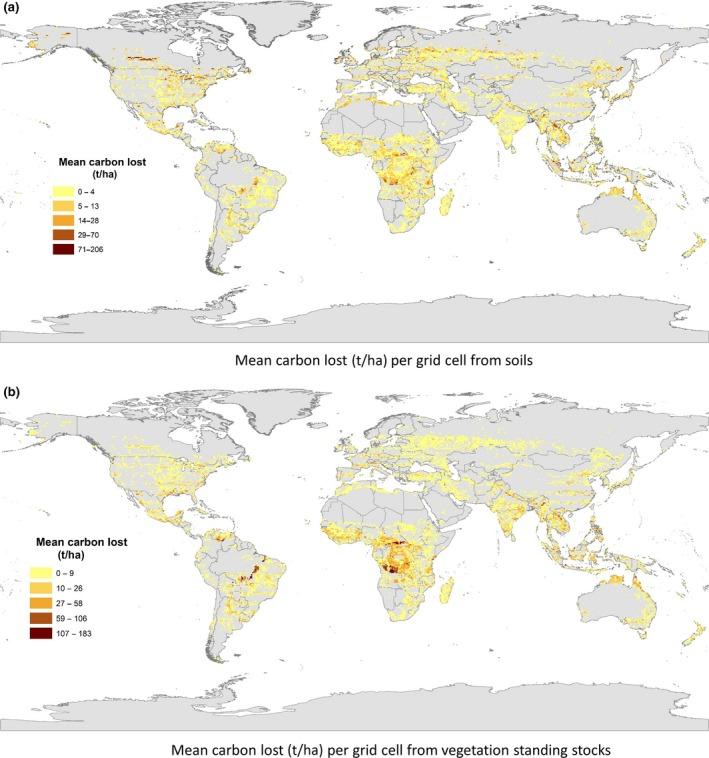
Cropland expansion threatens biodiversity by driving habitat loss and impacts carbon storage through loss of biomass and soil carbon (C). There is a growing concern land-use change (LUC) to cropland will result in a loss of ecosystem function and various ecosystem services essential for human health and well-being. This paper examines projections of future cropland expansion from an integrated assessment model IMAGE 3.0 under a "business as usual" scenario and the direct impact on both biodiversity and C storage. By focusing on biodiversity hotspots and Alliance for Zero Extinction (AZE) sites, loss of habitat as well as potential impacts on endangered and critically endangered species are explored. With regards to C storage, the impact on both soil and vegetation standing C stocks are examined. We show that if projected trends are realized, there are likely to be severe consequences for these resources. Substantial loss of habitat in biodiversity hotspots such as Indo-Burma, and the Philippians is expected as well as 50% of species in AZE sites losing part of their last remaining habitat. An estimated 13.7% of vegetation standing C stocks and 4.6% of soil C stocks are also projected to be lost in areas affected with Brazil and Mexico being identified as priorities in terms of both biodiversity and C losses from cropland expansion. Changes in policy to regulate projected cropland expansion, and increased measures to protect natural resources, are highly likely to be required to prevent these biodiversity and C losses in the future.
耕地扩张通过驱动生境丧失和生物量及土壤碳损失对碳储存产生影响,从而威胁生物多样性。人们越来越关注到耕地的土地利用变化(LUC)将导致生态系统功能丧失以及对人类健康和福祉至关重要的各种生态系统服务的丧失。本文通过综合评估模型 IMAGE 3.0 研究了“按现状推测”情景下未来耕地扩张的预测情况及其对生物多样性和碳储存的直接影响。通过关注生物多样性热点地区和零灭绝联盟(AZE)地点,探讨了生境丧失以及对濒危和极危物种的潜在影响。在碳储存方面,研究了土壤和植被现存量碳的影响。研究结果表明,如果预测趋势得以实现,这些资源很可能会面临严重后果。预计在生物多样性热点地区如印度-缅甸和菲律宾地区的生境将大量丧失,AZE 地点的 50%物种将失去其最后剩余的部分生境。估计在受影响地区,植被现存量碳中有 13.7%和土壤碳储量中有 4.6%将会损失,巴西和墨西哥被确定为在生物多样性和耕地扩张导致的碳损失方面的优先地区。需要改变政策以规范预测的耕地扩张,并采取更多措施保护自然资源,以防止未来生物多样性和碳的损失。



 Zotero 插件