
二甲双胍通过 AMPK-MTOR/PGC-1α 信号通路增加急性心肌梗死后大鼠的心脏破裂。
Metformin Increases Cardiac Rupture After Myocardial Infarction via the AMPK-MTOR/PGC-1α Signaling Pathway in Rats with Acute Myocardial Infarction.
机构信息
State Key Laboratory of Organ Failure Research, Department of Cardiology, Nanfang Hospital, Southern Medical University, Guangzhou, Guangdong, China (mainland).
Key Laboratory for Organ Failure Research, Ministry of Education of the People's Republic of China, Guangzhou, Guangdong, China (mainland).
出版信息
Med Sci Monit. 2018 Oct 2;24:6989-7000. doi: 10.12659/MSM.910930.
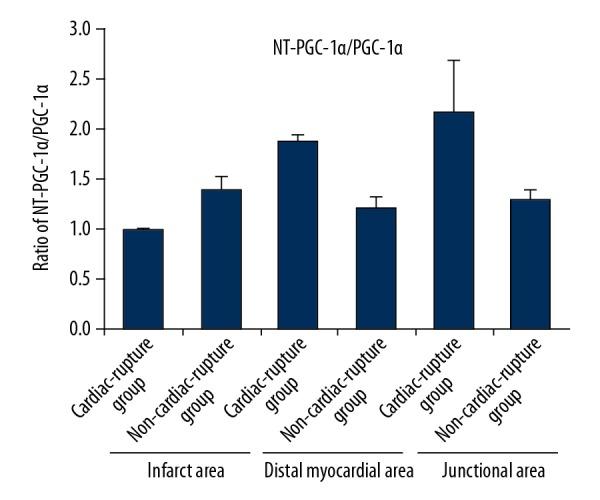
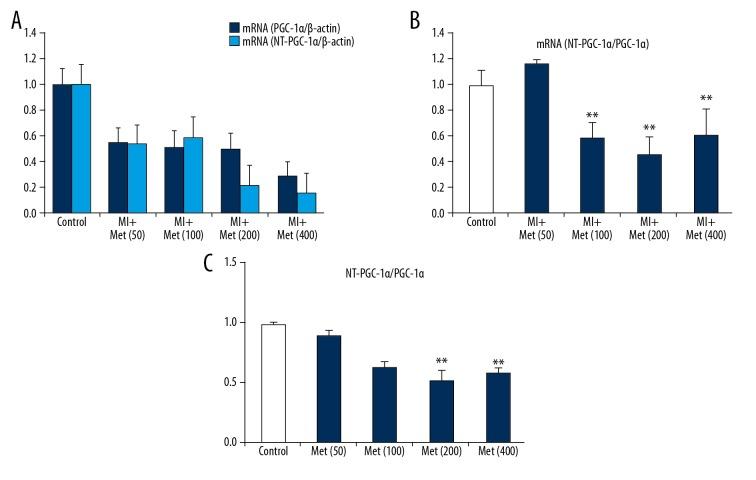
BACKGROUND Cardiac rupture often occurs after acute myocardial infarction due to complex and unclear pathogenesis. This study investigated whether metformin increases the incidence of cardiac rupture after myocardial infarction through the AMPK-MTOR/PGC-1α signaling pathway. MATERIAL AND METHODS An acute myocardial infarction (MI) mouse model was established. A series of experiments involving RT-qPCR, Western blot, TUNEL staining, and Masson staining were performed in this study. RESULTS Myocardial infarction occurred, resulting in the cardiac rupture, and the expression level of PGC-1α increased in the cardiac myocardium. Meanwhile, the proportion of myocardial NT-PGC-1α/PGC-1α decreased. The expression level of myocardial PGC-1α in MI mice with cardiac rupture after MI was significantly higher than that in the mice without cardiac rupture, and the ratio of myocardial NT-PGC-1α/PGC-1α was low. In addition, increasing the dose of metformin significantly increased the incidence of cardiac rupture after myocardial infarction in MI mice. High-dose metformin caused cardiac rupture in MI mice. Moreover, high-dose metformin (Met 2.0 nM) reduces the proportion of NT-PGC-1α/PGC-1α in primary cardiomyocytes of SD mice (SD-NRVCs [Neonatal rat ventricular cardiomyocytes]), and its effect was inhibited by Compound C (AMPK inhibitor). Further, after 3 days of treatment with high-dose metformin in MI mice, myocardial fibrin synthesis decreased and fibrosis was significantly inhibited. Meanwhile, cardiomyocyte apoptosis increased significantly. With the increase in metformin concentration, the expression level of myocardial LC3b gradually increased in MI mice, suggesting that metformin enhances the autophagy of cardiomyocytes. CONCLUSIONS These results suggest that metformin increases cardiac rupture after myocardial infarction through the AMPK-MTOR/PGC-1α signaling pathway.
背景
由于发病机制复杂且不明确,急性心肌梗死后常发生心脏破裂。本研究通过 AMPK-MTOR/PGC-1α 信号通路探讨二甲双胍是否会增加心肌梗死后心脏破裂的发生率。
材料与方法
建立急性心肌梗死(MI)小鼠模型。进行一系列实验,包括 RT-qPCR、Western blot、TUNEL 染色和 Masson 染色。
结果
发生心肌梗死,导致心脏破裂,心肌中 PGC-1α 的表达水平增加。同时,心肌 NT-PGC-1α/PGC-1α 的比例降低。MI 后发生心脏破裂的 MI 小鼠心肌中 PGC-1α 的表达水平明显高于未发生心脏破裂的小鼠,心肌 NT-PGC-1α/PGC-1α 的比值较低。此外,增加二甲双胍的剂量可显著增加 MI 小鼠心肌梗死后心脏破裂的发生率。高剂量二甲双胍(Met 2.0 nM)降低了 SD 小鼠(SD-NRVCs[新生大鼠心室肌细胞])原代心肌细胞中 NT-PGC-1α/PGC-1α 的比例,其作用被 Compound C(AMPK 抑制剂)抑制。进一步,在 MI 小鼠中用高剂量二甲双胍治疗 3 天后,心肌纤维蛋白合成减少,纤维化明显抑制。同时,心肌细胞凋亡显著增加。随着二甲双胍浓度的增加,MI 小鼠心肌中 LC3b 的表达水平逐渐升高,提示二甲双胍增强了心肌细胞的自噬作用。
结论
这些结果表明,二甲双胍通过 AMPK-MTOR/PGC-1α 信号通路增加心肌梗死后心脏破裂的发生。






 Zotero 插件