
异常的 MCT4 和 GLUT1 表达与肝癌切除术后早期复发和预后不良相关。
Aberrant MCT4 and GLUT1 expression is correlated with early recurrence and poor prognosis of hepatocellular carcinoma after hepatectomy.
机构信息
Department of Hepatobiliary Oncology, Sun Yat-sen University Cancer Center, Guangzhou, 510060, Guangdong, China.
Collaborative Innovation Center for Cancer Medicine, Sun Yat-sen University Cancer Center, Guangzhou, 510060, Guangdong, China.
出版信息
Cancer Med. 2018 Nov;7(11):5339-5350. doi: 10.1002/cam4.1521. Epub 2018 Oct 10.
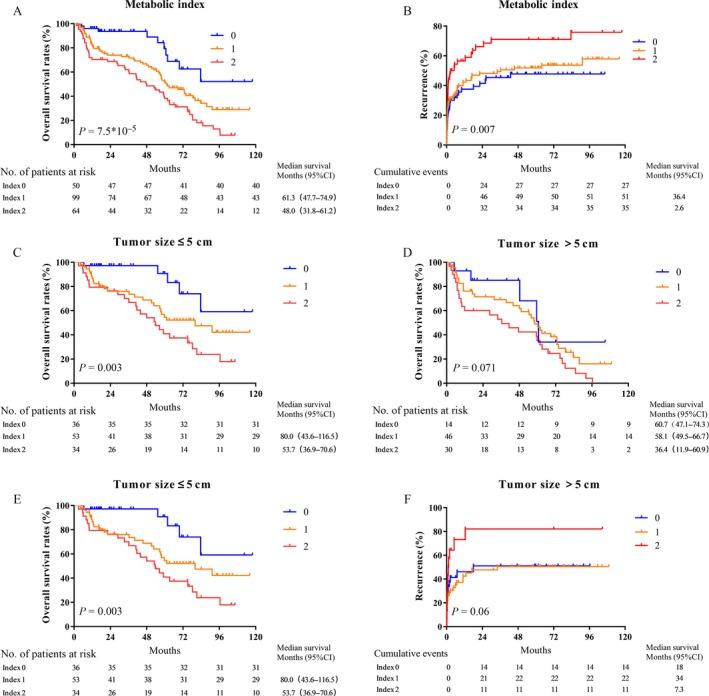
The tumor microenvironment is a key determinant of cancer cell biology. The microenvironment is a complex mixture of tumor cells, stromal cells, and proteins, extracellular matrix, oxygen tension, and pH levels surrounding the cells that regulate the tumor progress. This study identified the prognostic factors associated with hepatocellular carcinoma (HCC) and MCT4 and GLUT1 expression levels in HCC specimens. In this study, we analyzed MCT4 and GLUT1 expression levels in tissue samples from 213 patients with HCC by immunohistochemical analyses and in HCC tumor tissues and matched adjacent nonneoplastic tissues by quantitative real-time PCR. We conducted a prognostic analysis of the overall survival (OS) and time to recurrence (TTR) using immunoreactivity and other common clinical and pathological parameters. All variables with prognostic impact were further analyzed by multivariate analysis. We found that MCT4 and GLUT1 expression levels were significantly higher in tumor tissues than in adjacent nontumor tissues, and they were positively correlated with tumor size. Survival analysis showed that patients with high expression levels of MCT4 or GLUT1 had a poor OS and TTR. In patients with HCC, MCT4 expression was an independent negative prognostic factor for OS (hazard ratio [HR] = 1.617; 95% confidence interval [CI] = 1.102-2.374; P = 0.014), and metabolic indicators were independent prognostic factors for OS (HR = 1.617, 95% CI = 1.102-2.374, P = 0.006) and TTR (HR = 1.348, 95% CI = 1.079-1.685, P = 0.009). Interestingly, patients with positive metabolic indicator expression in tumor cells had a significantly shorter OS and earlier TTR than those with negative metabolic indicator expression in tumor cells in the ≤5 cm and >5 cm subgroups. In summary, using the expression of MCT4 and GLUT1 and their metabolic parameters to determine the metabolic status of tumors is promising for predicting the prognosis of patients with HCC.
肿瘤微环境是癌细胞生物学的关键决定因素。微环境是肿瘤细胞、基质细胞和蛋白质、细胞外基质、氧张力和 pH 值的复杂混合物,这些物质调节肿瘤的进展。本研究鉴定了与肝细胞癌(HCC)相关的预后因素以及 HCC 标本中 MCT4 和 GLUT1 的表达水平。在这项研究中,我们通过免疫组织化学分析分析了 213 例 HCC 患者组织样本中的 MCT4 和 GLUT1 表达水平,并通过定量实时 PCR 分析了 HCC 肿瘤组织及其匹配的相邻非肿瘤组织中的 MCT4 和 GLUT1 表达水平。我们使用免疫反应性和其他常见的临床和病理参数对总生存期(OS)和复发时间(TTR)进行了预后分析。对具有预后影响的所有变量进行了多变量分析。我们发现,MCT4 和 GLUT1 的表达水平在肿瘤组织中明显高于相邻的非肿瘤组织,并且与肿瘤大小呈正相关。生存分析显示,MCT4 或 GLUT1 高表达的患者 OS 和 TTR 较差。在 HCC 患者中,MCT4 表达是 OS 的独立负预后因素(危险比[HR] = 1.617;95%置信区间[CI] = 1.102-2.374;P = 0.014),代谢指标是 OS(HR = 1.617,95%CI = 1.102-2.374,P = 0.006)和 TTR(HR = 1.348,95%CI = 1.079-1.685,P = 0.009)的独立预后因素。有趣的是,在≤5cm 和>5cm 亚组中,肿瘤细胞中代谢指标表达阳性的患者 OS 和 TTR 明显短于肿瘤细胞中代谢指标表达阴性的患者。总之,使用 MCT4 和 GLUT1 的表达及其代谢参数来确定肿瘤的代谢状态有望预测 HCC 患者的预后。


 Zotero 插件