
适应性免疫系统的遗传结构确定了关键的免疫调节因子。
Genetic Architecture of Adaptive Immune System Identifies Key Immune Regulators.
机构信息
KU Leuven Department of Neurosciences, Laboratory for Neuroimmunology, 3000 Leuven, Belgium; VIB Center for Brain & Disease Research, Laboratory for Translational Immunology, 3000 Leuven, Belgium; KU Leuven Department of Immunology and Microbiology, Laboratory for Translational Immunology, 3000 Leuven, Belgium; Leuven Brain Institute (LBI), Leuven, Belgium.
VIB Center for Brain & Disease Research, Laboratory for Translational Immunology, 3000 Leuven, Belgium; KU Leuven Department of Immunology and Microbiology, Laboratory for Translational Immunology, 3000 Leuven, Belgium; Leuven Brain Institute (LBI), Leuven, Belgium.
出版信息
Cell Rep. 2018 Oct 16;25(3):798-810.e6. doi: 10.1016/j.celrep.2018.09.048.
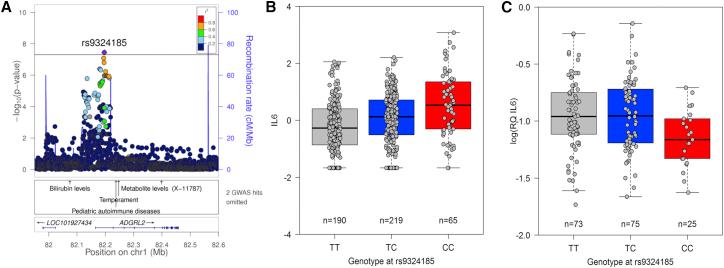
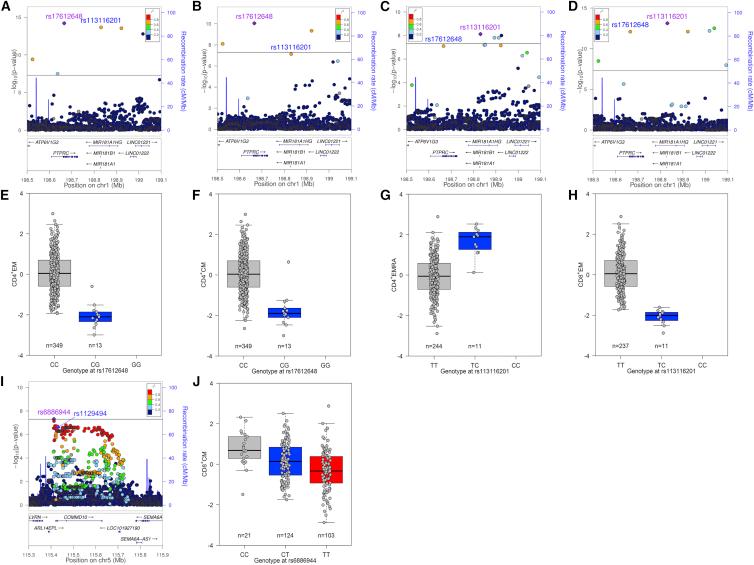
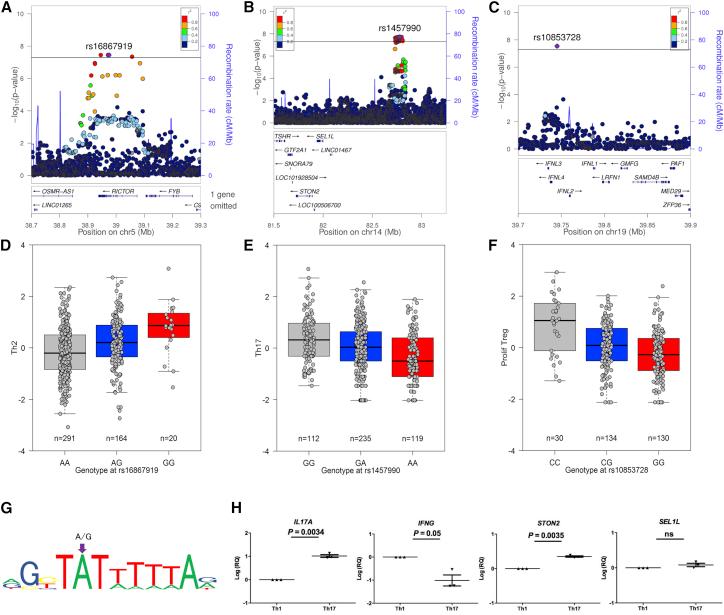
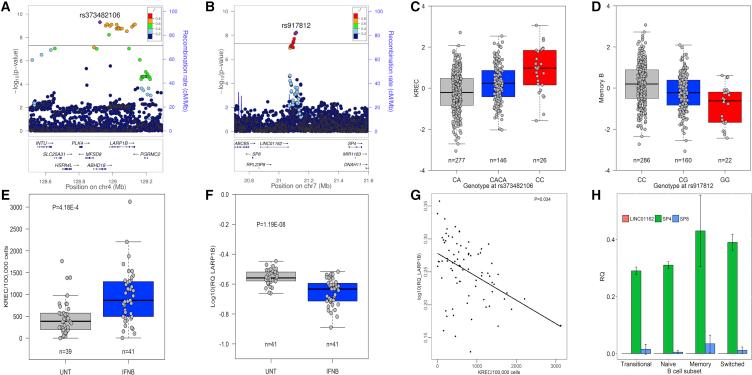
The immune system is highly diverse, but characterization of its genetic architecture has lagged behind the vast progress made by genome-wide association studies (GWASs) of emergent diseases. Our GWAS for 54 functionally relevant phenotypes of the adaptive immune system in 489 healthy individuals identifies eight genome-wide significant associations explaining 6%-20% of variance. Coding and splicing variants in PTPRC and COMMD10 are involved in memory T cell differentiation. Genetic variation controlling disease-relevant T helper cell subsets includes RICTOR and STON2 associated with Th2 and Th17, respectively, and the interferon-lambda locus controlling regulatory T cell proliferation. Early and memory B cell differentiation stages are associated with variation in LARP1B and SP4. Finally, the latrophilin family member ADGRL2 correlates with baseline pro-inflammatory interleukin-6 levels. Suggestive associations reveal mechanisms of autoimmune disease associations, in particular related to pro-inflammatory cytokine production. Pinpointing these key human immune regulators offers attractive therapeutic perspectives.
免疫系统具有高度多样性,但对其遗传结构的描述远远落后于新兴疾病的全基因组关联研究(GWAS)所取得的巨大进展。我们对 489 名健康个体的适应性免疫系统的 54 种功能相关表型进行了 GWAS,确定了 8 个全基因组显著关联,解释了 6%-20%的变异。PTPRC 和 COMMD10 中的编码和剪接变异参与了记忆 T 细胞分化。控制与疾病相关的辅助性 T 细胞亚群的遗传变异包括与 Th2 和 Th17 分别相关的 RICTOR 和 STON2,以及控制调节性 T 细胞增殖的干扰素-λ基因座。早期和记忆 B 细胞分化阶段与 LARP1B 和 SP4 的变异相关。最后,latrophilin 家族成员 ADGRL2 与基线促炎细胞因子白细胞介素-6 水平相关。提示性关联揭示了自身免疫性疾病关联的机制,特别是与促炎细胞因子产生有关。确定这些关键的人类免疫调节剂提供了有吸引力的治疗前景。


 Zotero 插件