
脓毒症中的免疫佐剂治疗:针对即将出现的免疫抑制性脓毒症的新策略。
Immunoadjuvant therapy in sepsis: novel strategies for immunosuppressive sepsis coming down the pike.
作者信息
Watanabe Eizo, Thampy Lukose K, Hotchkiss Richard S
机构信息
Department of General Medical Science Graduate School of Medicine Chiba University Chiba City Japan.
Department of Emergency and Critical Care Medicine Eastern Chiba Medical Center Togane City Japan.
出版信息
Acute Med Surg. 2018 Aug 6;5(4):309-315. doi: 10.1002/ams2.363. eCollection 2018 Oct.
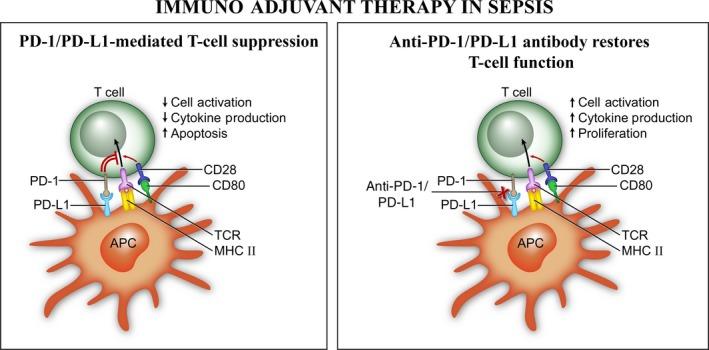
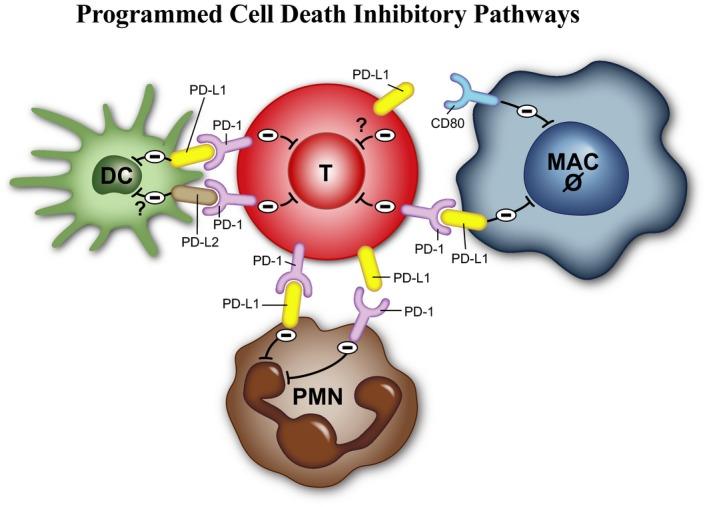
Recent efforts have focused on immunoadjuvant therapies for sepsis. The host inflammatory response consequent to initial exposure to pathogens is often followed by anti-inflammatory forces, resulting in increased morbidity and mortality in such critically ill patients. In the subacute stage of sepsis, apoptosis (type I programmed cell death) and subsequently autophagy (type II programmed cell death) have been attracting recent research interest. Although many patients may die during the initial cytokine storm, those who survive this phase might acquire defining characteristics of profound immunosuppression, including failure to clear the primary infection, development of secondary opportunistic infections, and reactivation of latent viruses. Both types of cell death are currently thought to be associated with this subacute immunosuppressive phase of sepsis, and acceleration of autophagy might alleviate immunosuppression through regulation of apoptosis of key immune effector cells. Programmed cell death 1 (PD-1) and its corresponding ligand play a major pathological role in immunosuppression not only in cancer but also in sepsis. Positive costimulatory pathways in T cells, such as CD28 signaling, permit the effector T cell to expand, persist, and effectively clear antigen. However, PD-1 is a negative costimulatory pathway on T cells that broadly enhances immunosuppressive signals across the innate and adaptive immune system. To counter this immunosuppression in sepsis, checkpoint blockade has garnered attention in an area of clinical research. In this review, we introduce some approaches of immunotherapy using anti-PD-1 antibody in infectious diseases and share our future perspectives.
最近的研究工作集中在脓毒症的免疫佐剂疗法上。宿主在初次接触病原体后引发的炎症反应,通常会继之以抗炎反应,导致这类重症患者的发病率和死亡率升高。在脓毒症的亚急性期,凋亡(I型程序性细胞死亡)以及随后的自噬(II型程序性细胞死亡)引起了近期的研究关注。尽管许多患者可能在最初的细胞因子风暴期间死亡,但那些度过此阶段的患者可能会出现深度免疫抑制的典型特征,包括无法清除原发性感染、继发机会性感染以及潜伏病毒的重新激活。目前认为这两种类型的细胞死亡均与脓毒症的亚急性免疫抑制期有关,加速自噬可能通过调节关键免疫效应细胞的凋亡来减轻免疫抑制。程序性细胞死亡蛋白1(PD-1)及其相应配体不仅在癌症中,而且在脓毒症的免疫抑制中都起着主要的病理作用。T细胞中的正性共刺激途径,如CD28信号传导,可使效应T细胞扩增、持续存在并有效清除抗原。然而,PD-1是T细胞上的负性共刺激途径,可广泛增强先天性和适应性免疫系统的免疫抑制信号。为了对抗脓毒症中的这种免疫抑制,检查点阻断在临床研究领域已受到关注。在本综述中,我们介绍了在传染病中使用抗PD-1抗体的一些免疫治疗方法,并分享我们对未来的展望。
 Zotero 插件