
脓毒症诱导的免疫抑制机制及脓毒症的免疫调节治疗
Mechanisms of sepsis-induced immunosuppression and immunological modification therapies for sepsis.
作者信息
Ono Satoshi, Tsujimoto Hironori, Hiraki Shuichi, Aosasa Suefumi
机构信息
Division of Critical Care Medicine Tokyo Medical University Hachioji Medical Center Tokyo Japan.
Department of Surgery National Defense Medical College Saitama Japan.
出版信息
Ann Gastroenterol Surg. 2018 Jul 24;2(5):351-358. doi: 10.1002/ags3.12194. eCollection 2018 Sep.
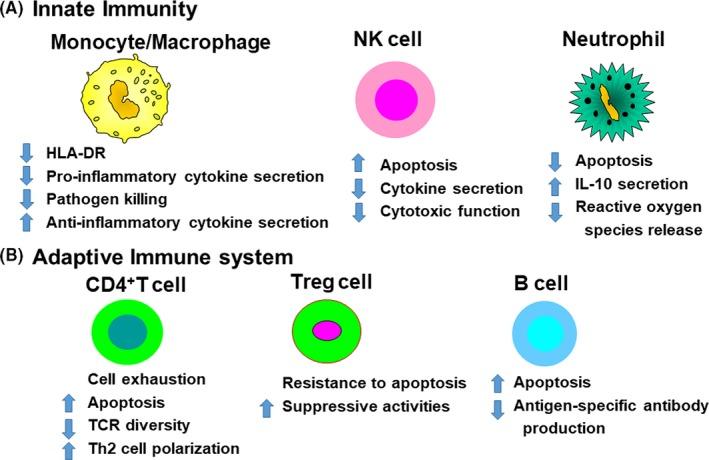
Surgical injury can be a life-threatening complication, not only due to the injury itself, but also due to immune responses to the injury and subsequent development of infections, which readily result in sepsis. Sepsis remains the leading cause of death in most intensive care units. Unfavorable outcomes of several high-profile trials in the treatment of sepsis have led researchers to state that sepsis studies need a new direction. The immune response that occurs during sepsis is characterized by a cytokine-mediated hyper-inflammatory phase, which most patients survive, and a subsequent immunosuppressive phase. Therefore, therapies that improve host immunity might increase the survival of patients with sepsis. Many mechanisms are responsible for sepsis-induced immunosuppression, including apoptosis of immune cells, increased regulatory T cells and expression of programmed cell death 1 on CD4 T cells, and cellular exhaustion. Immunomodulatory molecules that were recently identified include interleukin-7, interleukin-15, and anti-programmed cell death 1. Recent studies suggest that immunoadjuvant therapy is the next major advance in sepsis treatment.
手术损伤可能是一种危及生命的并发症,不仅因为损伤本身,还因为对损伤的免疫反应以及随后感染的发生,而感染很容易导致脓毒症。脓毒症仍然是大多数重症监护病房的主要死亡原因。脓毒症治疗中几项备受瞩目的试验结果不佳,促使研究人员指出脓毒症研究需要新的方向。脓毒症期间发生的免疫反应的特征是细胞因子介导的炎症亢进期(大多数患者可存活)以及随后的免疫抑制期。因此,改善宿主免疫力的疗法可能会提高脓毒症患者的存活率。脓毒症诱导的免疫抑制有多种机制,包括免疫细胞凋亡、调节性T细胞增加以及CD4 T细胞上程序性细胞死亡1的表达,还有细胞耗竭。最近发现的免疫调节分子包括白细胞介素-7、白细胞介素-15和抗程序性细胞死亡1。最近的研究表明,免疫佐剂疗法是脓毒症治疗的下一个重大进展。


 Zotero 插件