
硅在渗透胁迫下两种不同番茄基因型介导差异胁迫耐受性反应中的调节作用
Regulatory Role of Silicon in Mediating Differential Stress Tolerance Responses in Two Contrasting Tomato Genotypes Under Osmotic Stress.
作者信息
Ali Nusrat, Schwarzenberg Adrian, Yvin Jean-Claude, Hosseini Seyed A
机构信息
Plant Nutrition Department, Centre Mondial de l'Innovation Roullier, Saint-Malo, France.
出版信息
Front Plant Sci. 2018 Oct 8;9:1475. doi: 10.3389/fpls.2018.01475. eCollection 2018.
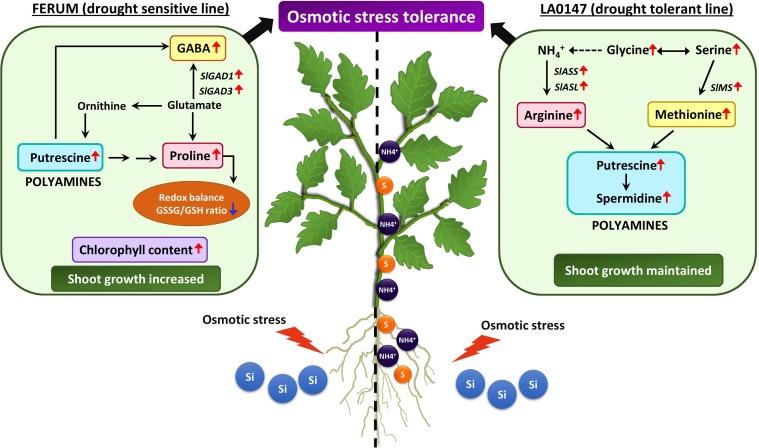
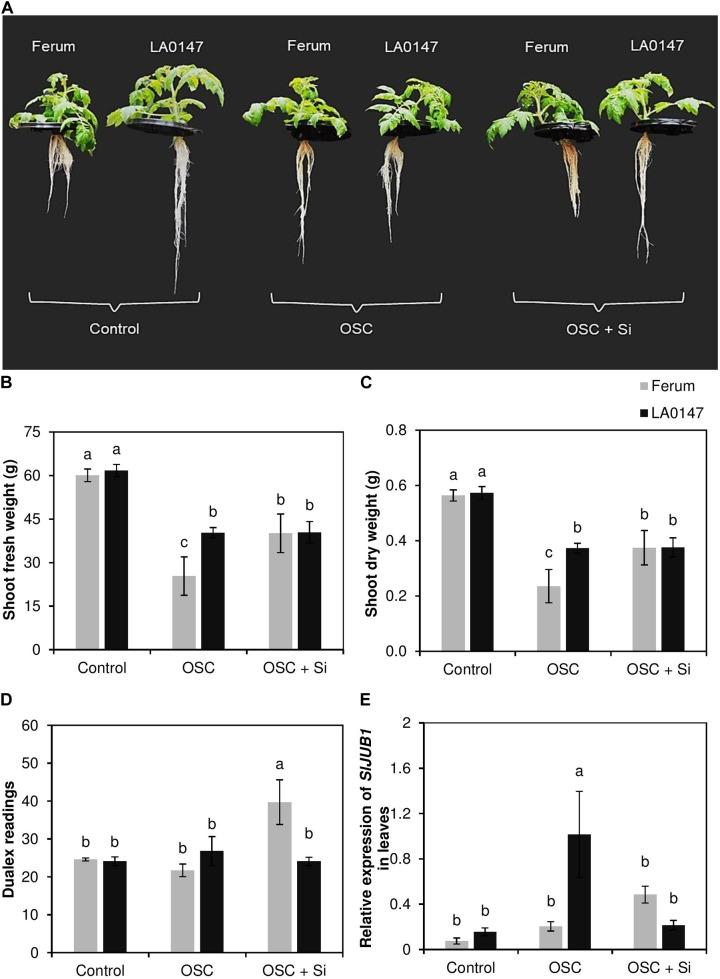
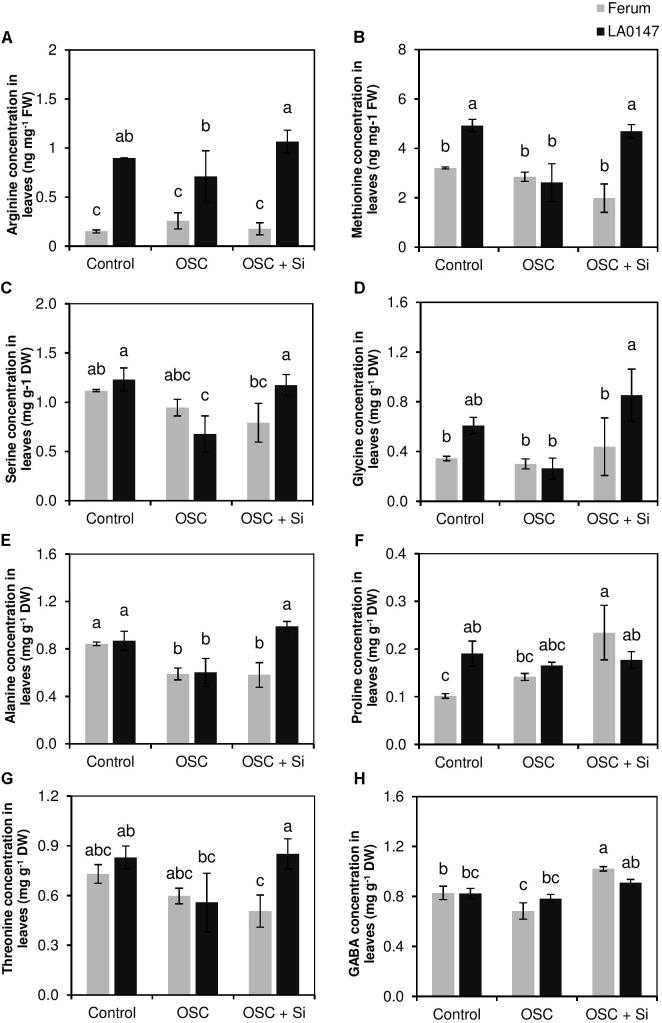
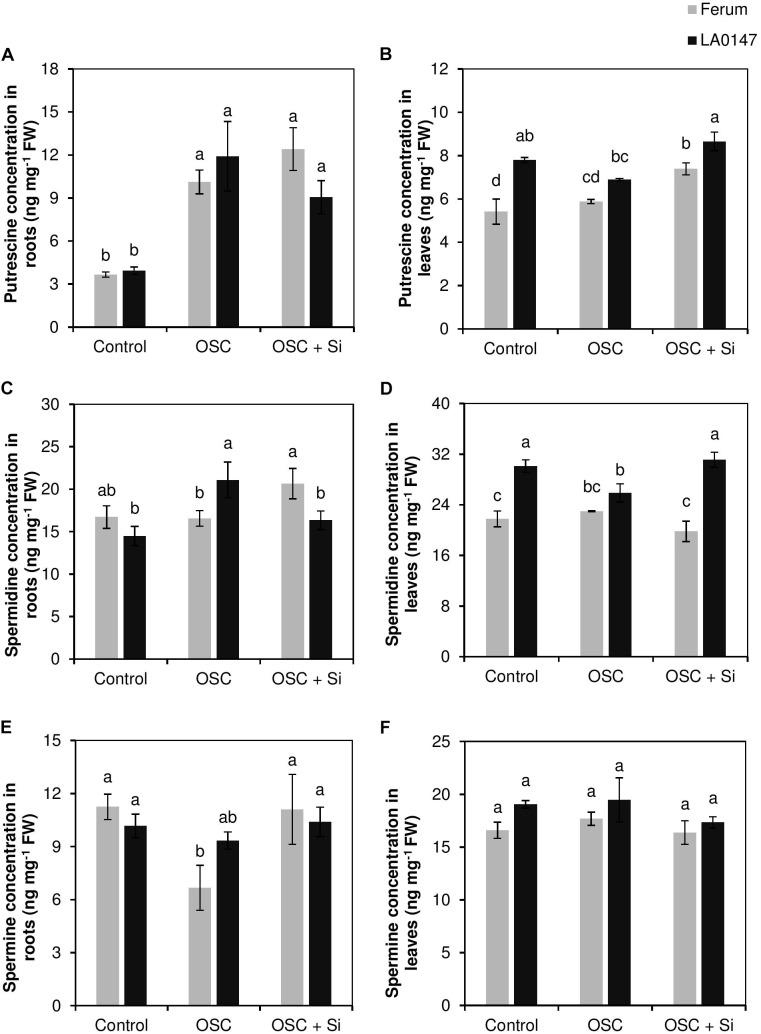
Previous studies have shown the role of silicon (Si) in mitigating the adverse effect of drought stress in different crop species. However, data are lacking on a comparison of drought tolerant and drought sensitive crop cultivars in response to Si nutrition. Therefore, the aim of this study was to elucidate the mechanism (s) by which two contrasting tomato genotypes respond to Si nutrition under osmotic stress condition. Two tomato lines contrasting in their response to drought stress were hydroponically grown under polyethylene glycol (PEG, 6000) and two regimes of Si (0 and 1.5 mM). Metabolite profiling was performed in two lines. Growth and relevant physiological parameters, and expression levels of selected genes were also measured. Si application resulted in improved osmotic stress tolerance in both drought tolerant line LA0147 and drought sensitive line FERUM. In the drought tolerant line, Si enhanced uptake of sulfur (S) and ammonium ( ) which led to a significantly higher production of amino acids arginine, methionine, serine, and glycine. While in the drought sensitive line, Si significantly increased production of amino acids proline and GABA which further lowered the level of GSSG to GSH ratio and thus balanced the redox homeostasis under osmotic stress. The higher significant production of amino acids arginine, methionine, GABA, and proline enhanced production of free polyamines putrescine and spermidine and improved osmotic stress tolerance. Therefore, we conclude that Si distinctively regulated osmotic stress tolerance in two contrasting tomato genotypes by differential accumulation of relevant amino acids which eventually led to enhanced polyamine metabolism.
先前的研究已经表明硅(Si)在减轻不同作物品种干旱胁迫的不利影响方面所起的作用。然而,关于耐旱和干旱敏感作物品种对硅营养响应的比较数据却很缺乏。因此,本研究的目的是阐明两种不同的番茄基因型在渗透胁迫条件下对硅营养作出响应的机制。将对干旱胁迫反应不同的两个番茄品系在聚乙二醇(PEG,6000)和两种硅处理(0和1.5 mM)条件下进行水培种植。对两个品系进行了代谢物谱分析。还测量了生长和相关生理参数以及所选基因的表达水平。施用硅提高了耐旱品系LA0147和干旱敏感品系FERUM的渗透胁迫耐受性。在耐旱品系中,硅增强了硫(S)和铵( )的吸收,这导致精氨酸、蛋氨酸、丝氨酸和甘氨酸等氨基酸的产量显著更高。而在干旱敏感品系中,硅显著增加了脯氨酸和γ-氨基丁酸(GABA)的产量,这进一步降低了氧化型谷胱甘肽(GSSG)与还原型谷胱甘肽(GSH)的比例,从而在渗透胁迫下平衡了氧化还原稳态。精氨酸、蛋氨酸、GABA和脯氨酸等氨基酸的大量显著产生促进了游离多胺腐胺和亚精胺的产生,并提高了渗透胁迫耐受性。因此,我们得出结论,硅通过相关氨基酸的差异积累以独特方式调节了两种不同番茄基因型的渗透胁迫耐受性,最终导致多胺代谢增强。




 Zotero 插件