
硅和脯氨酸对干旱胁迫甜菜氧化机制的影响评估
Evaluation of Silicon and Proline Application on the Oxidative Machinery in Drought-Stressed Sugar Beet.
作者信息
AlKahtani Muneera D F, Hafez Yaser M, Attia Kotb, Rashwan Emadeldeen, Husnain Latifa Al, AlGwaiz Hussah I M, Abdelaal Khaled A A
机构信息
Biology Department, College of Science, Princess Nourah Bint Abdulrahman University, Riyadh 102275-11675, Saudi Arabia.
Excellence Center (EPCRS), Plant Pathology and Biotechnology Lab, Faculty of Agriculture, Kafrelsheikh University, Kafr Elsheikh 33516, Egypt.
出版信息
Antioxidants (Basel). 2021 Mar 6;10(3):398. doi: 10.3390/antiox10030398.
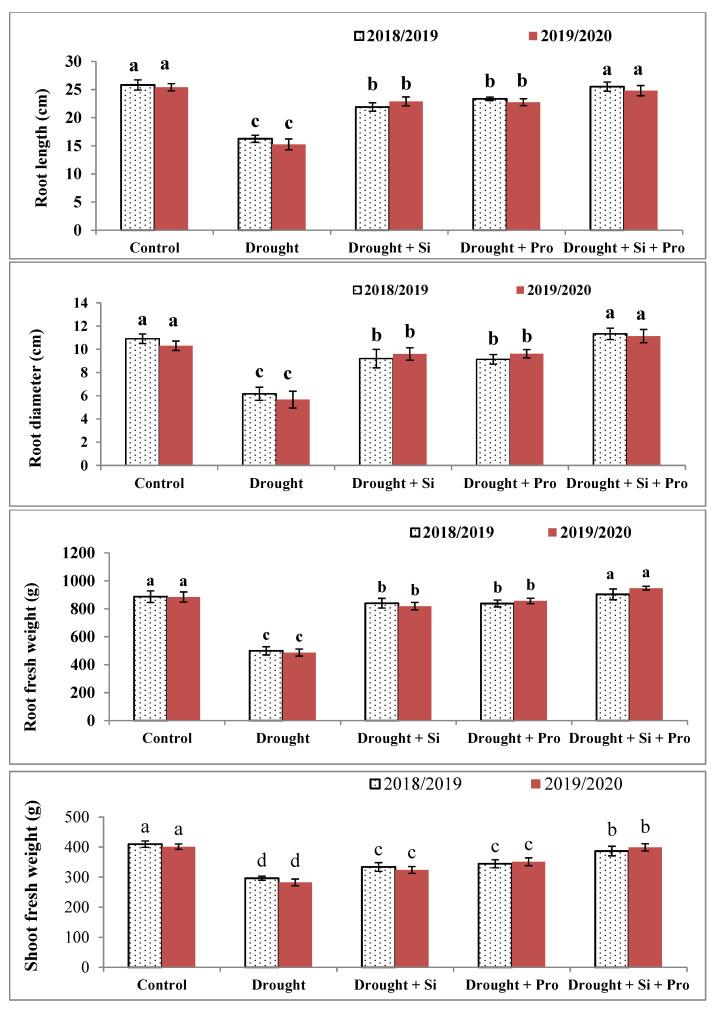
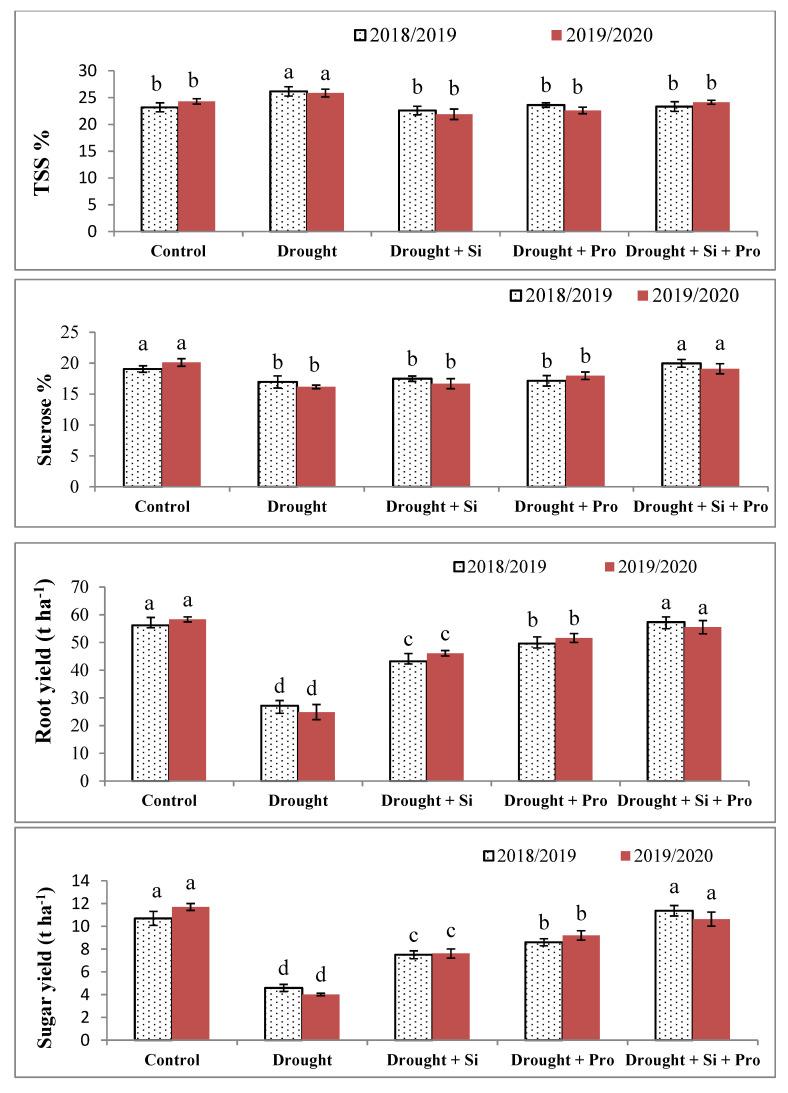
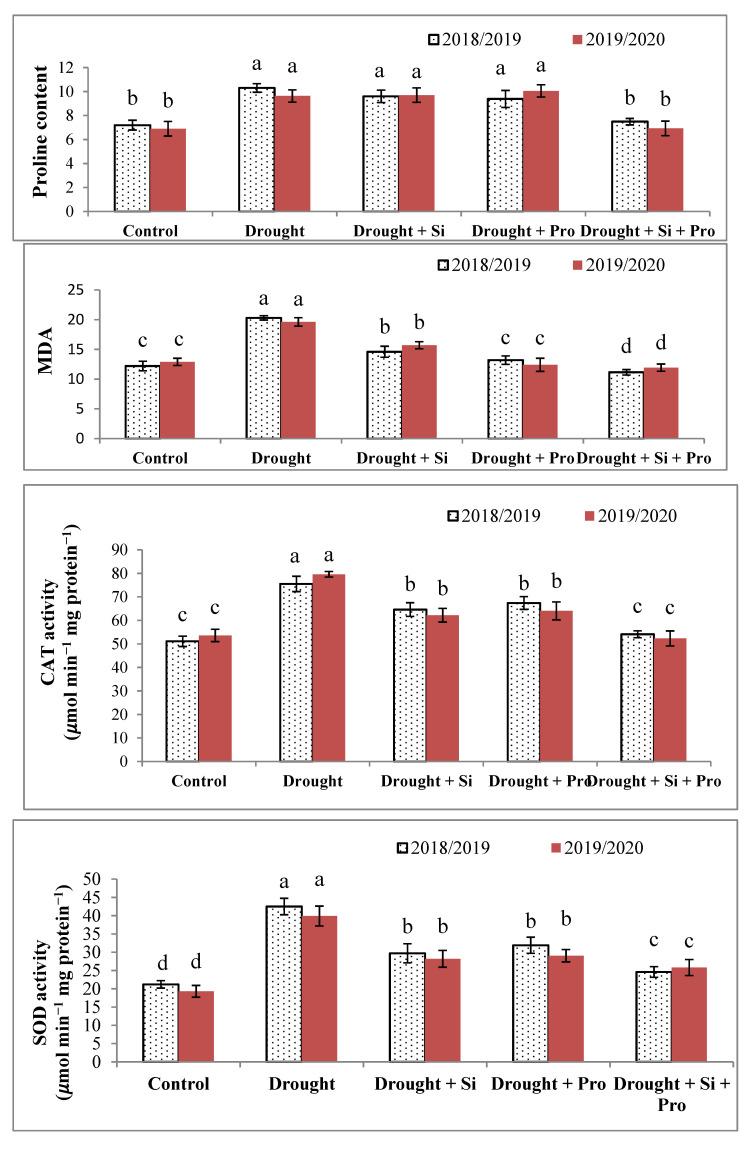
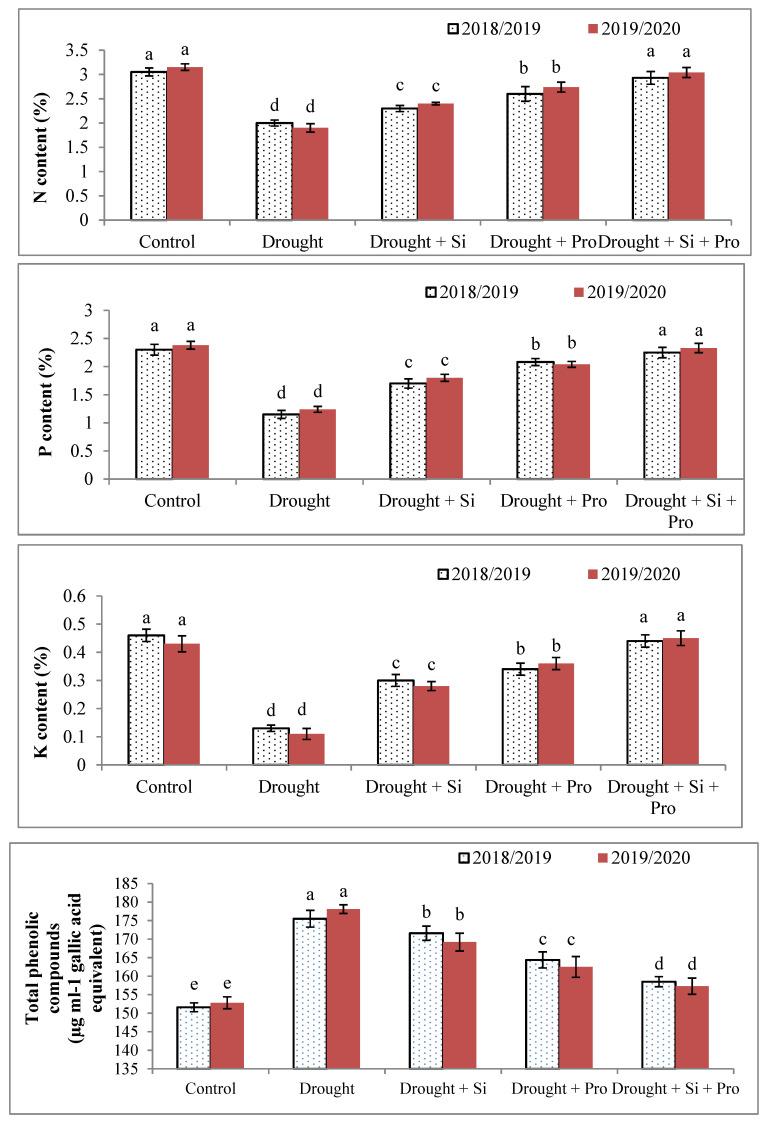
Drought stress deleteriously affects growth, development and productivity in plants. So, we examined the silicon effect (2 mmol) and proline (10 mmol) individually or the combination (Si + proline) in alleviating the harmful effect of drought on total phenolic compounds, reactive oxygen species (ROS), chlorophyll concentration and antioxidant enzymes as well as yield parameters of drought-stressed sugar beet plants during 2018/2019 and 2019/2020 seasons. Our findings indicated that the root diameter and length (cm), root and shoot fresh weights (g plant) as well as root and sugar yield significantly decreased in sugar beet plants under drought. Relative water content (RWC), nitrogen (N), phosphorus (P) and potassium (K) contents and chlorophyll (Chl) concentration considerably reduced in stressed sugar beet plants that compared with control in both seasons. Nonetheless, lipid peroxidation (MDA), electrolyte leakage (EL), hydrogen peroxide (HO) and superoxide (O) considerably elevated as signals of drought. Drought-stressed sugar beet plants showed an increase in proline accumulation, total phenolic compounds and up-regulation of antioxidant enzymes catalase (CAT) and superoxide dismutase (SOD) activity to mitigate drought effects. Si and proline individually or the combination Si + proline considerably increased root and sugar yield, sucrose%, Chl concentration and RWC, MDA and EL were remarkably reduced. The treatments led to adjust proline and total phenolic compounds as well as CAT and SOD activity in stressed sugar beet plants. We concluded that application of Si + proline under drought stress led to improve the resistance of sugar beet by regulating of proline, antioxidant enzymes, phenolic compounds and improving RWC, Chl concentration and Nitrogen, Phosphorus and Potassium (NPK) contents as well as yield parameters.
干旱胁迫对植物的生长、发育和生产力产生有害影响。因此,我们在2018/2019年和2019/2020年生长季研究了硅(2 mmol)和脯氨酸(10 mmol)单独作用或二者组合(硅 + 脯氨酸)对干旱胁迫下甜菜植株总酚类化合物、活性氧(ROS)、叶绿素浓度、抗氧化酶以及产量参数的有害影响的缓解作用。我们的研究结果表明,干旱条件下甜菜植株的根直径和长度(厘米)、根和地上部鲜重(克/株)以及根产量和糖分产量显著下降。与两个生长季的对照相比,胁迫甜菜植株的相对含水量(RWC)、氮(N)、磷(P)和钾(K)含量以及叶绿素(Chl)浓度大幅降低。然而,脂质过氧化(MDA)、电解质渗漏(EL)、过氧化氢(HO)和超氧阴离子(O)大幅升高,成为干旱的信号。干旱胁迫的甜菜植株脯氨酸积累增加、总酚类化合物增多,抗氧化酶过氧化氢酶(CAT)和超氧化物歧化酶(SOD)活性上调以减轻干旱影响。硅和脯氨酸单独作用或二者组合(硅 + 脯氨酸)显著提高了根产量和糖分产量、蔗糖百分比、叶绿素浓度以及相对含水量,显著降低了丙二醛和电解质渗漏。这些处理使胁迫甜菜植株中的脯氨酸、总酚类化合物以及过氧化氢酶和超氧化物歧化酶活性得到调节。我们得出结论,干旱胁迫下施用硅 + 脯氨酸可通过调节脯氨酸、抗氧化酶、酚类化合物,改善相对含水量、叶绿素浓度以及氮、磷和钾(NPK)含量以及产量参数,从而提高甜菜的抗性。


 Zotero 插件