
烟草使用相关癌症监测 - 美国,2010-2014 年。
Surveillance for Cancers Associated with Tobacco Use - United States, 2010-2014.
机构信息
Division of Cancer Prevention and Control, National Center for Chronic Disease Prevention and Health Promotion, CDC.
Commissioned Corps, U.S. Public Health Service, Rockville, Maryland.
出版信息
MMWR Surveill Summ. 2018 Nov 2;67(12):1-42. doi: 10.15585/mmwr.ss6712a1.
PROBLEM/CONDITION: Tobacco use is the leading preventable cause of cancer, contributing to at least 12 types of cancer, including acute myeloid leukemia (AML) and cancers of the oral cavity and pharynx; esophagus; stomach; colon and rectum; liver; pancreas; larynx; lung, bronchus, and trachea; kidney and renal pelvis; urinary bladder; and cervix. This report provides a comprehensive assessment of recent tobacco-associated cancer incidence for each cancer type by sex, age, race/ethnicity, metropolitan county classification, tumor characteristics, U.S. census region, and state. These data are important for initiation, monitoring, and evaluation of tobacco prevention and control measures.
PERIOD COVERED
2010-2014.
DESCRIPTION OF SYSTEM
Cancer incidence data from CDC's National Program of Cancer Registries and the National Cancer Institute's Surveillance, Epidemiology, and End Results program were used to calculate average annual age-adjusted incidence rates for 2010-2014 and trends in annual age-adjusted incidence rates for 2010-2014. These cancer incidence data cover approximately 99% of the U.S.
POPULATION
This report provides age-adjusted cancer incidence rates for each of the 12 cancer types known to be causally associated with tobacco use, including liver and colorectal cancer, which were deemed to be causally associated with tobacco use by the U.S. Surgeon General in 2014. Findings are reported by demographic and geographic characteristics, percentage distributions for tumor characteristics, and trends in cancer incidence by sex.
RESULTS
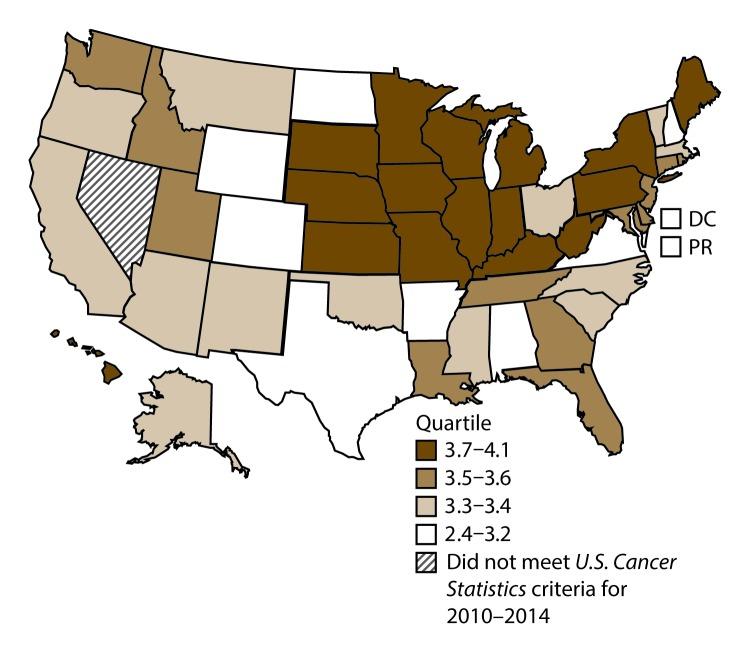
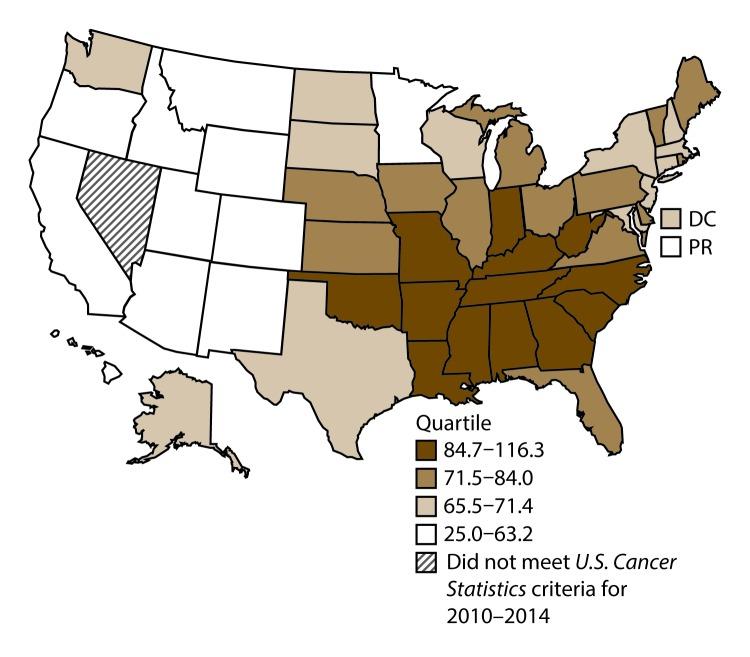
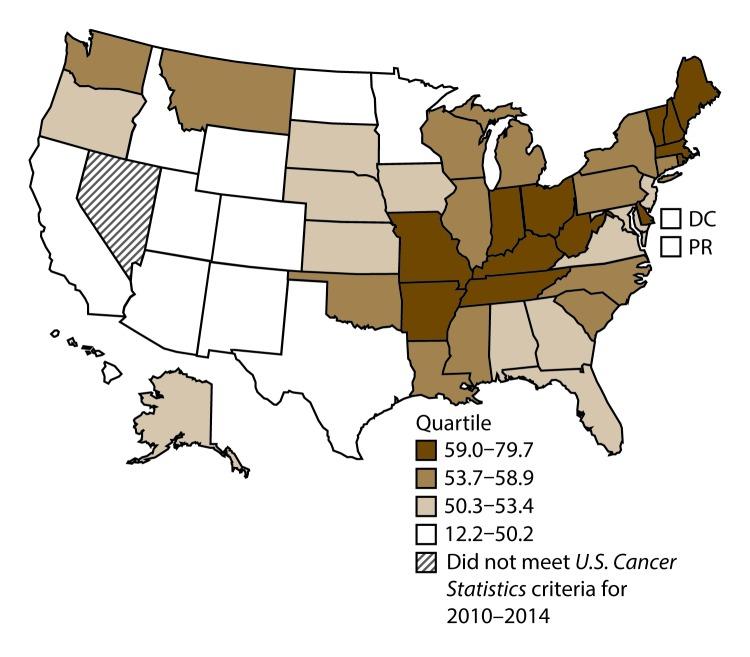
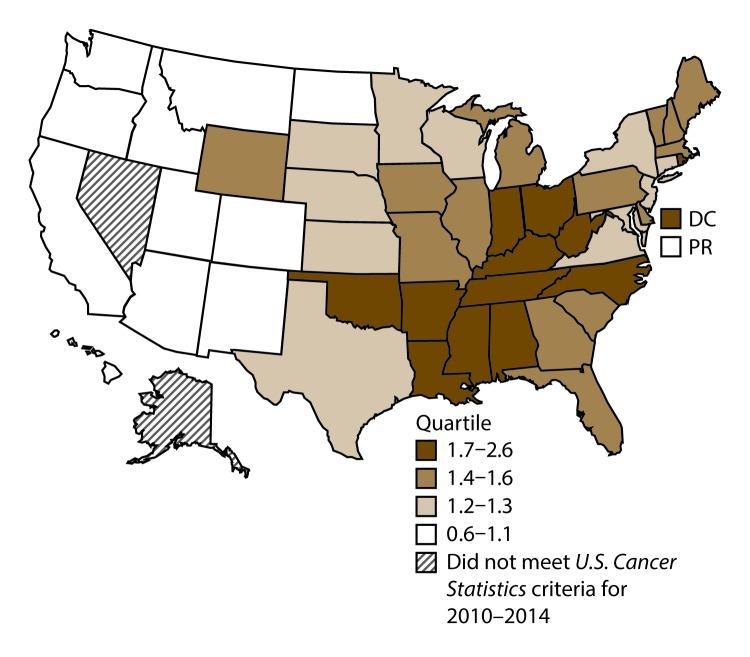
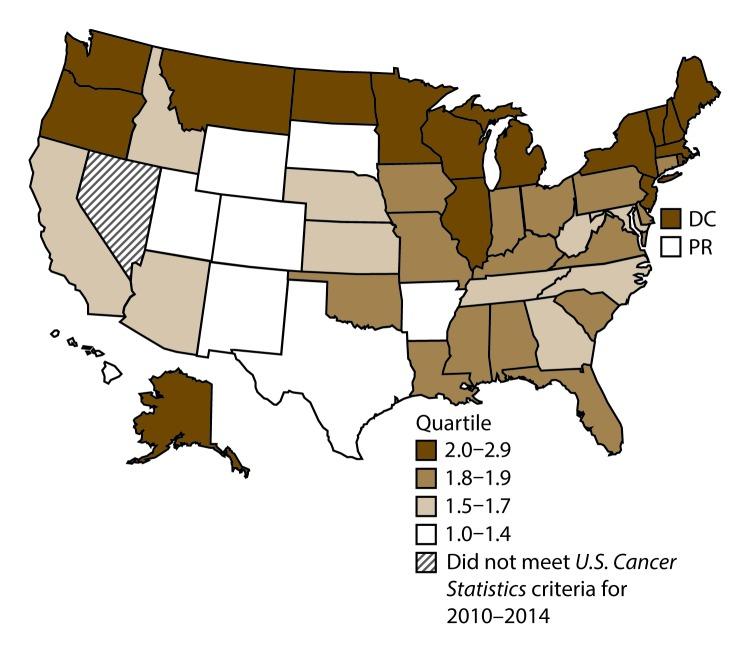
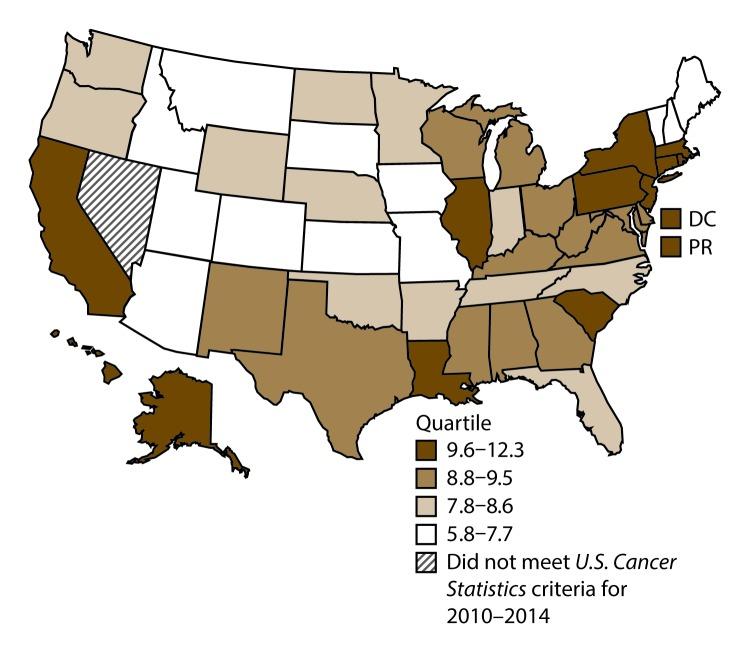
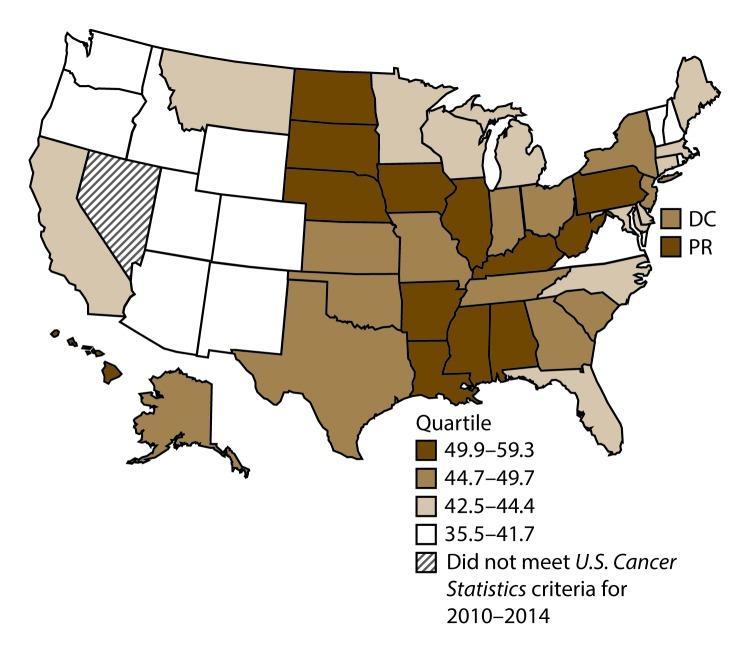
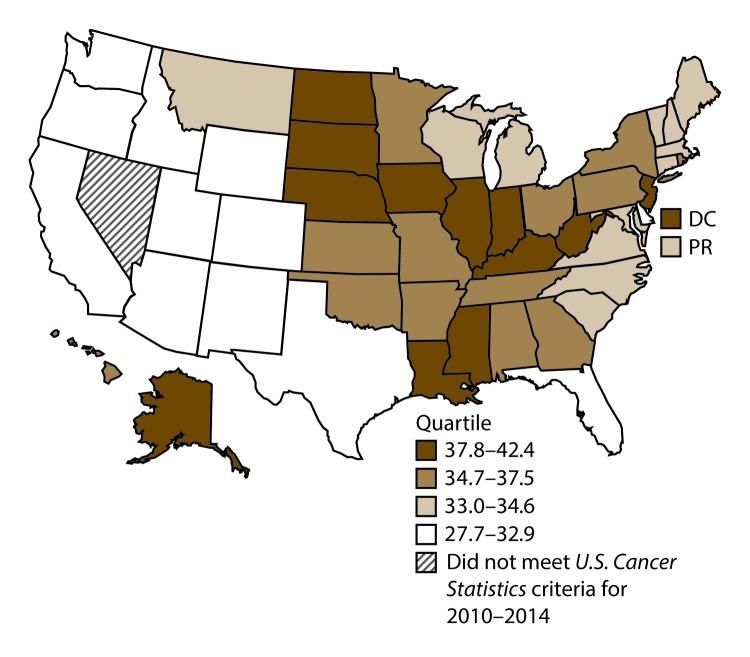
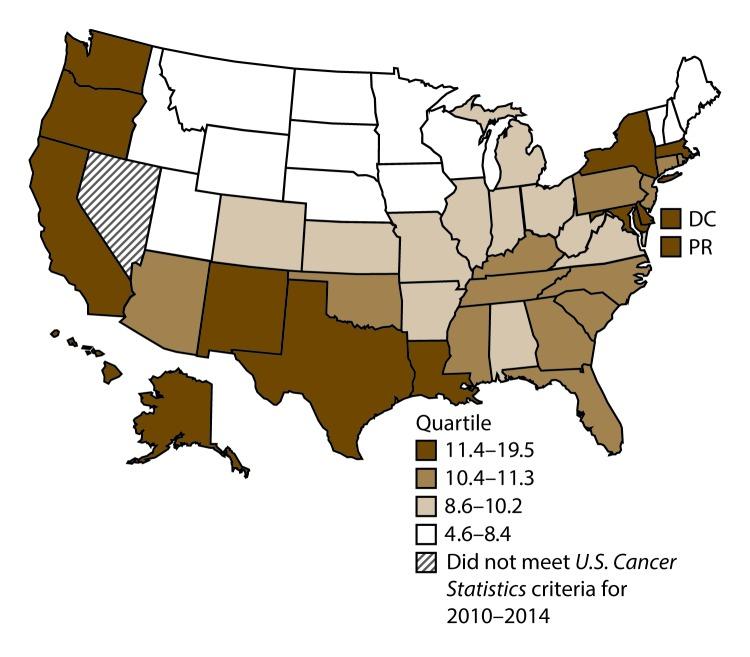
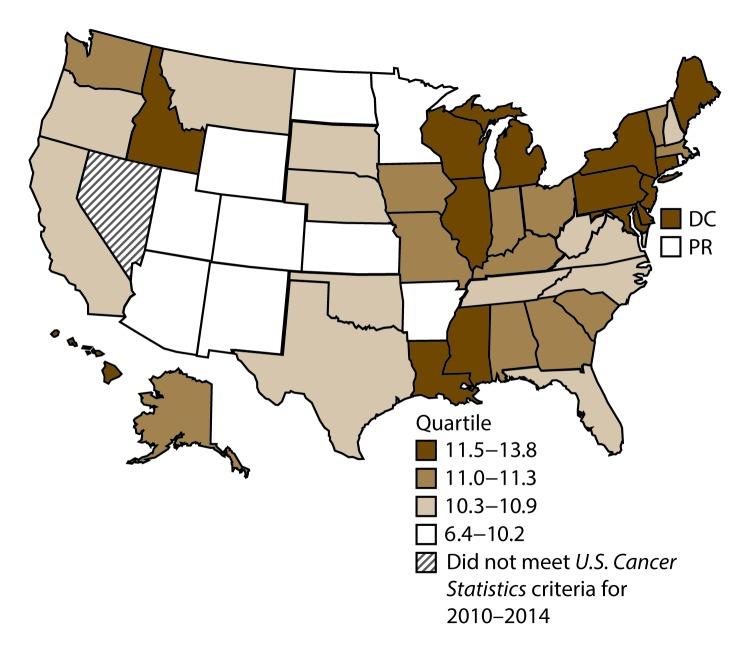
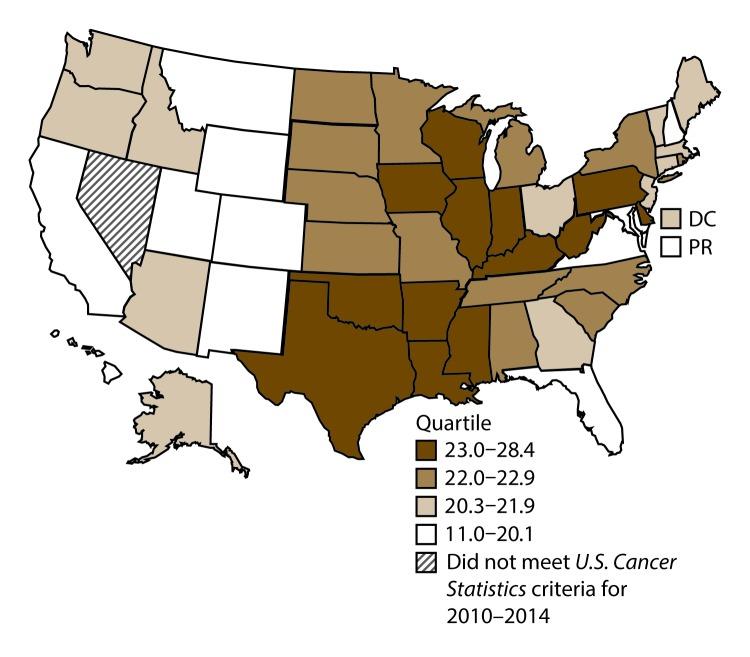
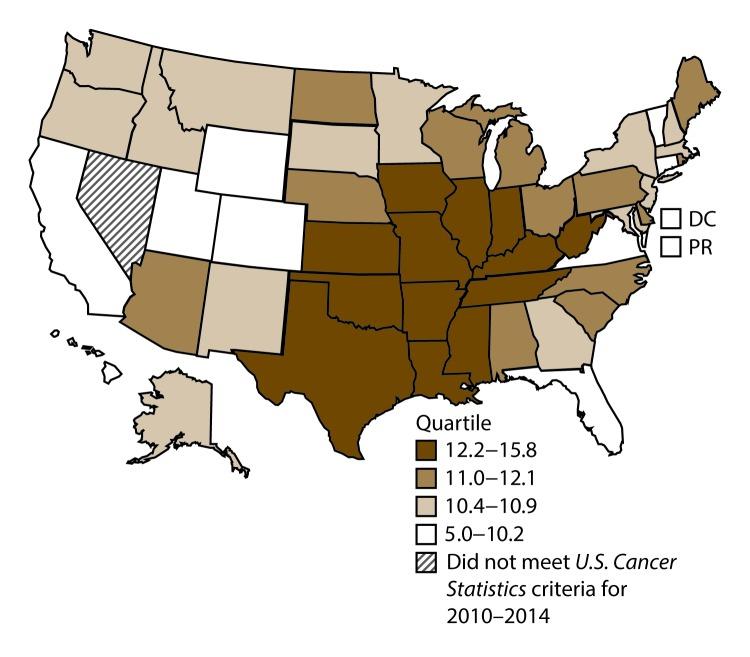
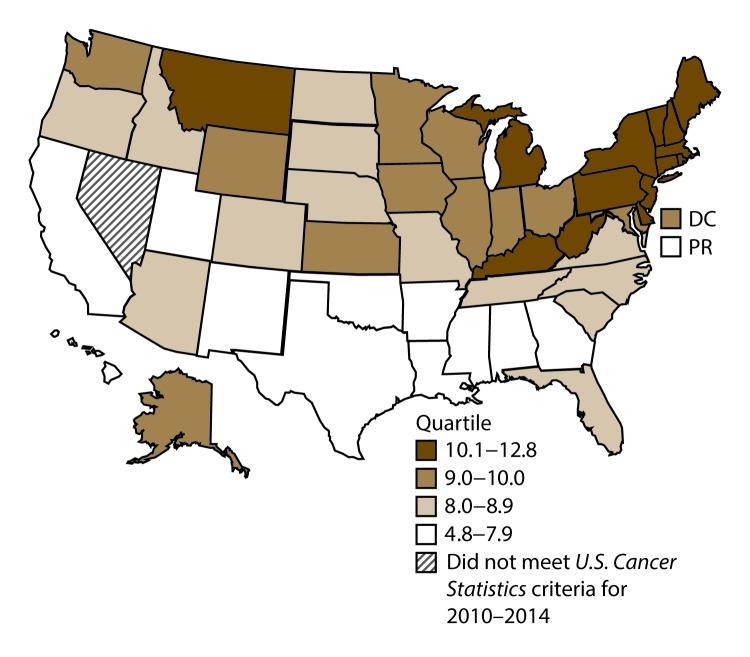
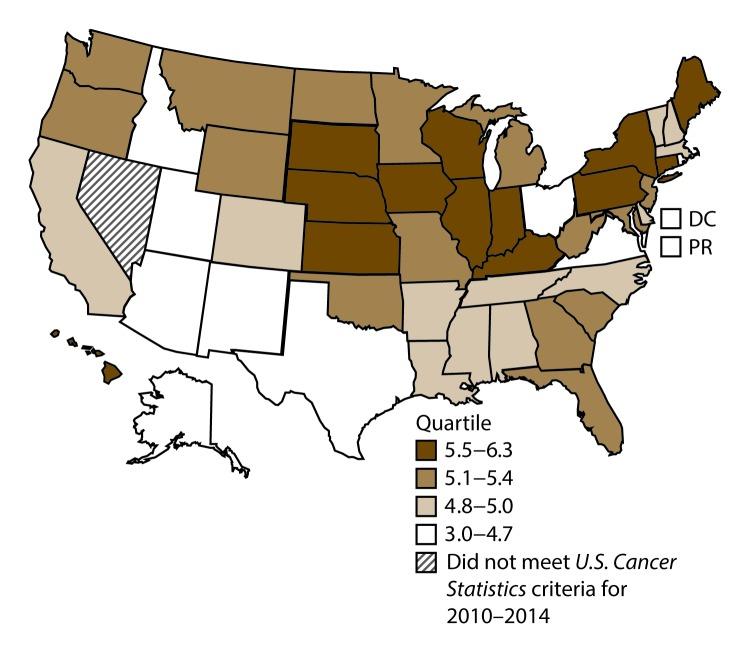
During 2010-2014, approximately 3.3 million new tobacco-associated cancer cases were reported in the United States, approximately 667,000 per year. Age-adjusted incidence rates ranged from 4.2 AML cases per 100,000 persons to 61.3 lung cancer cases per 100,000 persons. By cancer type, incidence rates were higher among men than women (excluding cervical cancer), higher among non-Hispanics than Hispanics (for all cancers except stomach, liver, kidney, and cervical), higher among persons in nonmetropolitan counties than those in metropolitan counties (for all cancers except stomach, liver, pancreatic, and AML), and lower in the West than in other U.S. census regions (all except stomach, liver, bladder, and AML). Compared with other racial/ethnic groups, certain cancer rates were highest among whites (oral cavity and pharyngeal, esophageal, bladder, and AML), blacks (colon and rectal, pancreatic, laryngeal, lung and bronchial, cervical, and kidney), and Asians/Pacific Islanders (stomach and liver). During 2010-2014, the rate of all tobacco-associated cancers combined decreased 1.2% per year, influenced largely by decreases in cancers of the larynx (3.0%), lung (2.2%), colon and rectum (2.1%), and bladder (1.3%).
INTERPRETATION
Although tobacco-associated cancer incidence decreased overall during 2010-2014, the incidence remains high in several states and subgroups, including among men, whites, blacks, non-Hispanics, and persons in nonmetropolitan counties. These disproportionately high rates of tobacco-related cancer incidence reflect overall demographic patterns of cancer incidence in the United States and also reflect patterns of tobacco use.
PUBLIC HEALTH ACTION
Tobacco-associated cancer incidence can be reduced through prevention and control of tobacco use and comprehensive cancer-control efforts focused on reducing cancer risk, detecting cancer early, and better assisting communities disproportionately affected by cancer. Ongoing surveillance to monitor cancer incidence can identify populations with a high incidence of tobacco-associated cancers and evaluate the effectiveness of tobacco control programs and policies. Implementation research can be conducted to achieve wider adoption of existing evidence-based cancer prevention and screening programs and tobacco control measures, especially to reach groups with the largest disparities in cancer rates.
问题/情况:吸烟是癌症的主要可预防原因,可导致至少 12 种癌症,包括急性髓细胞白血病(AML)和口腔和咽;食管;胃;结肠和直肠;肝;胰腺;喉;肺,支气管和气管;肾和肾盂;膀胱;和子宫颈。本报告全面评估了每种癌症类型的最新与烟草相关的癌症发病率,包括性别、年龄、种族/族裔、大都市县分类、肿瘤特征、美国人口普查区和州。这些数据对于启动、监测和评估烟草预防和控制措施非常重要。
涵盖时期
2010-2014 年。
系统描述
使用疾病预防控制中心国家癌症登记处和美国国家癌症研究所监测、流行病学和最终结果计划的数据计算了 2010-2014 年的平均年龄调整发病率和 2010-2014 年的年度年龄调整发病率趋势。这些癌症发病率数据覆盖了美国约 99%的人口。
人群
本报告提供了已知与烟草使用因果相关的 12 种癌症类型的年龄调整癌症发病率,包括肝癌和结直肠癌,2014 年美国外科医生总干事认为这些癌症与烟草使用因果相关。报告结果按人口统计学和地理特征、肿瘤特征的百分比分布以及按性别划分的癌症发病率趋势进行报告。
结果
在 2010-2014 年期间,美国约有 330 万例新的与烟草相关的癌症病例报告,每年约有 66.7 万例。年龄调整后的发病率从每 10 万人中有 4.2 例 AML 病例到每 10 万人中有 61.3 例肺癌病例不等。按癌症类型划分,男性的发病率高于女性(宫颈癌除外),非西班牙裔高于西班牙裔(除了胃癌、肝癌、肾癌和宫颈癌),非大都市县的发病率高于大都市县(除了胃癌、肝癌、胰腺、和 AML),西部地区的发病率低于其他美国人口普查区(除了胃癌、肝癌、膀胱、和 AML)。与其他种族/族裔群体相比,某些癌症发病率在白人中最高(口腔和咽、食管、膀胱和 AML),黑人中最高(结肠和直肠、胰腺、喉、肺和支气管、宫颈和肾),和亚洲/太平洋岛民中最高(胃癌和肝癌)。在 2010-2014 年期间,所有与烟草相关的癌症的综合发病率每年下降 1.2%,主要受喉癌(3.0%)、肺癌(2.2%)、结肠和直肠癌(2.1%)和膀胱癌(1.3%)发病率下降的影响。
解释
尽管 2010-2014 年期间与烟草相关的癌症发病率总体下降,但在某些州和亚组中,包括男性、白人、黑人和非西班牙裔以及非大都市县的发病率仍然很高。这些与烟草相关的癌症发病率高得不成比例,反映了美国癌症发病率的总体人口统计学模式,也反映了烟草使用的模式。
公共卫生行动
通过预防和控制烟草使用以及以降低癌症风险、早期发现癌症和更好地帮助受癌症影响最大的社区为重点的综合癌症控制工作,可以减少与烟草相关的癌症发病率。持续监测癌症发病率可以确定具有高与烟草相关癌症发病率的人群,并评估烟草控制计划和政策的有效性。可以进行实施研究,以更广泛地采用现有的癌症预防和筛查计划以及烟草控制措施,特别是为那些癌症发病率差距最大的群体服务。








 Zotero 插件