
富含精氨酸的细胞穿透肽诱导形成多层膜,随后通过融合孔进入细胞。
Arginine-rich cell-penetrating peptides induce membrane multilamellarity and subsequently enter via formation of a fusion pore.
机构信息
Institute of Organic Chemistry and Biochemistry, Czech Academy of Sciences, CZ-166 10 Prague 6, Czech Republic.
Institute of Physical and Theoretical Chemistry, University of Regensburg, D-93040 Regensburg, Germany.
出版信息
Proc Natl Acad Sci U S A. 2018 Nov 20;115(47):11923-11928. doi: 10.1073/pnas.1811520115. Epub 2018 Nov 5.
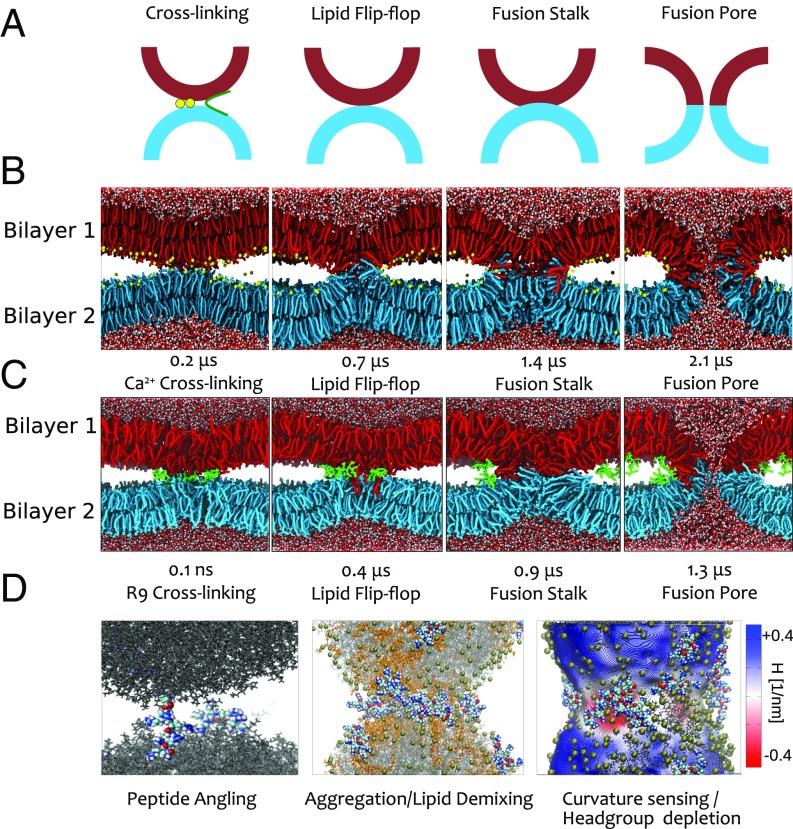
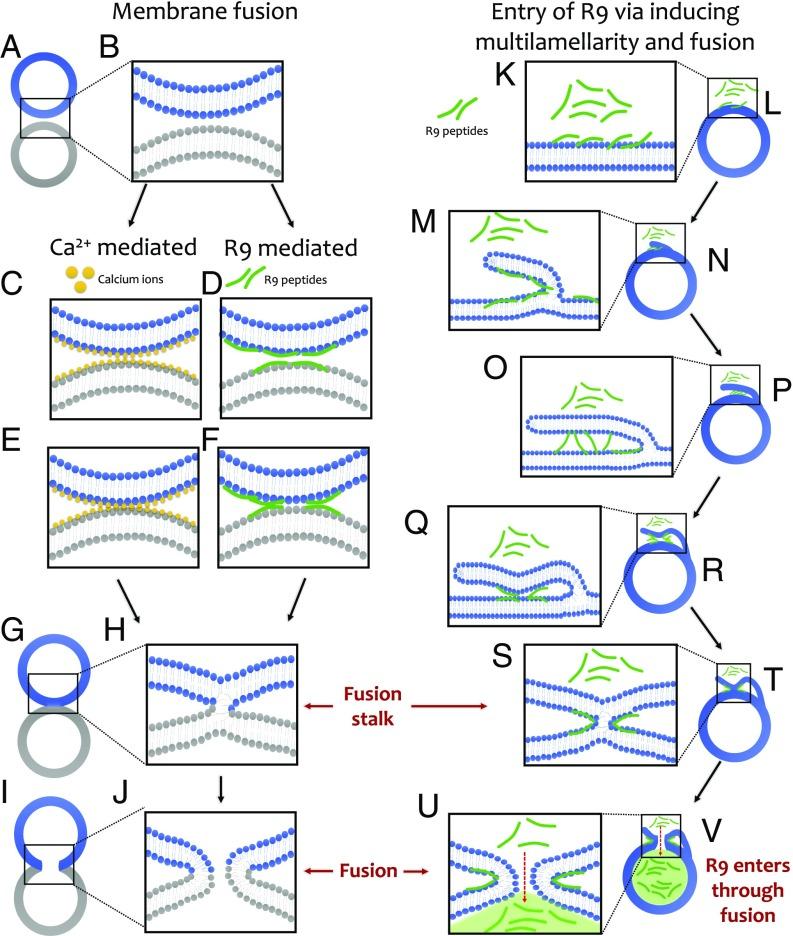
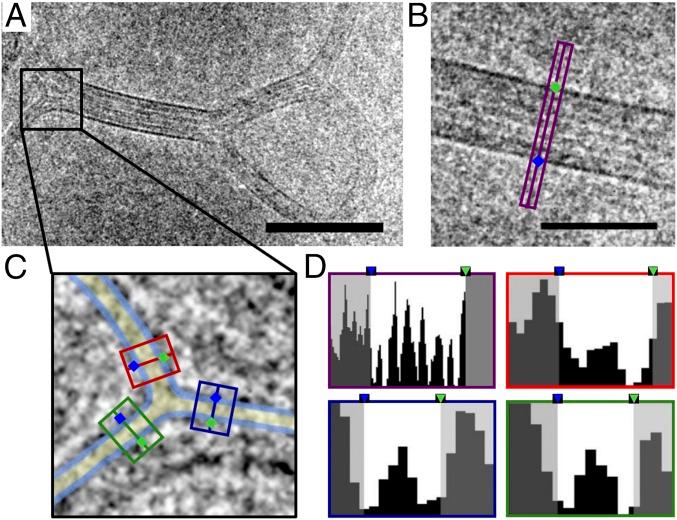
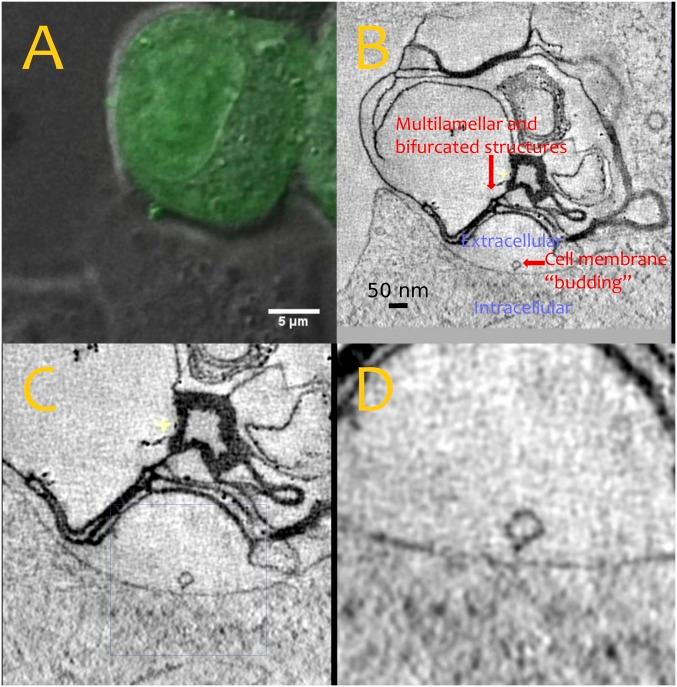
Arginine-rich cell-penetrating peptides do not enter cells by directly passing through a lipid membrane; they instead passively enter vesicles and live cells by inducing membrane multilamellarity and fusion. The molecular picture of this penetration mode, which differs qualitatively from the previously proposed direct mechanism, is provided by molecular dynamics simulations. The kinetics of vesicle agglomeration and fusion by an iconic cell-penetrating peptide-nonaarginine-are documented via real-time fluorescence techniques, while the induction of multilamellar phases in vesicles and live cells is demonstrated by a combination of electron and fluorescence microscopies. This concert of experiments and simulations reveals that the identified passive cell penetration mechanism bears analogy to vesicle fusion induced by calcium ions, indicating that the two processes may share a common mechanistic origin.
富含精氨酸的细胞穿透肽并非直接穿过脂膜进入细胞;相反,它们通过诱导膜的多层化和融合而被动地进入囊泡和活细胞。分子动力学模拟提供了这种穿透模式的分子图像,它与之前提出的直接机制在质上有所不同。通过实时荧光技术记录标志性的细胞穿透肽-九聚精氨酸引起的囊泡聚集和融合的动力学,而通过电子和荧光显微镜的组合证明了囊泡和活细胞中多层相的诱导。这一系列的实验和模拟表明,所确定的被动细胞穿透机制与钙离子诱导的囊泡融合具有类似性,表明这两个过程可能具有共同的机制起源。

 Zotero 插件