
无菌小鼠中长链非编码 RNA 和蛋白质编码基因的协调调控。
Coordinate regulation of long non-coding RNAs and protein-coding genes in germ-free mice.
机构信息
Department of Environmental and Occupational Health Sciences, University of Washington, 4225 Roosevelt Way NE, Seattle, WA, 98105, USA.
出版信息
BMC Genomics. 2018 Nov 21;19(1):834. doi: 10.1186/s12864-018-5235-3.
BACKGROUND
Long non-coding RNAs (lncRNAs) are increasingly recognized as regulators of tissue-specific cellular functions and have been shown to regulate transcriptional and translational processes, acting as signals, decoys, guides, and scaffolds. It has been suggested that some lncRNAs act in cis to regulate the expression of neighboring protein-coding genes (PCGs) in a mechanism that fine-tunes gene expression. Gut microbiome is increasingly recognized as a regulator of development, inflammation, host metabolic processes, and xenobiotic metabolism. However, there is little known regarding whether the gut microbiome modulates lncRNA gene expression in various host metabolic organs. The goals of this study were to 1) characterize the tissue-specific expression of lncRNAs and 2) identify and annotate lncRNAs differentially regulated in the absence of gut microbiome.
RESULTS
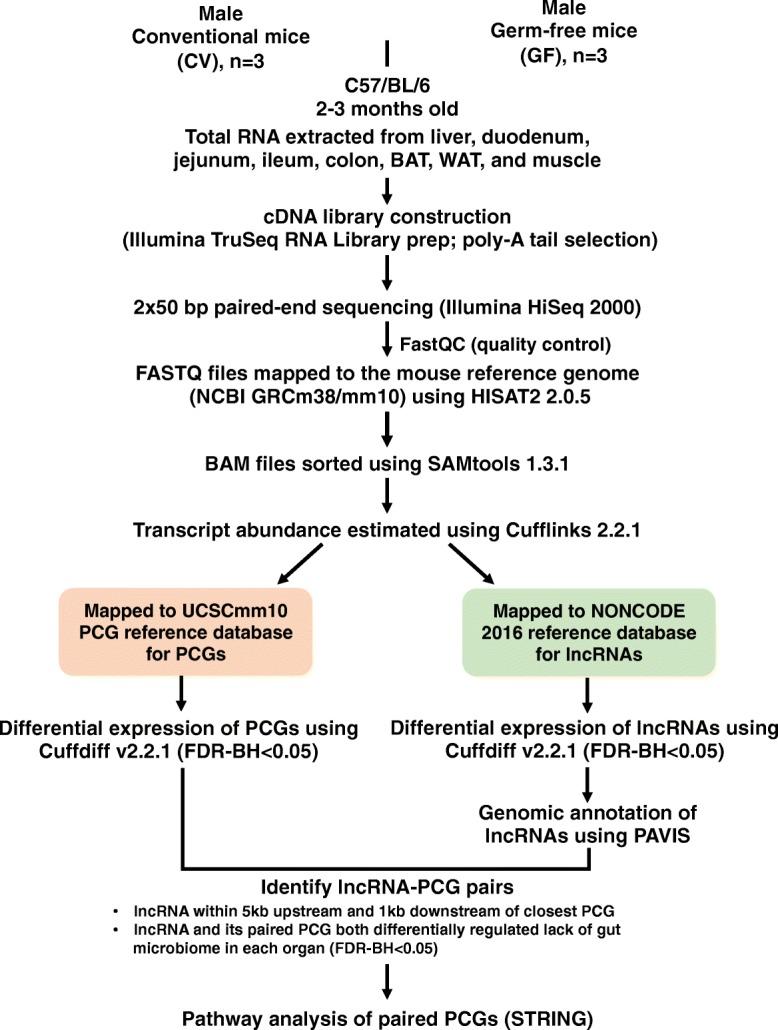
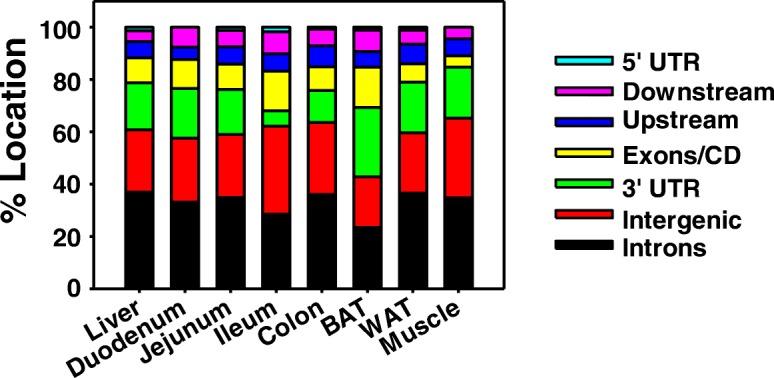
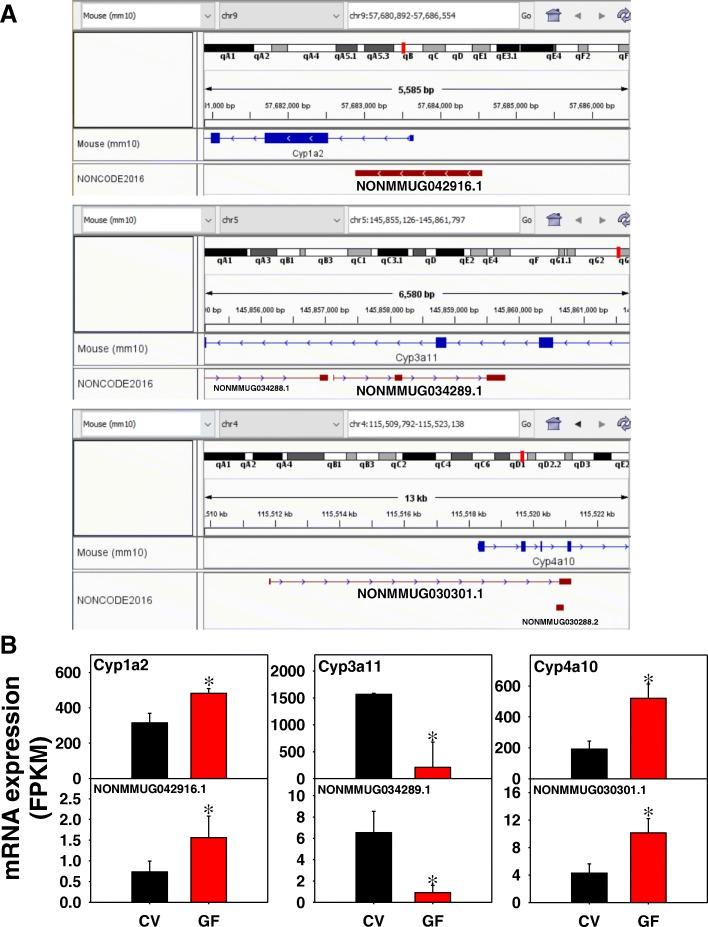
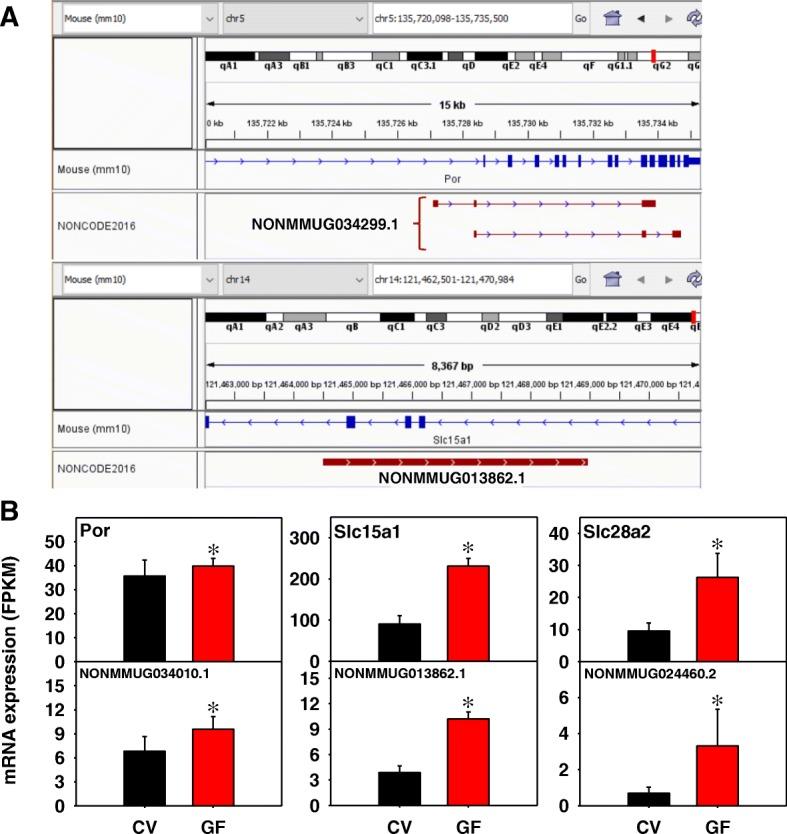
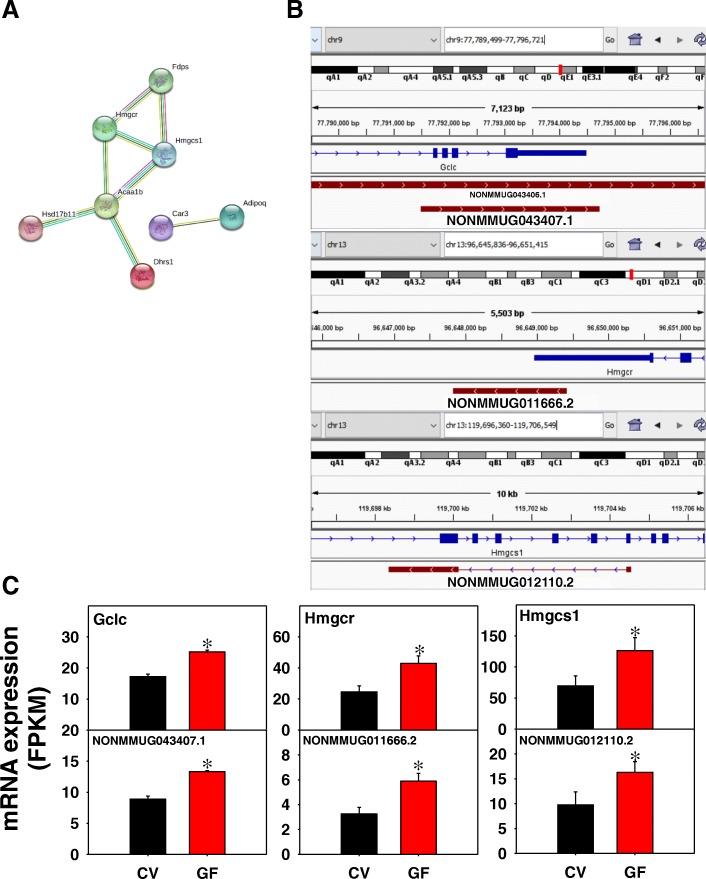
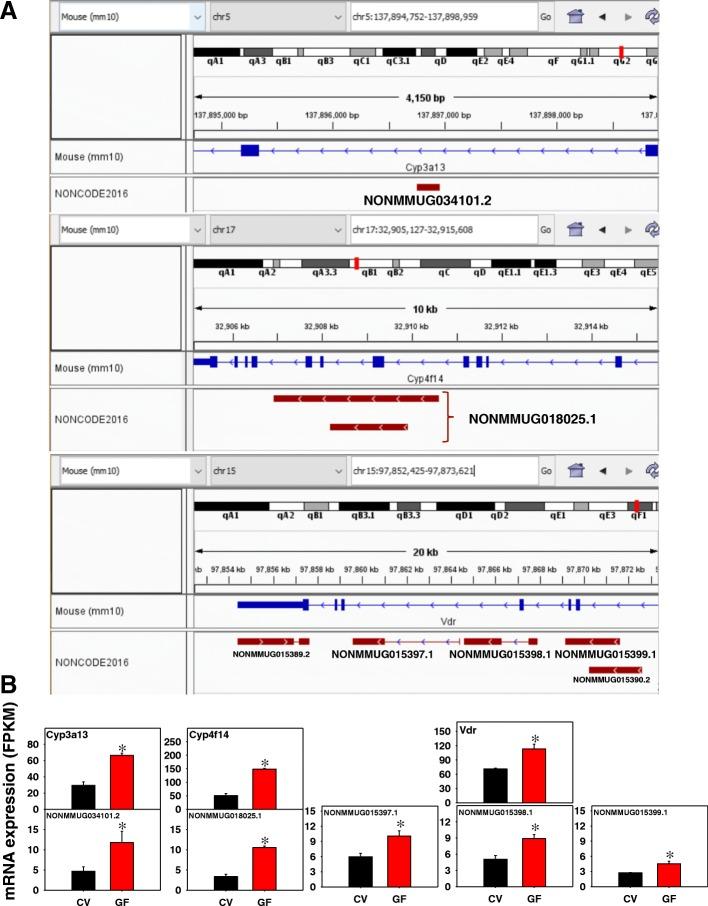
Total RNA was isolated from various tissues (liver, duodenum, jejunum, ileum, colon, brown adipose tissue, white adipose tissue, and skeletal muscle) from adult male conventional and germ-free mice (n = 3 per group). RNA-Seq was conducted and reads were mapped to the mouse reference genome (mm10) using HISAT. Transcript abundance and differential expression was determined with Cufflinks using the reference databases NONCODE 2016 for lncRNAs and UCSC mm10 for PCGs. Although the constitutive expression of lncRNAs was ubiquitous within the enterohepatic (liver and intestine) and the peripheral metabolic tissues (fat and muscle) in conventional mice, differential expression of lncRNAs by lack of gut microbiota was highly tissue specific. Interestingly, the majority of gut microbiota-regulated lncRNAs were in jejunum. Most lncRNAs were co-regulated with neighboring PCGs. STRING analysis showed that differentially expressed PCGs in proximity to lncRNAs form tissue-specific networks, suggesting that lncRNAs may interact with gut microbiota/microbial metabolites to regulate tissue-specific functions.
CONCLUSIONS
This study is among the first to demonstrate that gut microbiota critically regulates the expression of lncRNAs not only locally in intestine but also remotely in other metabolic organs, suggesting that common transcriptional machinery may be shared to transcribe lncRNA-PCG pairs, and lncRNAs may interact with PCGs to regulate tissue-specific pathways.
背景
长非编码 RNA(lncRNA)越来越被认为是组织特异性细胞功能的调节剂,并且已经证明其可以调节转录和翻译过程,充当信号、诱饵、向导和支架。有人认为,一些 lncRNA 在顺式作用中调节邻近蛋白编码基因(PCG)的表达,这种机制可以精细调节基因表达。肠道微生物组越来越被认为是调节发育、炎症、宿主代谢过程和异生物质代谢的调节剂。然而,对于肠道微生物组是否调节各种宿主代谢器官中的 lncRNA 基因表达,知之甚少。本研究的目的是 1)描述 lncRNA 的组织特异性表达,2)鉴定和注释在没有肠道微生物组的情况下差异调节的 lncRNA。
结果
从成年雄性常规和无菌小鼠的各种组织(肝脏、十二指肠、空肠、回肠、结肠、棕色脂肪组织、白色脂肪组织和骨骼肌)中分离总 RNA(n=每组 3 只)。使用 HISAT 将 RNA-Seq 进行测序,并将读取映射到小鼠参考基因组(mm10)。使用 Cufflinks 使用 NONCODE 2016 作为 lncRNA 的参考数据库和 UCSC mm10 作为 PCG 的参考数据库来确定转录物丰度和差异表达。尽管在常规小鼠的肠肝(肝脏和肠道)和外周代谢组织(脂肪和肌肉)中,lncRNA 的组成性表达是普遍存在的,但缺乏肠道微生物群时 lncRNA 的差异表达具有高度的组织特异性。有趣的是,大多数由肠道微生物群调节的 lncRNA 位于空肠中。大多数 lncRNA 与相邻 PCG 共同调节。STRING 分析表明,与 lncRNA 接近的差异表达 PCG 形成组织特异性网络,这表明 lncRNA 可能与肠道微生物群/微生物代谢物相互作用以调节组织特异性功能。
结论
本研究是首次证明肠道微生物群不仅在肠道局部,而且在其他代谢器官中都能显著调节 lncRNA 的表达,这表明共同的转录机制可能用于转录 lncRNA-PCG 对,lncRNA 可能与 PCG 相互作用以调节组织特异性途径。







 Zotero 插件