
鉴定RPL5和RPL10作为非典型畸胎样/横纹肌样瘤的新型诊断生物标志物。
Identification of RPL5 and RPL10 as novel diagnostic biomarkers of Atypical teratoid/rhabdoid tumors.
作者信息
Ren Yanming, Tao Chuanyuan, Wang Xiliang, Ju Yan
机构信息
1Department of Neurosurgery, West China Hospital of Sichuan University, No. 37 Guo Xue Xiang, Chengdu, Sichuan China.
2Beijing Institute of Genomics, Chinese Academy of Sciences, Beijing, China.
出版信息
Cancer Cell Int. 2018 Nov 20;18:190. doi: 10.1186/s12935-018-0681-1. eCollection 2018.
BACKGROUND
Rhabdoid tumors (RTs) are aggressive tumors that occur most frequently in children under 2 years old, which often invade kidney (KRTs) and Center Nervous System, named Atypical teratoid/rhabdoid tumors (AT/RTs). RTs often progress fast and lead to a high lethality. RTs have a low incidence, we can hardly accumulate enough samples to elicit the diagnosis. More importantly, histologically, RTs present a host of neural, epithelial, mesenchymal, or ependymal patterns, which makes them rather variable and difficult to diagnose. Molecularly, RTs are diagnosed mainly on the lack of SMARCB1/INI1 protein expression, which, on the one hand, accounts for 75% of RTs, on the other hand, loss of expression of SMARCB1 is not exclusive to RTs. So, there is a need to find more accurate diagnose markers of RTs.
METHODS
In this study, we analyzed 109 samples including AT/RT, KRT and corresponding normal samples downloaded form NCBI GEO database. First, we identified the differentially expressed lncRNAs and PCGs in AT/RT, KRT and corresponding normal samples. Second, we evaluated the co-expression relationship between lncRNA and PCG, and defined four types of the dysregulated PCG-lncRNA pairs. Third, we compared the differentially expressed genes, the dysregulated PCG-lncRNA pairs and commonly known cancer genes, we get potential diagnostic markers. Then, the potential diagnostic markers were subjected to Receiver operating characteristic (ROC) analysis to assess the diagnostic accuracy. Importantly, differential expression of the marker genes in different tumors was shown to distinguish AT/RT and KRT from other pediatric tumors specifically.
RESULTS
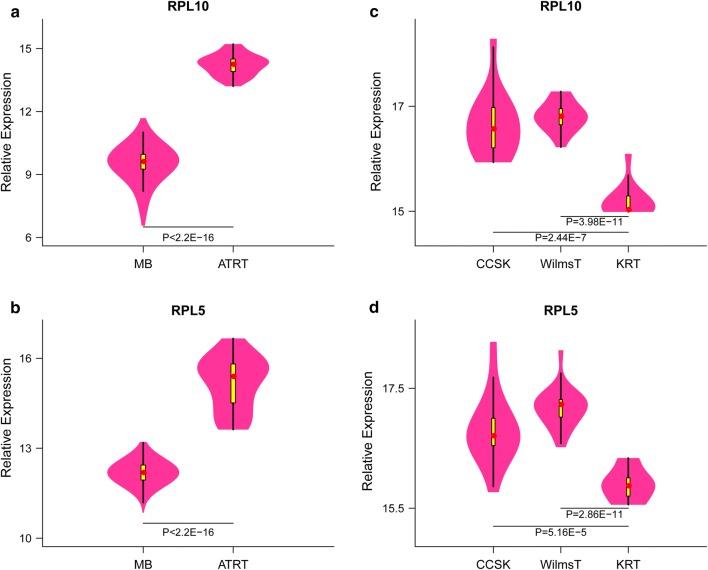
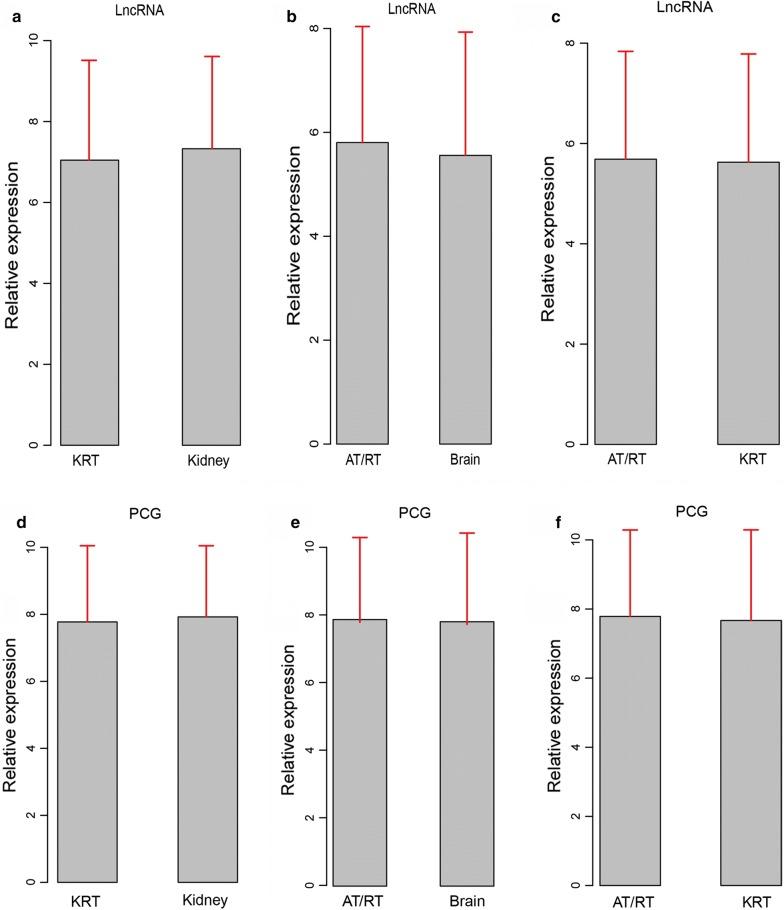
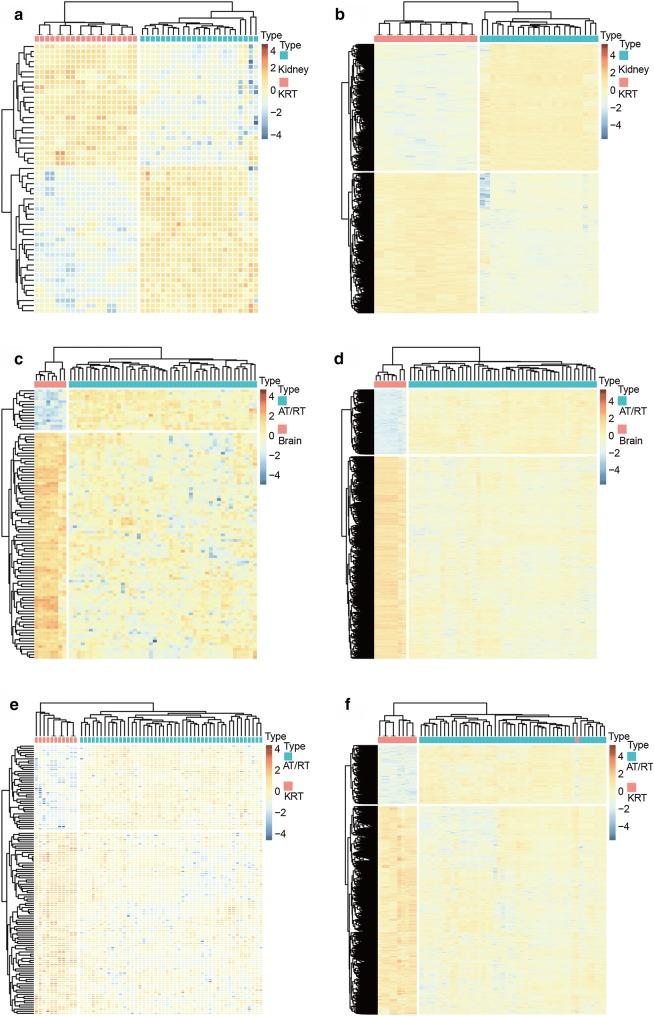
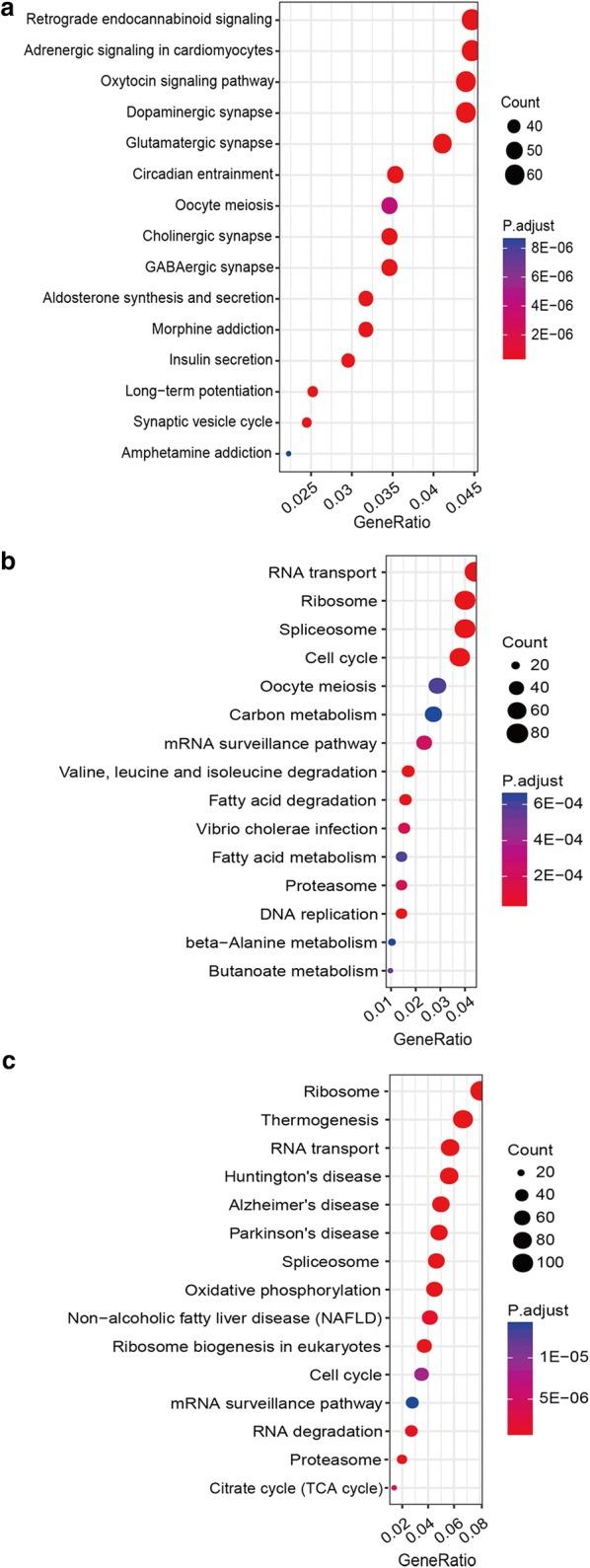
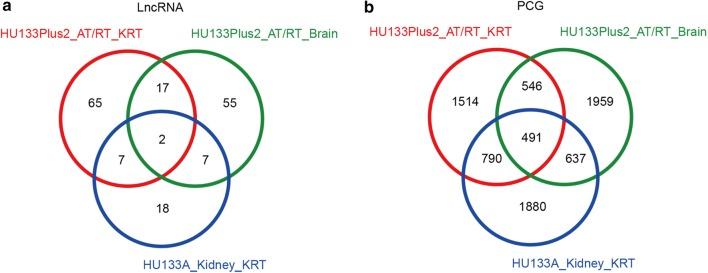
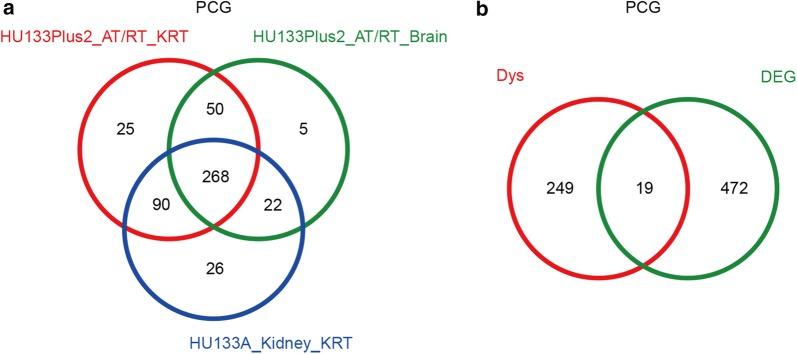
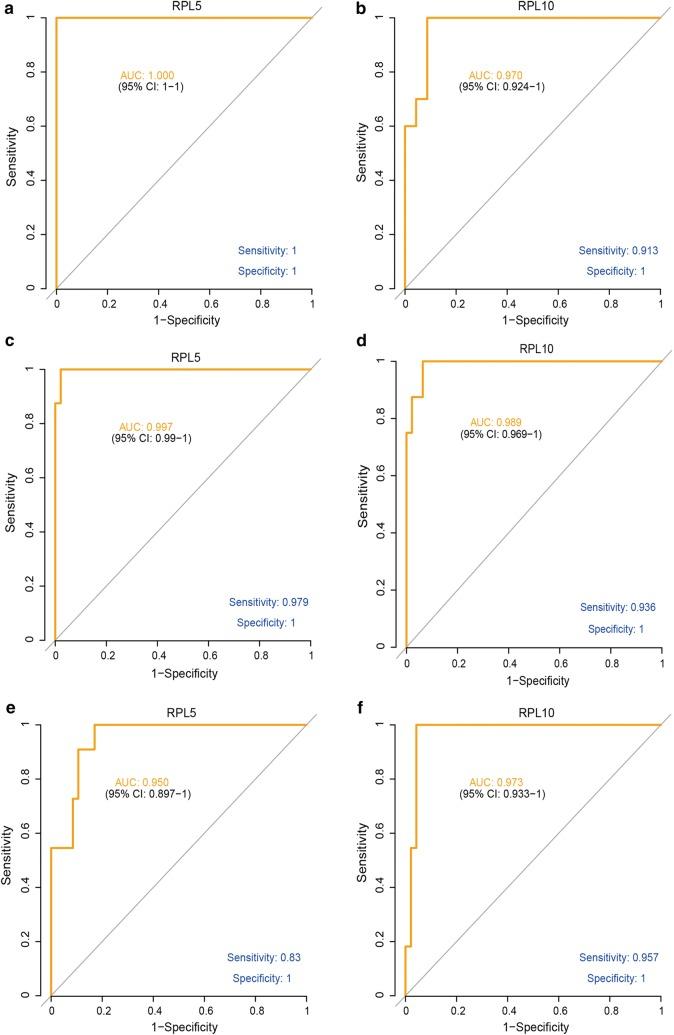
We compared the expression profiles between 47 AT/RTs, 31 KRTs, 8 normal brain samples, and 23 normal kidney samples. After applying a stringent set of criteria on the gene expression profiles, we identified 3667 PCGs and 81 lncRNAs differentially expressed in AT/RT, 3809 PCGs and 34 lncRNAs differentially expressed in KRT tissues. Next, we compared the three sets(AT/RT versus control brain samples, KRT versus control kidney samples, and AT/RT versus KRT) of differentially expressed lncRNAs and PCGs, 491 PCGs and 2 lncRNAs appeared in all three sets. We examined the correlation of the expression levels of these genes in the 'three-set overlap' group and identified four types of dysregulated lncRNAs and PCGs. By compared these genes to the well-known cancer driver genes, 19 PCGs were selected as potential candidates of diagnostic markers. Filtered with the number of the corresponding co-expressed lncRNA (namely "degree"), eight PCGs with more than five lncRNAs in the 'three-set overlap' group were selected as candidate diagnostic markers. Among them, RPL5 and RPL10 exhibited high sensitivity and specificity in diagnosis of AT/RT and KRT. However, when these two genes were used to distinguish AT/RT and KRT from other pediatric tumors, only AT/RT can be distinguished from medulloblastoma.
CONCLUSIONS
Our study mined existing GEO datasets for novel diagnostic markers associated with Rhabdoid tumors, and identified RPL5 and RPL10 as potential diagnostic markers for AT/RT. These two biomarkers may be used as supplementary biomarkers to canonical diagnostic tools such as biopsy and immunohistochemistry.
背景
横纹肌样瘤(RTs)是一种侵袭性肿瘤,最常发生于2岁以下儿童,常侵犯肾脏(肾横纹肌样瘤,KRTs)和中枢神经系统,称为非典型畸胎样/横纹肌样瘤(AT/RTs)。RTs通常进展迅速,致死率高。RTs发病率低,很难积累足够的样本以得出诊断结果。更重要的是,在组织学上,RTs呈现出多种神经、上皮、间充质或室管膜模式,这使得它们变化很大且难以诊断。在分子层面,RTs主要通过缺乏SMARCB1/INI1蛋白表达来诊断,一方面,这占RTs的75%,另一方面,SMARCB1表达缺失并非RTs所特有。因此,需要找到更准确的RTs诊断标志物。
方法
在本研究中,我们分析了从NCBI GEO数据库下载的109个样本,包括AT/RT、KRT及相应的正常样本。首先,我们鉴定了AT/RT、KRT及相应正常样本中差异表达的lncRNA和蛋白质编码基因(PCG)。其次,我们评估了lncRNA与PCG之间的共表达关系,并定义了四种类型的失调PCG-lncRNA对。第三,我们比较了差异表达基因、失调的PCG-lncRNA对与已知的癌症基因,得到潜在的诊断标志物。然后,对潜在诊断标志物进行受试者工作特征(ROC)分析以评估诊断准确性。重要的是,标志物基因在不同肿瘤中的差异表达被证明能特异性地区分AT/RT和KRT与其他儿科肿瘤。
结果
我们比较了47个AT/RTs、31个KRTs、8个正常脑样本和23个正常肾样本的表达谱。在对基因表达谱应用一套严格标准后,我们鉴定出在AT/RT中差异表达的3667个PCG和81个lncRNA,在KRT组织中差异表达的3809个PCG和34个lncRNA。接下来,我们比较了三组(AT/RT与对照脑样本、KRT与对照肾样本以及AT/RT与KRT)差异表达的lncRNA和PCG,491个PCG和2个lncRNA出现在所有三组中。我们检查了“三组重叠”组中这些基因表达水平的相关性,并鉴定出四种类型的失调lncRNA和PCG。通过将这些基因与知名的癌症驱动基因进行比较,选择了19个PCG作为诊断标志物的潜在候选者。根据相应共表达lncRNA的数量(即“度”)进行筛选,在“三组重叠”组中选择了8个与5个以上lncRNA共表达的PCG作为候选诊断标志物。其中,RPL5和RPL10在AT/RT和KRT的诊断中表现出高敏感性和特异性。然而,当用这两个基因区分AT/RT和KRT与其他儿科肿瘤时,仅能将AT/RT与髓母细胞瘤区分开。
结论
我们的研究挖掘了现有的GEO数据集以寻找与横纹肌样瘤相关的新型诊断标志物,并确定RPL5和RPL10为AT/RT的潜在诊断标志物。这两种生物标志物可作为活检和免疫组织化学等经典诊断工具的补充生物标志物。
 Zotero 插件