
高级糖基化终末产物(ALEs)作为 RAGE 配体:解释原因的质谱和计算研究。
Advanced lipoxidation end products (ALEs) as RAGE binders: Mass spectrometric and computational studies to explain the reasons why.
机构信息
Department of Pharmaceutical Sciences, Via Mangiagalli 25, Università degli Studi di Milano, 20133 Milano, Italy.
Department of Biosciences, Via Celoria 26, Università degli Studi di Milano, 20133 Milano, Italy.
出版信息
Redox Biol. 2019 May;23:101083. doi: 10.1016/j.redox.2018.101083. Epub 2018 Dec 18.
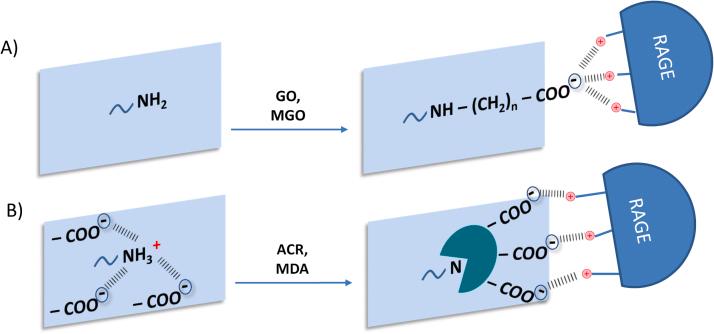
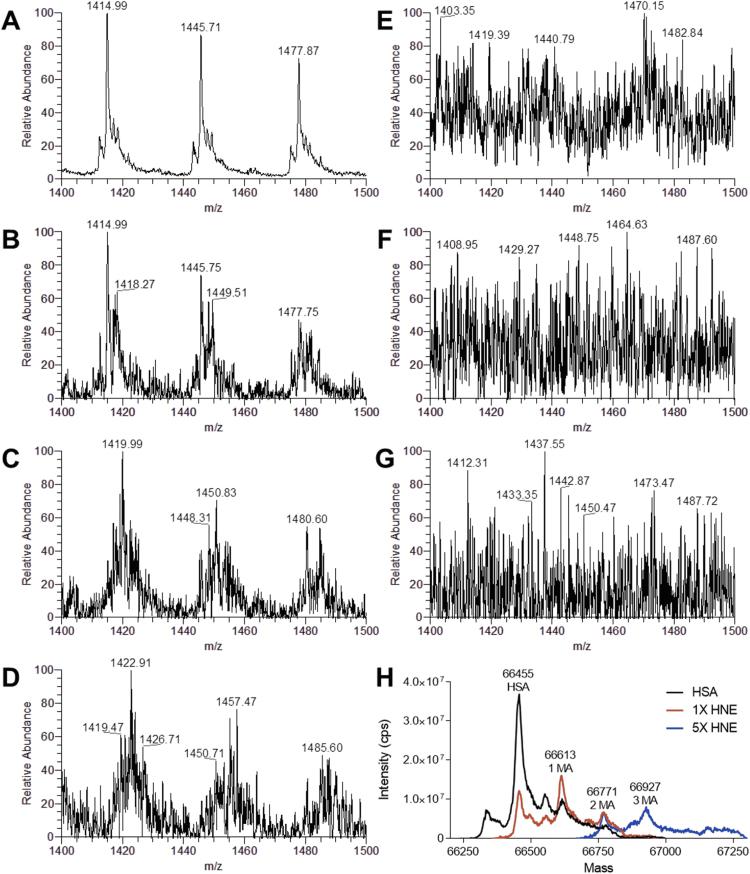
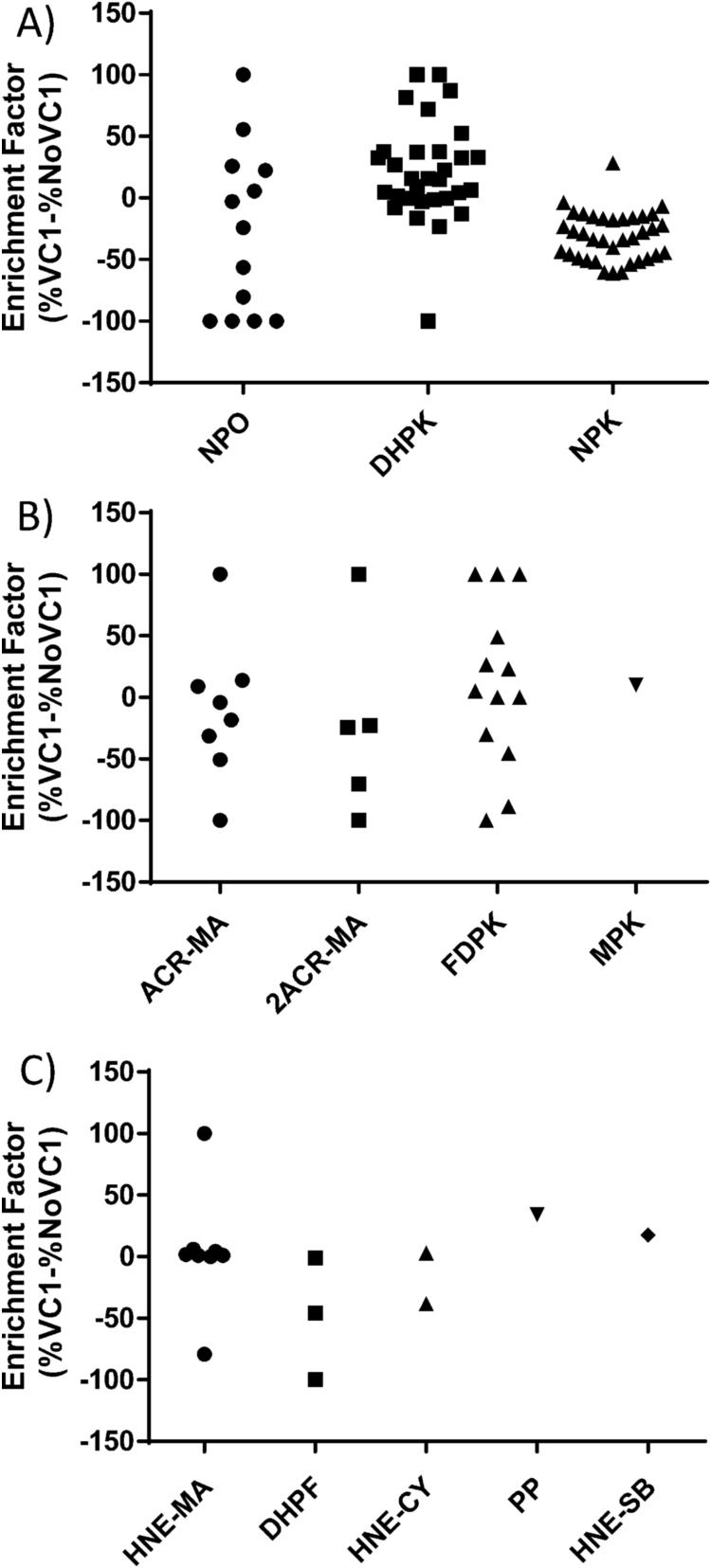
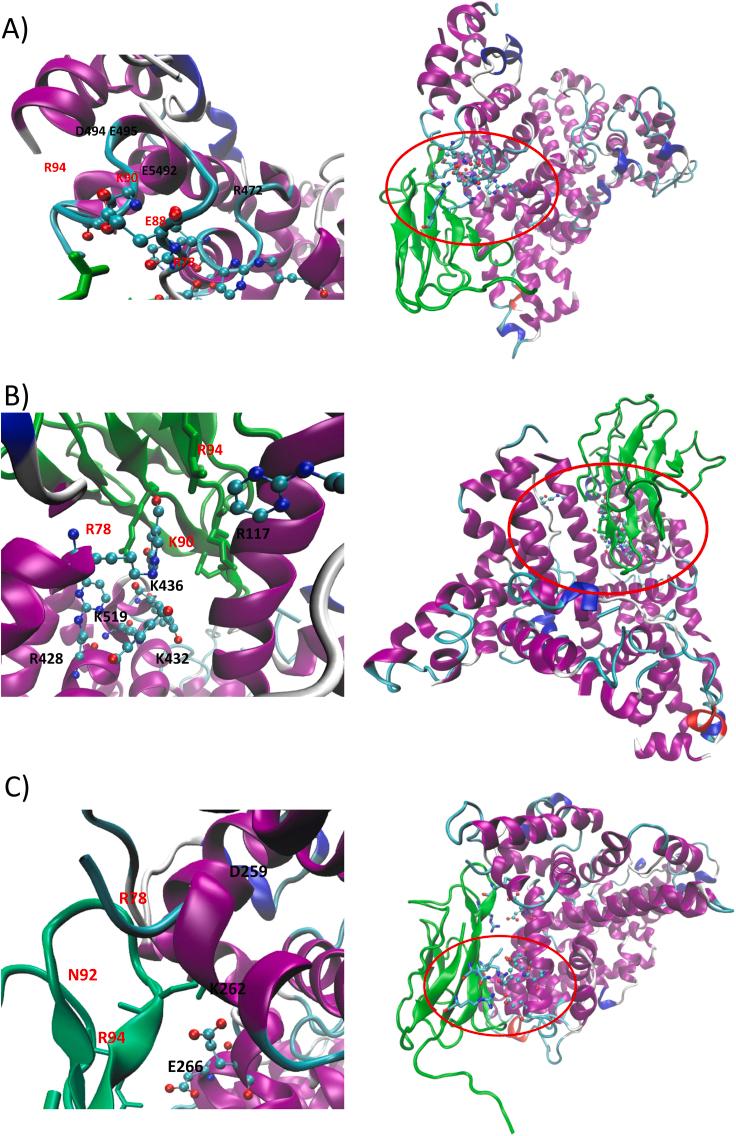
Advanced Lipoxidation End-products (ALEs) are modified proteins that can act as pathogenic factors in several chronic diseases. Several molecular mechanisms have so far been considered to explain the damaging action of ALEs and among these a pathway involving the receptor for advanced glycation end products (RAGE) should be considered. The aim of the present work is to understand if ALEs formed from lipid peroxidation derived reactive carbonyl species (RCS) are able to act as RAGE binders and also to gain a deeper insight into the molecular mechanisms involved in the protein-protein engagement. ALEs were produced in vitro, by incubating human serum albumin (HSA) with 4-hydroxy-trans- 2-nonenal (HNE), acrolein (ACR) and malondialdehyde (MDA). The identification of ALEs was performed by MS. ALEs were then subjected to the VC1 Pull-Down assay (VC1 is the ligand binding domain of RAGE) and the enrichment factor (the difference between the relative abundance in the enriched sample minus the amount in the untreated one) as an index of affinity, was determined. Computation studies were then carried out to explain the factors governing the affinity of the adducted moieties and the site of interaction on adducted HSA for VC1-binding. The in silico analyses revealed the key role played by those adducts which strongly reduce the basicity of the modified residues and thus occur at their neutral state at physiological conditions (e.g. the MDA adducts, dihydropyridine-Lysine (DHPK) and N-2-pyrimidyl-ornithine (NPO), and acrolein derivatives, N-(3-formyl-3,4-dehydro-piperidinyl) lysine, FDPK). These neutral adducts become unable to stabilize ion-pairs with the surrounding negative residues which thus can contact the RAGE positive residues. In conclusion, ALEs derived from lipid peroxidation-RCS are binders of RAGE and this affinity depends on the effect of the adduct moiety to reduce the basicity of the target amino acid and on the acid moieties surrounding the aminoacidic target.
高级糖基化终产物(ALEs)是经过修饰的蛋白质,可作为几种慢性疾病的致病因素。迄今为止,已经提出了几种分子机制来解释 ALE 的损伤作用,其中应考虑涉及晚期糖基化终产物受体(RAGE)的途径。本工作的目的是了解是否可以将脂质过氧化衍生的反应性羰基物质(RCS)形成的 ALE 作为 RAGE 结合物,并深入了解涉及蛋白质-蛋白质结合的分子机制。通过在 4-羟基-反式-2-壬烯醛(HNE)、丙烯醛(ACR)和丙二醛(MDA)存在下孵育人血清白蛋白(HSA),在体外产生 ALE。通过 MS 鉴定 ALE。然后,将 ALE 进行 VC1 下拉测定(VC1 是 RAGE 的配体结合域),并确定作为亲和力指标的富集因子(富集样品中相对丰度与未处理样品中相对丰度的差异)。然后进行计算研究,以解释修饰部分的亲和力和与 VC1 结合的修饰 HSA 上的相互作用位点的控制因素。计算机分析表明,在生理条件下处于中性状态的那些加合物(例如 MDA 加合物,二氢吡啶赖氨酸(DHPK)和 N-2-嘧啶基-鸟氨酸(NPO)以及丙烯醛衍生物,N-(3-甲酰基-3,4-二氢哌啶基)赖氨酸,FDPK)强烈降低了修饰残基的碱性,从而起着关键作用。这些中性加合物不能与周围的负残基稳定离子对,因此可以与 RAGE 正残基接触。总之,脂质过氧化-RCS 衍生的 ALE 是 RAGE 的结合物,这种亲和力取决于加合物部分降低靶氨基酸碱性的效果以及围绕靶氨基酸的酸部分。



 Zotero 插件