
比较脊髓麻醉和全身麻醉对埃塞俄比亚亚的斯亚贝巴一家三级医院中接受剖宫产的子痫前期产妇的影响。
Comparing the Effect of Spinal and General Anaesthesia for Pre-Eclamptic Mothers Who Underwent Caesarean Delivery in A Tertiary, Addis Ababa, Ethiopia.
作者信息
Aregawi Adugna, Terefe Tsehay, Admasu Wossenyeleh, Akalu Leulayehu
机构信息
Department of Anesthesia College of Health Sciences Addis Ababa University Addis Ababa, Ethiopi.
Department of Anesthesia, Blac Lion Specialized Hospital, Addis Ababa, Ethiopia.
出版信息
Ethiop J Health Sci. 2018 Jul;28(4):443-450. doi: 10.4314/ejhs.v28i4.10.
BACKGROUND
Opinions are controversial regarding the use of general and spinal anesthesia in pre-eclamptic mothers undergoing Caesarean section. Some studies recommended avoiding spinal anesthesia in pre-eclamptic patients because of concern for sudden severe hypotension, while other studies support the use of spinal anesthesia as first choice reasoning less post-operative morbidity and mortality. This study aims to compare maternal outcome among pre-eclamptic women undergone caesarian delivery under general and spinal anesthesia.
METHODS AND PATIENTS
A retrospective comparative cross-sectional study was conducted to compare maternal outcome. All pre-eclamptic mothers who underwent Caesarian section in Black Lion Specialized Hospital from October 2014 to October 2016 were included in the study. Data entry and analysis were conducted using SPSS version 20. Student's T-test was used to compare the outcome in both groups and p value < 0.05 was set as cut off point for statistical significance.
RESULTS
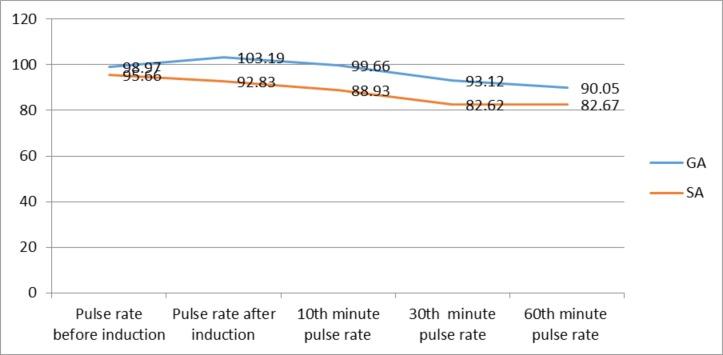
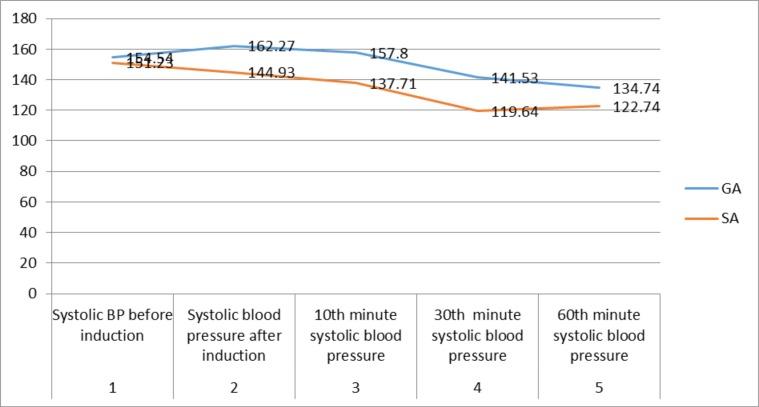
A total of 170 client documents were reviewed. The mean age of the study subjects was 28.18 ± 4.66 years, with median age 28 years (IQR: 25-30). Our study shows that both general and spinal anesthesia have no difference in terms of maternal survival status, days of hospital stay, post-operative admission to ICU, and post-operative complications. However, this study found a statistically significant higher post-operative blood pressure and pulse rate among general anesthesia groups compared with spinal anesthesia group.
CONCLUSION
Spinal anesthesia is safer than general anesthesia in terms of stable vital signs among pre-eclamptic women undergoing Cesarean section.
背景
对于子痫前期产妇剖宫产时全身麻醉和脊髓麻醉的使用,观点存在争议。一些研究建议避免对子痫前期患者使用脊髓麻醉,因为担心突然发生严重低血压,而其他研究则支持将脊髓麻醉作为首选,理由是术后发病率和死亡率较低。本研究旨在比较子痫前期妇女在全身麻醉和脊髓麻醉下进行剖宫产的产妇结局。
方法与患者
进行了一项回顾性比较横断面研究以比较产妇结局。纳入了2014年10月至2016年10月在黑狮专科医院接受剖宫产的所有子痫前期产妇。使用SPSS 20版进行数据录入和分析。采用学生t检验比较两组的结局,设定p值<0.05为具有统计学意义的截断点。
结果
共审查了170份患者文件。研究对象的平均年龄为28.18±4.66岁,中位年龄为28岁(四分位间距:25 - 30岁)。我们的研究表明,全身麻醉和脊髓麻醉在产妇生存状况、住院天数、术后入住重症监护病房情况及术后并发症方面均无差异。然而,本研究发现全身麻醉组术后血压和脉搏率在统计学上显著高于脊髓麻醉组。
结论
对于子痫前期妇女剖宫产,就生命体征稳定而言,脊髓麻醉比全身麻醉更安全。

 Zotero 插件