
酸性条件下的前列腺癌细胞和外泌体表现出碳酸酐酶 IX 表达和活性的增加。
Prostate cancer cells and exosomes in acidic condition show increased carbonic anhydrase IX expression and activity.
机构信息
a Department of Oncology and Molecular Medicine , National Institute of Health , Rome , Italy.
b National Research Council , Institute of Biosciences and BioResources , Naples , Italy.
出版信息
J Enzyme Inhib Med Chem. 2019 Dec;34(1):272-278. doi: 10.1080/14756366.2018.1538980.
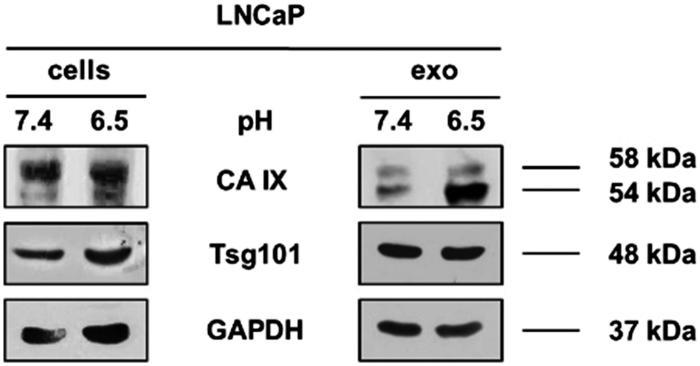
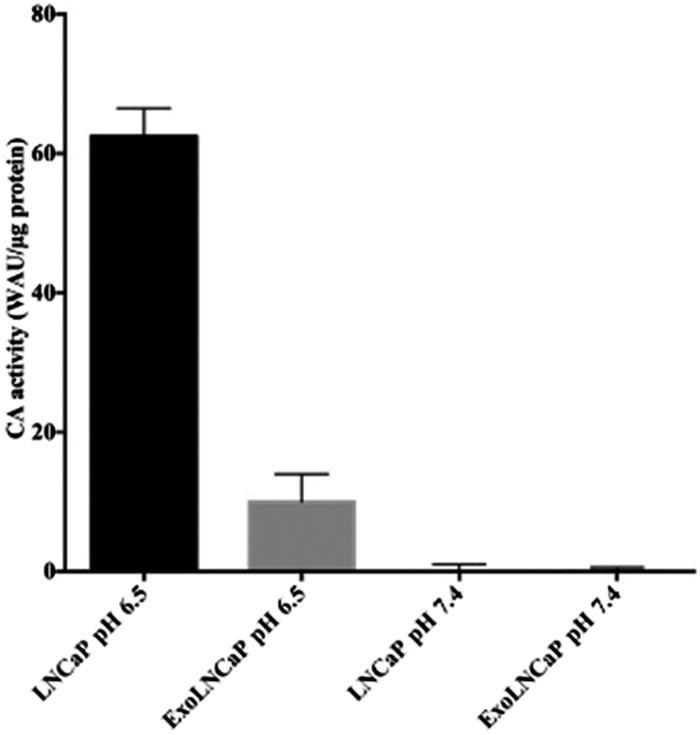
Acidity and hypoxia are crucial phenotypes of tumour microenvironment both contributing to the selection of malignant cells under a micro evolutionistic pressure. During the tumour progression, nanovesicles, called exosomes and the metalloenzyme carbonic anhydrase IX (CA IX) affect the tumour growth and proliferation. Exosomes are released into the tumour microenvironment and spilt all over the body, while CA IX is a tumour-associated protein overexpressed in many different solid tumours. In the present study, to better understand the relationships between exosomes and CA IX, it has been used an in vitro cellular model of cells cultured in different pH conditions. The results showed that the acidic microenvironment induced upregulation of both expression and activity of CA IX in cancer cells and their exosomes, together with increasing the number of released exosomes. These data strongly support the importance of CA IX as a cancer biomarker and as a valuable target of new anticancer therapies.
酸度和缺氧是肿瘤微环境的关键表型,都有助于在微观进化压力下选择恶性细胞。在肿瘤进展过程中,纳米囊泡,称为外泌体和金属酶碳酸酐酶 IX(CA IX),影响肿瘤的生长和增殖。外泌体被释放到肿瘤微环境中,并散布到全身,而 CA IX 是许多不同实体瘤中过表达的肿瘤相关蛋白。在本研究中,为了更好地理解外泌体和 CA IX 之间的关系,使用了在不同 pH 值条件下培养的细胞体外细胞模型。结果表明,酸性微环境诱导癌细胞及其外泌体中 CA IX 的表达和活性上调,同时增加了释放的外泌体数量。这些数据有力地支持了 CA IX 作为癌症生物标志物的重要性,以及作为新的抗癌疗法有价值的靶标。


 Zotero 插件