
肿瘤微环境的酸性和缺氧,肿瘤细胞释放细胞外囊泡过程中的一种正向相互作用。
Acidity and hypoxia of tumor microenvironment, a positive interplay in extracellular vesicle release by tumor cells.
作者信息
Peppicelli Silvia, Calorini Lido, Bianchini Francesca, Papucci Laura, Magnelli Lucia, Andreucci Elena
机构信息
Department of Experimental and Clinical Biomedical Sciences "Mario Serio", University of Florence, Florence, 50134, Italy.
出版信息
Cell Oncol (Dordr). 2025 Feb;48(1):27-41. doi: 10.1007/s13402-024-00969-z. Epub 2024 Jul 18.
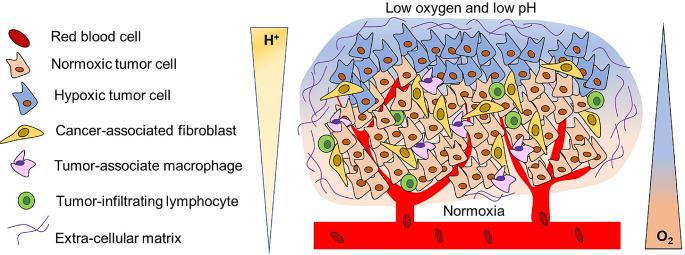
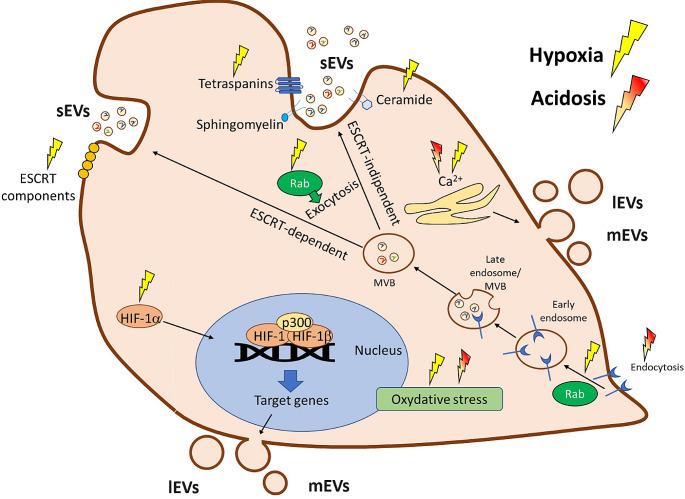
The complex and continuously evolving features of the tumor microenvironment, varying between tumor histotypes, are characterized by the presence of host cells and tumor cells embedded in a milieu shaped by hypoxia and low pH, resulting from the frequent imbalance between vascularity and tumor cell proliferation. These microenvironmental metabolic stressors play a crucial role in remodeling host cells and tumor cells, contributing to the stimulation of cancer cell heterogeneity, clonal evolution, and multidrug resistance, ultimately leading to progression and metastasis. The extracellular vesicles (EVs), membrane-enclosed structures released into the extracellular milieu by tumor/host cells, are now recognized as critical drivers in the complex intercellular communication between tumor cells and the local cellular components in a hypoxic/acidic microenvironment. Understanding the intricate molecular mechanisms governing the interactions between tumor and host cells within a hypoxic and acidic microenvironment, triggered by the release of EVs, could pave the way for innovative strategies to disrupt the complex interplay of cancer cells with their microenvironment. This approach may contribute to the development of an efficient and safe therapeutic strategy to combat cancer progression. Therefore, we review the major findings on the release of EVs in a hypoxic/acidic tumor microenvironment to appreciate their role in tumor progression toward metastatic disease.
肿瘤微环境具有复杂且不断演变的特征,不同肿瘤组织学类型之间存在差异,其特点是宿主细胞和肿瘤细胞存在于由缺氧和低pH值塑造的微环境中,这是由于血管生成与肿瘤细胞增殖之间频繁失衡所致。这些微环境代谢应激源在重塑宿主细胞和肿瘤细胞方面发挥着关键作用,促进癌细胞异质性、克隆进化和多药耐药性,最终导致肿瘤进展和转移。细胞外囊泡(EVs)是肿瘤/宿主细胞释放到细胞外微环境中的膜封闭结构,现在被认为是缺氧/酸性微环境中肿瘤细胞与局部细胞成分之间复杂细胞间通讯的关键驱动因素。了解由EVs释放引发的缺氧和酸性微环境中肿瘤与宿主细胞相互作用的复杂分子机制,可能为破坏癌细胞与其微环境复杂相互作用的创新策略铺平道路。这种方法可能有助于开发一种有效且安全的治疗策略来对抗肿瘤进展。因此,我们综述了缺氧/酸性肿瘤微环境中EVs释放的主要研究结果,以了解它们在肿瘤向转移性疾病进展中的作用。

 Zotero 插件