
参与视网膜视杆和视锥细胞中膜型鸟苷酸环化酶(ROS-GC)调节的碳酸氢根离子的作用方式。
Modes of Accessing Bicarbonate for the Regulation of Membrane Guanylate Cyclase (ROS-GC) in Retinal Rods and Cones.
机构信息
Department of Physiology and Biophysics, Boston University School of Medicine, Boston, MA 02118.
Research Divisions of Biochemistry and Molecular Biology, Unit of Regulatory and Molecular Biology, Salus University, Elkins Park, PA 19027.
出版信息
eNeuro. 2019 Feb 15;6(1). doi: 10.1523/ENEURO.0393-18.2019. eCollection 2019 Jan-Feb.
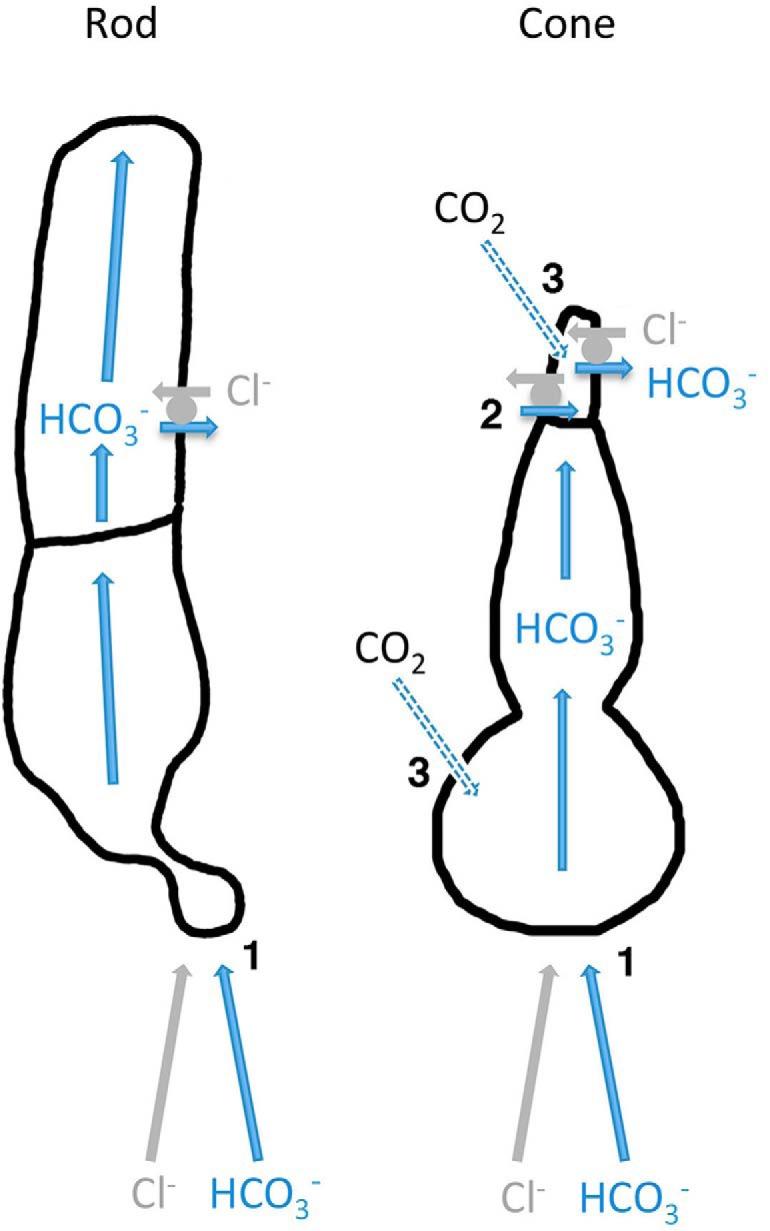
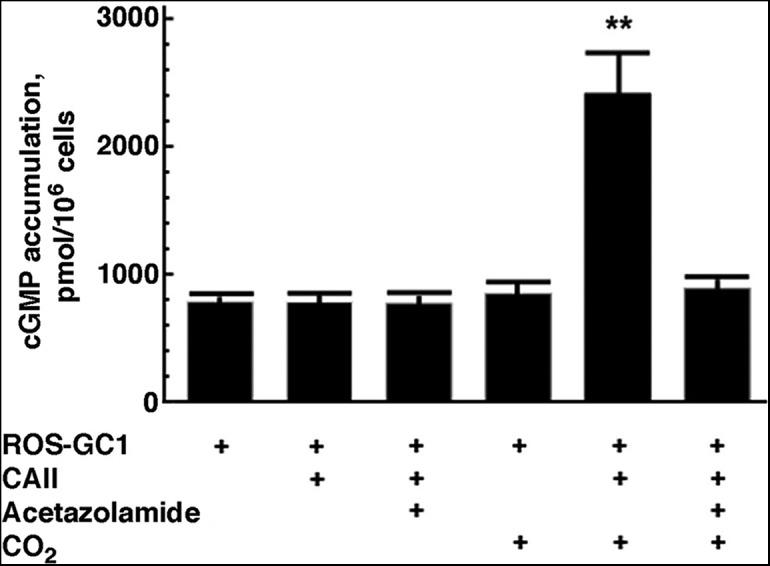
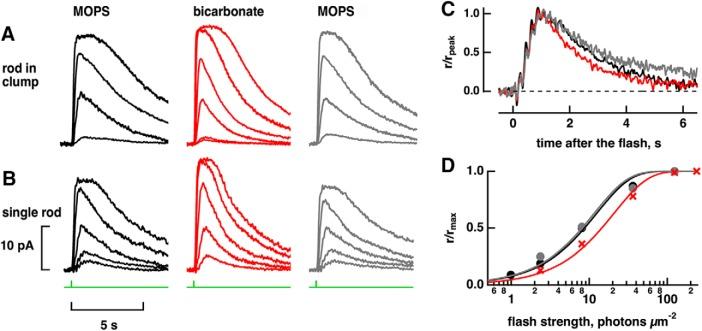
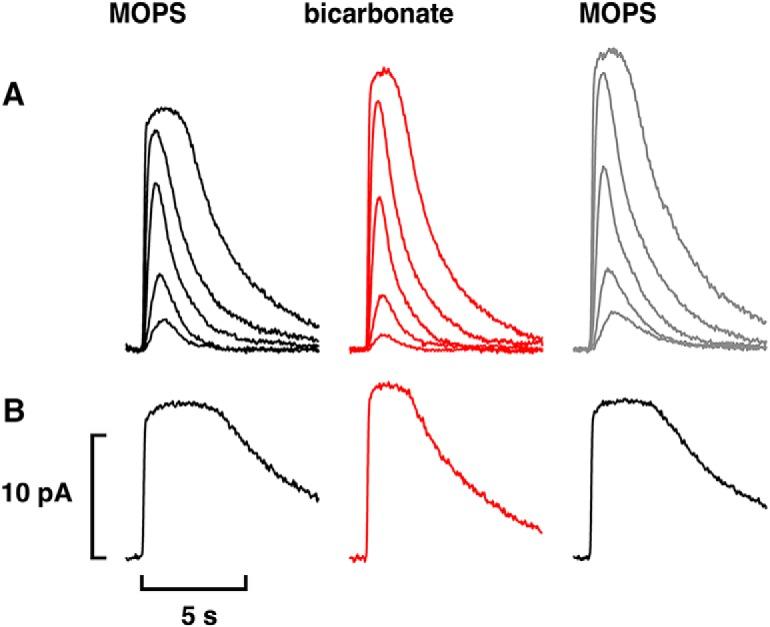
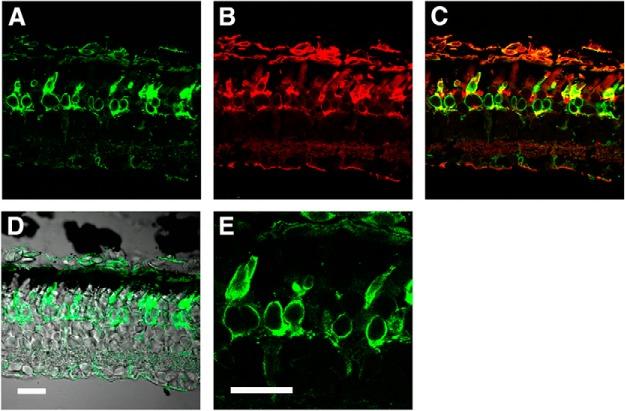
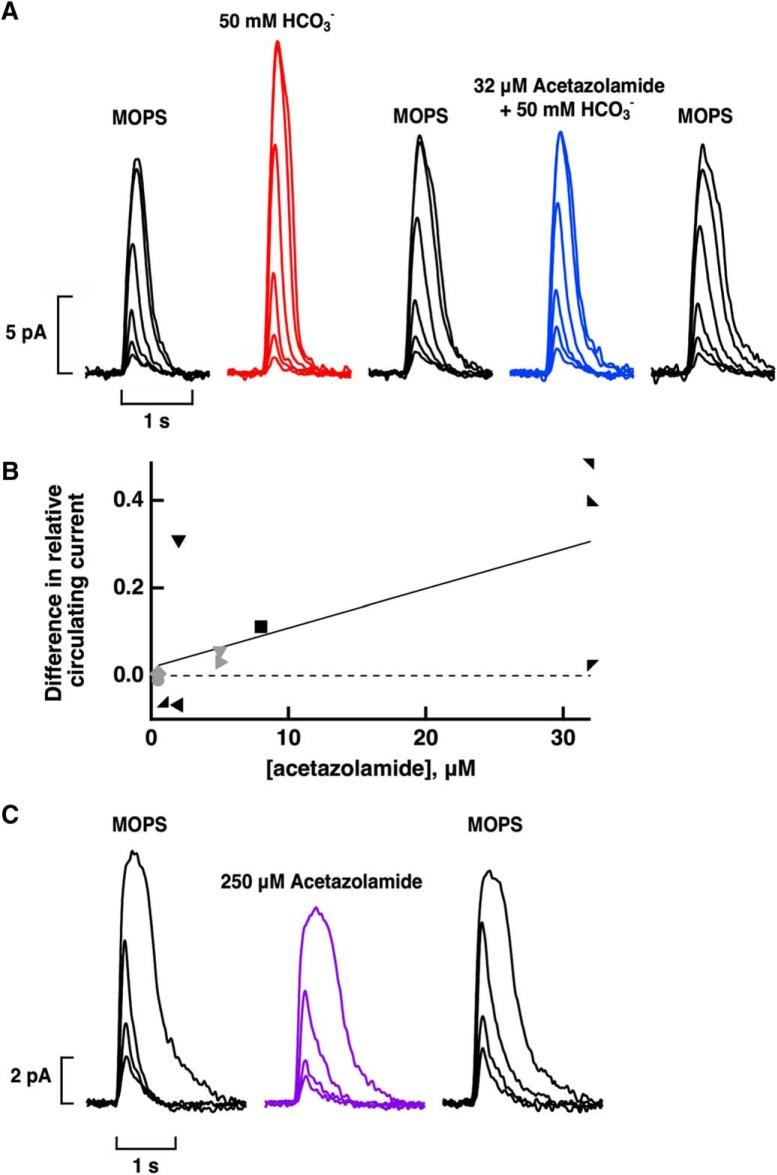
The membrane guanylate cyclase, ROS-GC, that synthesizes cyclic GMP for use as a second messenger for visual transduction in retinal rods and cones, is stimulated by bicarbonate. Bicarbonate acts directly on ROS-GC1, because it enhanced the enzymatic activity of a purified, recombinant fragment of bovine ROS-GC1 consisting solely of the core catalytic domain. Moreover, recombinant ROS-GC1 proved to be a true sensor of bicarbonate, rather than a sensor for CO. Access to bicarbonate differed in rods and cones of larval salamander, , of unknown sex. In rods, bicarbonate entered at the synapse and diffused to the outer segment, where it was removed by Cl-dependent exchange. In contrast, cones generated bicarbonate internally from endogenous CO or from exogenous CO that was present in extracellular solutions of bicarbonate. Bicarbonate production from both sources of CO was blocked by the carbonic anhydrase inhibitor, acetazolamide. Carbonic anhydrase II expression was verified immunohistochemically in cones but not in rods. In addition, cones acquired bicarbonate at their outer segments as well as at their inner segments. The multiple pathways for access in cones may support greater uptake of bicarbonate than in rods and buffer changes in its intracellular concentration.
膜鸟苷酸环化酶(ROS-GC)可将环鸟苷酸(cGMP)合成作为视网膜视杆和视锥细胞中视觉转导的第二信使,其受到碳酸氢盐的刺激。碳酸氢盐直接作用于 ROS-GC1,因为它增强了纯化的、仅由核心催化结构域组成的重组牛 ROS-GC1 片段的酶活性。此外,重组 ROS-GC1 被证明是碳酸氢盐的真正传感器,而不是 CO 的传感器。尚不清楚性别 的幼年蝾螈 的视杆和视锥细胞中,碳酸氢盐的进入方式存在差异。在视杆细胞中,碳酸氢盐在突触处进入并扩散到外节,在那里通过 Cl 依赖性交换被去除。相比之下,视锥细胞从内源性 CO 或外源性 CO (存在于含碳酸氢盐的细胞外液中)内部生成碳酸氢盐。碳酸酐酶抑制剂乙酰唑胺阻断了来自这两种 CO 源的碳酸氢盐的生成。免疫组织化学证实碳酸酐酶 II 在视锥细胞中表达,但不在视杆细胞中表达。此外,视锥细胞在外节和内节都能获得碳酸氢盐。视锥细胞中的多种进入途径可能支持比视杆细胞更多地摄取碳酸氢盐,并缓冲其细胞内浓度的变化。





 Zotero 插件