
在临床实践中实施肿瘤突变负荷(TMB)检测:关于检测要求的考量
Implementing TMB measurement in clinical practice: considerations on assay requirements.
作者信息
Büttner Reinhard, Longshore John W, López-Ríos Fernando, Merkelbach-Bruse Sabine, Normanno Nicola, Rouleau Etienne, Penault-Llorca Frédérique
机构信息
Institute of Pathology, University Hospital Cologne, Cologne, Germany.
Atrium Health, Carolinas Pathology Group, Charlotte, North Carolina, USA.
出版信息
ESMO Open. 2019 Jan 24;4(1):e000442. doi: 10.1136/esmoopen-2018-000442. eCollection 2019.
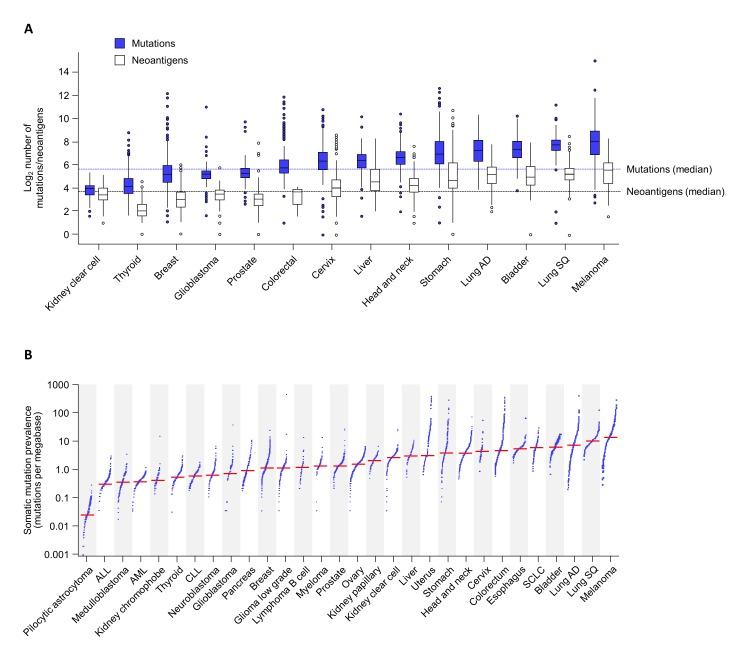
Clinical evidence demonstrates that treatment with immune checkpoint inhibitor immunotherapy agents can have considerable benefit across multiple tumours. However, there is a need for the development of predictive biomarkers that identify patients who are most likely to respond to immunotherapy. Comprehensive characterisation of tumours using genomic, transcriptomic, and proteomic approaches continues to lead the way in advancing precision medicine. Genetic correlates of response to therapy have been known for some time, but recent clinical evidence has strengthened the significance of high tumour mutational burden (TMB) as a biomarker of response and hence a rational target for immunotherapy. Concordantly, immune checkpoint inhibitors have changed clinical practice for lung cancer and melanoma, which are tumour types with some of the highest mutational burdens. TMB is an implementable approach for molecular biology and/or pathology laboratories that provides a quantitative measure of the total number of mutations in tumour tissue of patients and can be assessed by whole genome, whole exome, or large targeted gene panel sequencing of biopsied material. Currently, TMB assessment is not standardised across research and clinical studies. As a biomarker that affects treatment decisions, it is essential to unify TMB assessment approaches to allow for reliable, comparable results across studies. When implementing TMB measurement assays, it is important to consider factors that may impact the method workflow, the results of the assay, and the interpretation of the data. Such factors include biopsy sample type, sample quality and quantity, genome coverage, sequencing platform, bioinformatic pipeline, and the definitions of the final threshold that determines high TMB. This review outlines the factors for adoption of TMB measurement into clinical practice, providing an understanding of TMB assay considerations throughout the sample journey, and suggests principles to effectively implement TMB assays in a clinical setting to aid and optimise treatment decisions.
临床证据表明,使用免疫检查点抑制剂免疫治疗药物进行治疗可使多种肿瘤患者获益颇丰。然而,仍需要开发预测性生物标志物,以识别最有可能对免疫治疗产生反应的患者。利用基因组学、转录组学和蛋白质组学方法对肿瘤进行全面表征,在推动精准医学发展方面仍处于领先地位。治疗反应的遗传相关性已为人所知有一段时间了,但最近的临床证据强化了高肿瘤突变负荷(TMB)作为反应生物标志物的重要性,因此也是免疫治疗的合理靶点。相应地,免疫检查点抑制剂已经改变了肺癌和黑色素瘤的临床治疗实践,这两种肿瘤类型的突变负荷较高。TMB是一种可由分子生物学和/或病理实验室采用的方法,它提供了患者肿瘤组织中突变总数的定量测量,可通过对活检材料进行全基因组、全外显子组或大型靶向基因panel测序来评估。目前,TMB评估在研究和临床研究中尚未标准化。作为一种影响治疗决策的生物标志物,统一TMB评估方法以获得各研究间可靠、可比的结果至关重要。在实施TMB测量分析时,重要的是要考虑可能影响方法流程、分析结果和数据解释的因素。这些因素包括活检样本类型、样本质量和数量、基因组覆盖范围、测序平台、生物信息学流程以及确定高TMB的最终阈值定义。本综述概述了将TMB测量应用于临床实践的因素,有助于理解整个样本检测过程中TMB分析的注意事项,并提出在临床环境中有效实施TMB分析的原则,以辅助和优化治疗决策。

 Zotero 插件