
一种用于检测不稳定二价铁的高尔基体靶向荧光探针,以揭示由VPS35功能障碍引起的细胞铁分布异常。
A Golgi-targeting fluorescent probe for labile Fe(ii) to reveal an abnormal cellular iron distribution induced by dysfunction of VPS35.
作者信息
Hirayama Tasuku, Inden Masatoshi, Tsuboi Hitomi, Niwa Masato, Uchida Yasuhiro, Naka Yuki, Hozumi Isao, Nagasawa Hideko
机构信息
Laboratory of Pharmaceutical and Medicinal Chemistry , Gifu Pharmaceutical University , 1-25-4, Daigaku-Nishi , Gifu , 501-1196 , Japan . Email:
Laboratory of Medical Therapeutics and Molecular Therapeutics , Gifu Pharmaceutical University , 1-25-4, Daigaku-Nishi , Gifu , 501-1196 , Japan . Email:
出版信息
Chem Sci. 2018 Nov 26;10(5):1514-1521. doi: 10.1039/c8sc04386h. eCollection 2019 Feb 7.
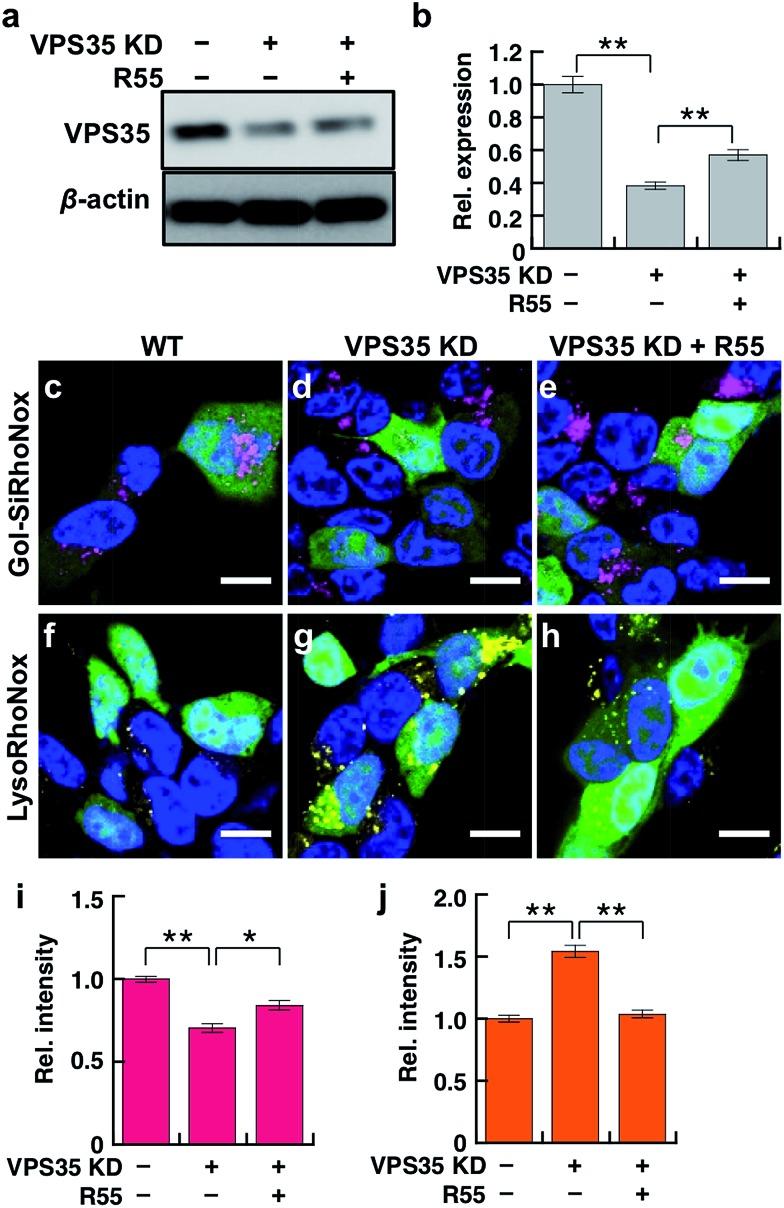
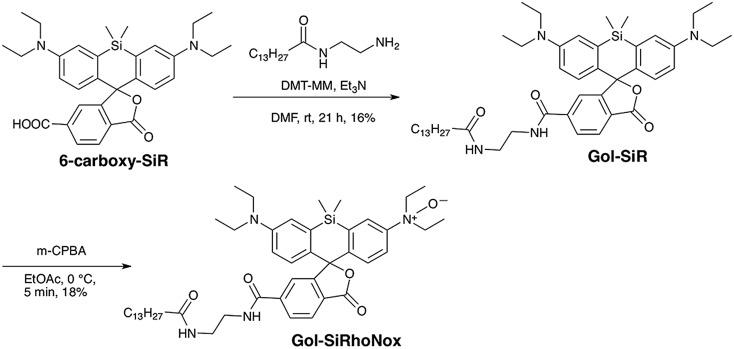
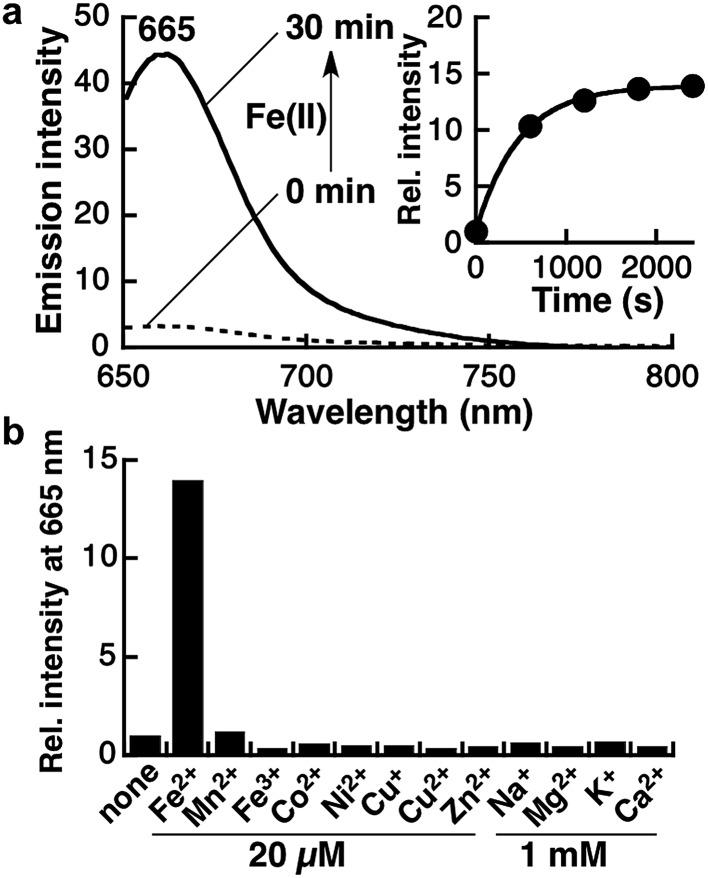
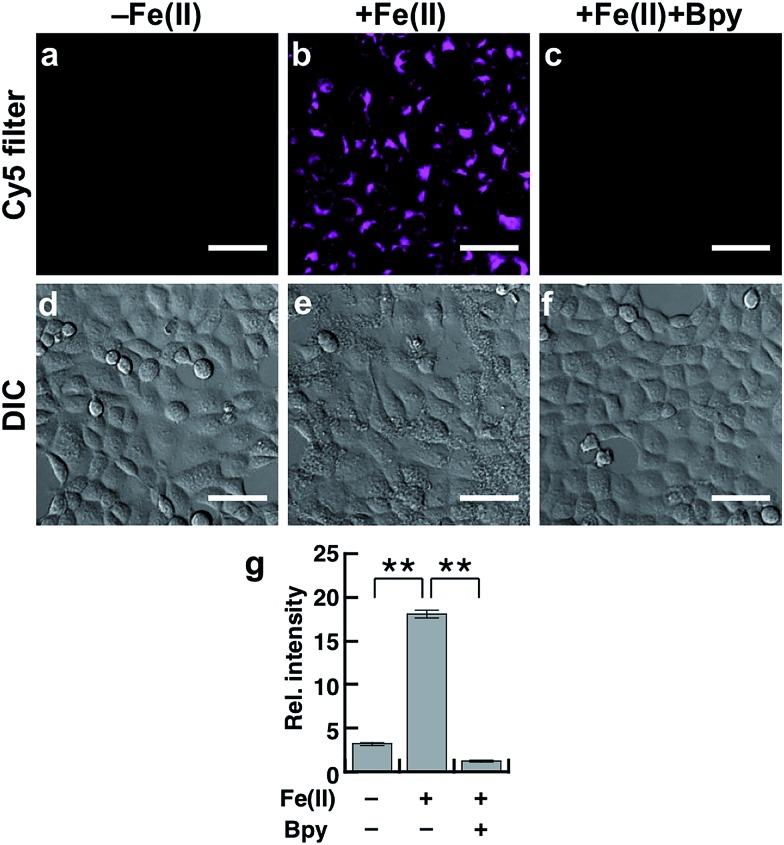
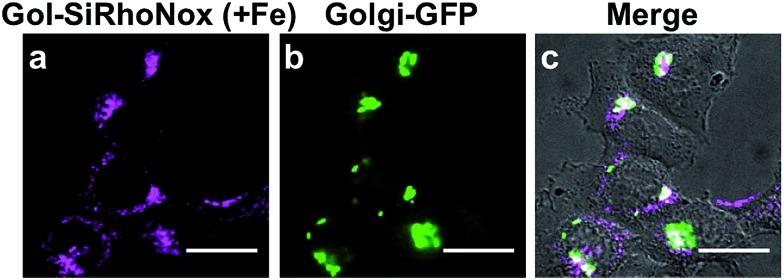
Iron is involved in numerous physiologically essential processes in our body. However, excessive iron is a pathogenic factor in neurodegenerative diseases, causing aberrant oxidative stress. Divalent metal transporter 1 (DMT1) acts as a primary transporter of Fe(ii) ions. The intracellular delivery of DMT1 toward the cellular membrane the trans-Golgi network during the endocytotic process is partially regulated by a retromer-mediated protein-sorting system comprising vacuolar protein-sorting proteins (VPSs). Thus, together with DMT1, the Golgi-apparatus acts as a hub organelle in the delivery system for intracellular Fe(ii) ions. Dysfunction of the VPS-relevant protein sorting system can induce the abnormal delivery of DMT1 toward lysosomes concomitantly with Fe(ii) ions. To explore this issue, we developed a fluorescent probe, Gol-SiRhoNox, for the Golgi-specific detection of Fe(ii) ions by integrating our original -oxide-based Fe(ii)-specific chemical switch, a new Golgi-localizable chemical motif, and polarity-sensitive fluorogenic scaffold. Our synchronous imaging study using Gol-SiRhoNox and LysoRhoNox, a previously developed fluorescent probe for lysosomal Fe(ii), revealed that the intracellular distribution balance of Fe(ii) ions between the Golgi apparatus and lysosomes is normally Golgi-dominant, whereas the lysosome-specific elevation of Fe(ii) ions was observed in cells with induced dysfunction of VPS35, a member of the retromer complex. Treatment of cells with dysfunctional VPS35 with R55, a molecular chaperone, resulted in the restoration of the subcellular distribution of Fe(ii) ions to the Golgi-dominant state. These results indicate that the impairment of the DMT1 traffic machinery affects subcellular iron homeostasis, promoting Fe(ii) leakage at the Golgi and lysosomal accumulation of Fe(ii) through missorting of DMT1.
铁参与了我们身体中许多生理必需过程。然而,过量的铁是神经退行性疾病中的一个致病因素,会导致异常的氧化应激。二价金属转运蛋白1(DMT1)是Fe(ii)离子的主要转运体。在胞吞过程中,DMT1向细胞膜(反式高尔基体网络)的细胞内转运部分受一个由液泡蛋白分选蛋白(VPS)组成的逆转录复合物介导的蛋白质分选系统调控。因此,与DMT1一起,高尔基体在细胞内Fe(ii)离子的转运系统中充当枢纽细胞器。与VPS相关的蛋白质分选系统功能障碍可导致DMT1与Fe(ii)离子一起异常转运至溶酶体。为了探究这个问题,我们开发了一种荧光探针Gol-SiRhoNox,通过整合我们最初基于氧化物的Fe(ii)特异性化学开关、一种新的高尔基体定位化学基序和极性敏感的荧光支架,用于高尔基体特异性检测Fe(ii)离子。我们使用Gol-SiRhoNox和LysoRhoNox(一种先前开发的用于溶酶体Fe(ii)的荧光探针)进行的同步成像研究表明,高尔基体和溶酶体之间Fe(ii)离子的细胞内分布平衡通常以高尔基体为主,而在逆转录复合物成员VPS35功能障碍诱导的细胞中观察到溶酶体特异性Fe(ii)离子升高。用分子伴侣R55处理VPS35功能障碍的细胞,导致Fe(ii)离子的亚细胞分布恢复到以高尔基体为主的状态。这些结果表明,DMT1转运机制的损伤会影响亚细胞铁稳态,通过DMT1的错误分选促进高尔基体处的Fe(ii)泄漏和Fe(ii)在溶酶体中的积累。

 Zotero 插件