
呼吸道合胞病毒的表位特异性血清学检测:构象至关重要。
Epitope-Specific Serological Assays for RSV: Conformation Matters.
作者信息
Phung Emily, Chang Lauren A, Morabito Kaitlyn M, Kanekiyo Masaru, Chen Man, Nair Deepika, Kumar Azad, Chen Grace L, Ledgerwood Julie E, Graham Barney S, Ruckwardt Tracy J
机构信息
Vaccine Research Center, National Institutes of Allergy and Infectious Diseases, National Institutes of Health, Bethesda, MD 20892, USA.
Institute for Biomedical Sciences, George Washington University, Washington, DC 20052, USA.
出版信息
Vaccines (Basel). 2019 Feb 23;7(1):23. doi: 10.3390/vaccines7010023.
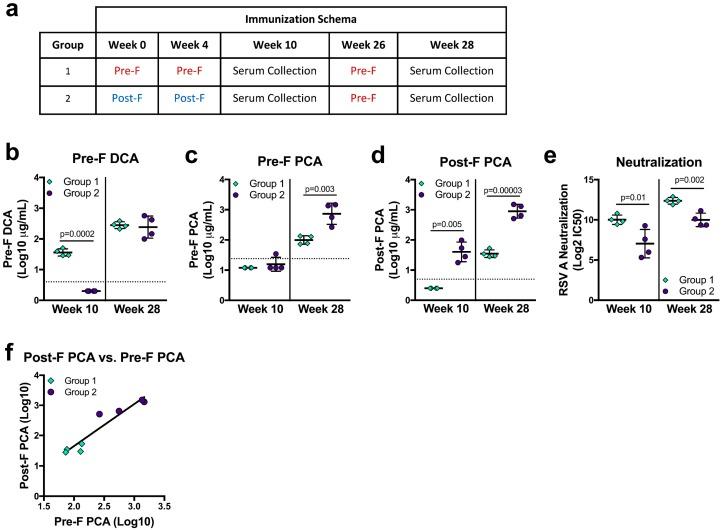
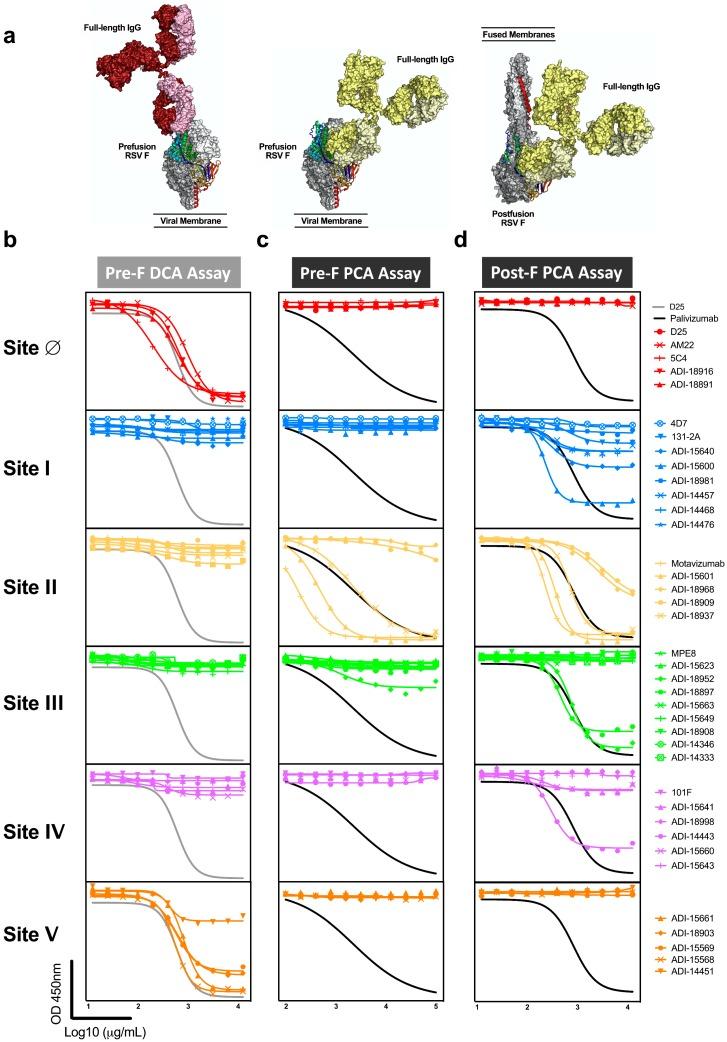
Respiratory syncytial virus (RSV) causes substantial morbidity and mortality in children and older adults. An effective vaccine must elicit neutralizing antibodies targeting the RSV fusion (F) protein, which exists in two major conformations, pre-fusion (pre-F) and post-fusion (post-F). Although 50% of the surface is shared, pre-F contains highly neutralization-sensitive antigenic sites not present on post-F. Recent advancement of several subunit F-based vaccine trials has spurred interest in quantifying and understanding the protective potential of antibodies directed to individual antigenic sites. Monoclonal antibody competition ELISAs are being used to measure these endpoints, but the impact of F conformation and competition from antibodies binding to adjacent antigenic sites has not been thoroughly investigated. Since this information is critical for interpreting clinical trial outcomes and defining serological correlates of protection, we optimized assays to evaluate D25-competing antibodies (DCA) to antigenic site Ø on pre-F, and compared readouts of palivizumab-competing antibodies (PCA) to site II on both pre-F and post-F. We show that antibodies to adjacent antigenic sites can contribute to DCA and PCA readouts, and that cross-competition from non-targeted sites is especially confounding when PCA is measured using a post-F substrate. While measuring DCA and PCA levels may be useful to delineate the role of antibodies targeting the apex and side of the F protein, respectively, the assay limitations and caveats should be considered when conducting immune monitoring during vaccine trials and defining correlates of protection.
呼吸道合胞病毒(RSV)在儿童和老年人中可导致严重发病和死亡。一种有效的疫苗必须引发针对RSV融合(F)蛋白的中和抗体,该蛋白存在两种主要构象,即前融合(pre-F)和后融合(post-F)。尽管50%的表面是共享的,但pre-F含有post-F上不存在的高度中和敏感抗原位点。最近几种基于F亚基的疫苗试验取得的进展激发了人们对量化和理解针对各个抗原位点的抗体的保护潜力的兴趣。单克隆抗体竞争ELISA正被用于测量这些终点,但F构象的影响以及与结合相邻抗原位点的抗体的竞争尚未得到充分研究。由于这些信息对于解释临床试验结果和确定保护的血清学相关指标至关重要,我们优化了检测方法,以评估针对pre-F上抗原位点Ø的D25竞争抗体(DCA),并比较了帕利珠单抗竞争抗体(PCA)在pre-F和post-F上针对位点II的读数。我们表明,针对相邻抗原位点的抗体可影响DCA和PCA读数,并且当使用post-F底物测量PCA时,来自非靶向位点的交叉竞争尤其令人困惑。虽然测量DCA和PCA水平可能分别有助于阐明靶向F蛋白顶端和侧面的抗体的作用,但在疫苗试验期间进行免疫监测和确定保护相关指标时,应考虑检测的局限性和注意事项。


 Zotero 插件