
CRISPR/Cas9 技术编辑 TFAM 基因在牛模型中的应用。
Edition of TFAM gene by CRISPR/Cas9 technology in bovine model.
机构信息
Department of Veterinary Medicine, Faculty of Animal Science and Food Engineering, University of São Paulo, Pirassununga, São Paulo, Brazil.
Laboratoire Structure et Instabilité des Génomes, Museum National d'Histoire Naturelle, INSERM U1154, CNRS UMR7196, Paris, France.
出版信息
PLoS One. 2019 Mar 7;14(3):e0213376. doi: 10.1371/journal.pone.0213376. eCollection 2019.
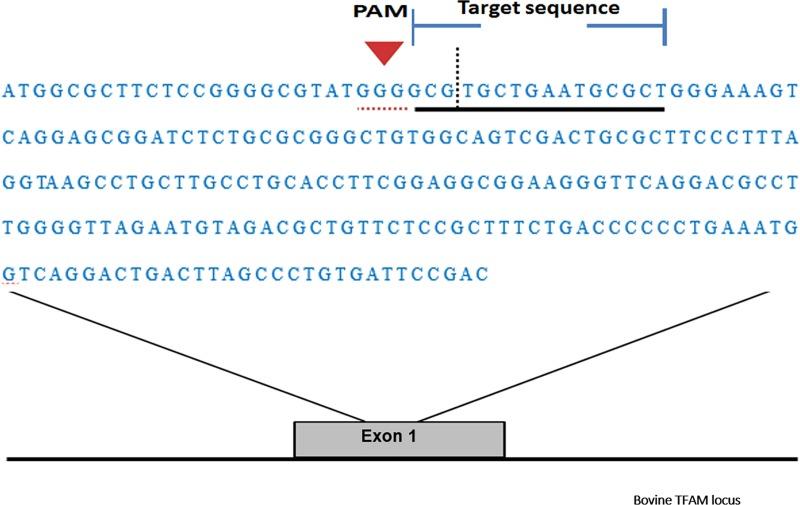
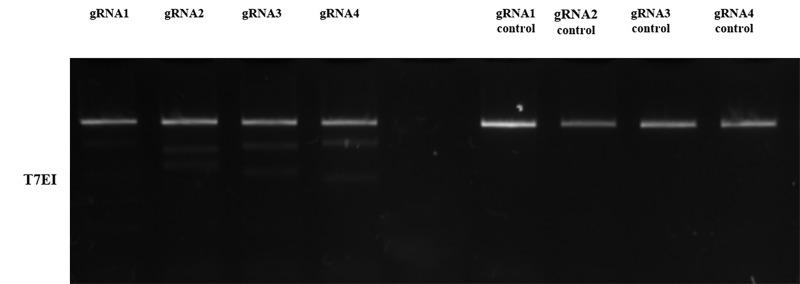
The mitochondrial transcription factor A (TFAM) is a mitochondrial DNA (mtDNA) binding protein essential for the initiation of transcription and genome maintenance. Recently it was demonstrated that the primary role of TFAM is to maintain the integrity of mtDNA and that it is a key regulator of mtDNA copy number. It was also shown that TFAM plays a central role in the mtDNA stress-mediated inflammatory response. In our study, we proposed to evaluate the possibility of editing the TFAM gene by CRISPR/Cas9 technology in bovine fibroblasts, as TFAM regulates the replication specificity of mtDNA. We further attempted to maintain these cells in culture post edition in a medium supplemented with uridine and pyruvate to mimic Rho zero cells that are capable of surviving without mtDNA, because it is known that the TFAM gene is lethal in knockout mice and chicken. Moreover, we evaluated the effects of TFAM modification on mtDNA copy number. The CRISPR gRNA was designed to target exon 1 of the bovine TFAM gene and subsequently cloned. Fibroblasts were transfected with Cas9 and control plasmids. After 24 h of transfection, cells were analyzed by flow cytometry to evaluate the efficiency of transfection. The site directed-mutation frequency was assessed by T7 endonuclease assay, and cell clones were analyzed for mtDNA copy number by Sanger DNA sequencing. We achieved transfection efficiency of 51.3%. We selected 23 successfully transformed clones for further analysis, and seven of these exhibited directed mutations at the CRISPR/Cas9 targeted site. Moreover, we also found a decrease in mtDNA copy number in the gene edited clones compared to that in the controls. These TFAM gene mutant cells were viable in culture when supplemented with uridine and pyruvate. We conclude that this CRISPR/Cas9 design was efficient, resulting in seven heterozygous mutant clones and opening up the possibility to use these mutant cell lines as a model system to elucidate the role of TFAM in the maintenance of mtDNA integrity.
线粒体转录因子 A(TFAM)是一种线粒体 DNA(mtDNA)结合蛋白,对转录起始和基因组维护至关重要。最近的研究表明,TFAM 的主要作用是维持 mtDNA 的完整性,它是 mtDNA 拷贝数的关键调节因子。此外,TFAM 在 mtDNA 应激介导的炎症反应中也起着核心作用。在我们的研究中,我们提出通过 CRISPR/Cas9 技术在牛成纤维细胞中编辑 TFAM 基因的可能性,因为 TFAM 调节 mtDNA 的复制特异性。我们进一步试图在编辑后在含有尿嘧啶和丙酮酸的培养基中维持这些细胞的培养,因为众所周知,TFAM 基因在 knockout 小鼠和鸡中是致命的。此外,我们还评估了 TFAM 修饰对 mtDNA 拷贝数的影响。CRISPR gRNA 被设计靶向牛 TFAM 基因的外显子 1,随后进行克隆。用 Cas9 和对照质粒转染成纤维细胞。转染 24 小时后,通过流式细胞术分析评估转染效率。通过 T7 内切酶测定评估定点突变频率,并通过 Sanger DNA 测序分析细胞克隆的 mtDNA 拷贝数。我们实现了 51.3%的转染效率。我们选择了 23 个成功转化的克隆进行进一步分析,其中 7 个在 CRISPR/Cas9 靶向位点出现定向突变。此外,我们还发现基因编辑克隆中的 mtDNA 拷贝数与对照相比有所下降。这些 TFAM 基因突变细胞在补充尿嘧啶和丙酮酸的情况下在培养中具有活力。我们得出结论,这种 CRISPR/Cas9 设计是有效的,产生了七个杂合突变克隆,并为使用这些突变细胞系作为阐明 TFAM 在维持 mtDNA 完整性中的作用的模型系统开辟了可能性。




 Zotero 插件