
患者、医疗保健专业人员和医院官员对埃塞俄比亚医院质量疼痛管理障碍和促进因素的看法:一项定性研究。
The views of patients, healthcare professionals and hospital officials on barriers to and facilitators of quality pain management in Ethiopian hospitals: A qualitative study.
机构信息
Department of Anesthesiology, Institute of Health, Faculty of Medicine, Jimma University, Jimma, Ethiopia.
Centre for International Health, Ludwig-Maximilians-Universität Munich, Munich, Germany.
出版信息
PLoS One. 2019 Mar 14;14(3):e0213644. doi: 10.1371/journal.pone.0213644. eCollection 2019.
BACKGROUND
Postoperative pain remains a challenge in the developed world, but the consequences of inadequately treated postoperative pain are particularly severe in low- and middle-income countries. Since 2011, reports have drawn attention to the poor quality of postoperative pain management in Ethiopia; however, our multicenter qualitative study was the first to attempt to understand the factors that are barriers to and facilitators of quality pain managment in the country. To this aim, the study explored the perspectives of patients, healthcare professionals, and hospital officials. We expected that the results of this study would inform strategies to improve the provision of quality pain management in Ethiopia and perhaps even in other low- and middle-income countries.
METHODS
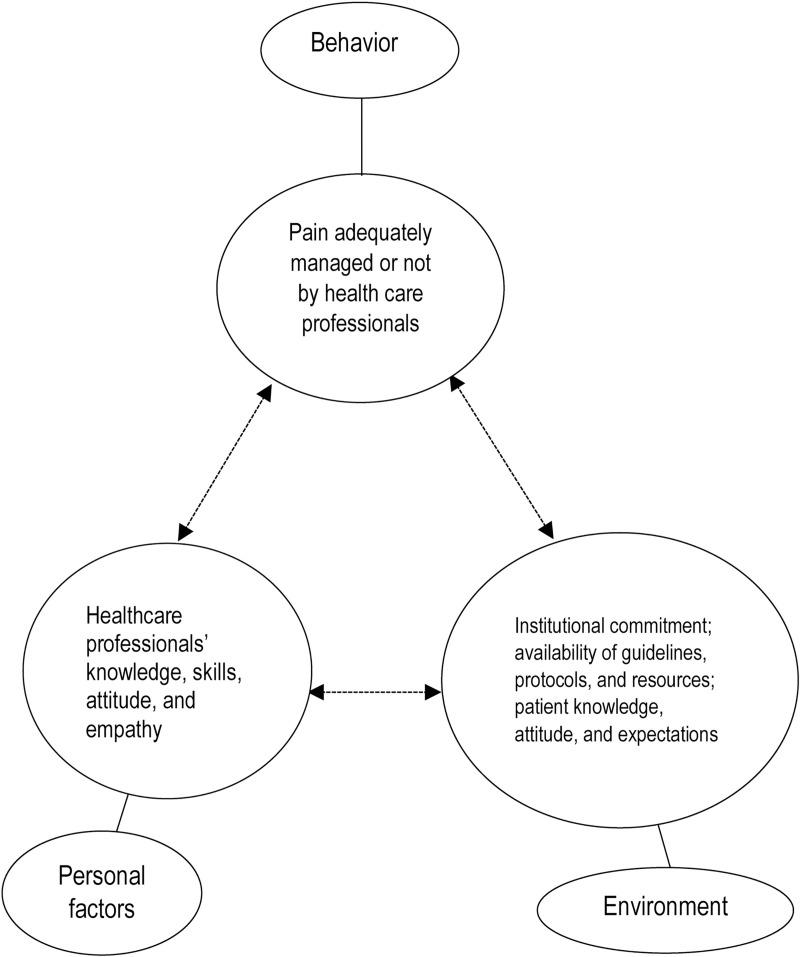
This study used a qualitative, descriptive approach in which nine healthcare professionals, nine patients, and six hospital officials (i.e. executives in a managerial or leadership position in administration, nursing, or education) participated in face-to-face, semi-structured interviews. Thematic data analysis was conducted, and patterns were explained with the help of a theoretical framework.
FINDINGS
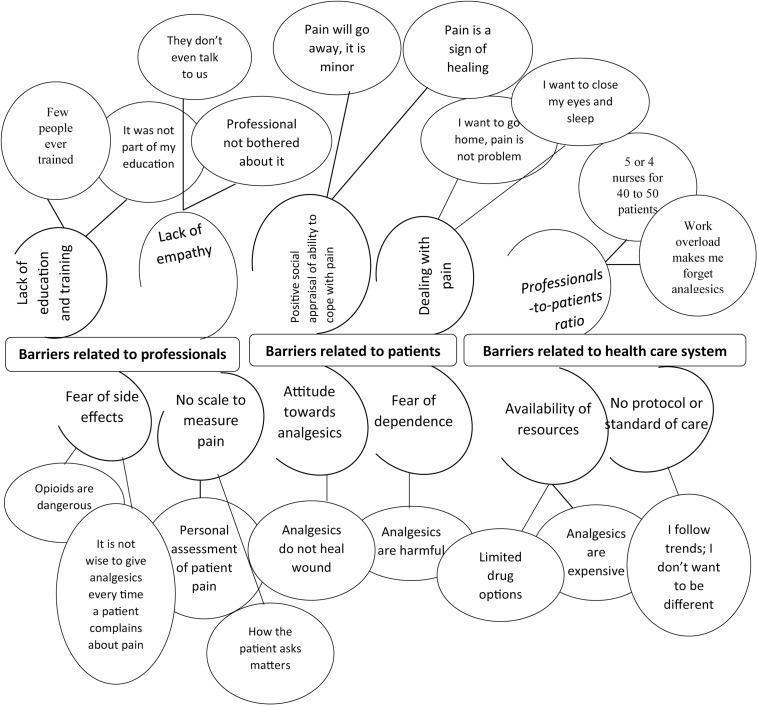
The barriers identified ranged from healthcare professionals' lack of empathy to a positive social appraisal of patients' ability to cope with pain. They also included a lack of emphasis on pain and its management during early medical education, together with the absence of available resources. Enhancing the ability of healthcare professionals to create favorable rapport with patients and increasing the cultural competence of professionals are essential ingredients of future pain education interventions.
CONCLUSIONS
Barriers to and facilitators of postoperative pain management do not exist independently but are reciprocally linked. This finding calls for holistic and inclusive interventions targeting healthcare professionals, patients, and hospital officials. The current situation is unlikely to improve if only healthcare professionals are educated about pain physiology, pharmacology, and management. Patients should also be educated, and the hospital environment should be modified to provide high-quality postoperative pain management.
背景
在发达国家,术后疼痛仍然是一个挑战,但在中低收入国家,术后疼痛治疗不当的后果尤其严重。自 2011 年以来,有报告引起了人们对埃塞俄比亚术后疼痛管理质量差的关注;然而,我们的多中心定性研究首次试图了解影响该国优质疼痛管理的障碍因素和促进因素。为此,该研究探讨了患者、医疗保健专业人员和医院官员的观点。我们预计,这项研究的结果将为改善埃塞俄比亚乃至其他中低收入国家提供优质疼痛管理的策略提供信息。
方法
本研究采用定性、描述性方法,9 名医疗保健专业人员、9 名患者和 6 名医院官员(即行政、护理或教育领域的管理或领导职位的管理人员)参与了面对面的半结构化访谈。进行了主题数据分析,并在理论框架的帮助下解释了模式。
结果
确定的障碍范围从医疗保健专业人员缺乏同理心到对患者应对疼痛能力的积极社会评价。还包括在早期医学教育中对疼痛及其管理重视不足,以及缺乏可用资源。增强医疗保健专业人员与患者建立良好关系的能力并提高专业人员的文化能力是未来疼痛教育干预的重要组成部分。
结论
术后疼痛管理的障碍和促进因素并非孤立存在,而是相互关联的。这一发现呼吁针对医疗保健专业人员、患者和医院官员采取整体和包容的干预措施。如果仅仅对医疗保健专业人员进行疼痛生理学、药理学和管理方面的教育,现状不太可能得到改善。还应教育患者,并应修改医院环境以提供高质量的术后疼痛管理。
 Zotero 插件