
球形二氧化硅纳米颗粒诱导的TGF-阻断抑制人肺上皮细胞的上皮-间质转化和增殖。
Blockage of TGF- Induced by Spherical Silica Nanoparticles Inhibits Epithelial-Mesenchymal Transition and Proliferation of Human Lung Epithelial Cells.
作者信息
Li YiXun, Li Huan, Duan Yong, Cai XueMei, You DingYun, Zhou Feng, Yang ChuanQi, Tuo XiaoYu, Liu ZiJie
机构信息
Yunnan Key Laboratory of Laboratory Medicine, Kunming, Yunnan, China.
Department of Laboratory Medicine, The First Affiliated Hospital of Kunming Medical University, Kunming, Yunnan, China.
出版信息
Biomed Res Int. 2019 Feb 18;2019:8231267. doi: 10.1155/2019/8231267. eCollection 2019.
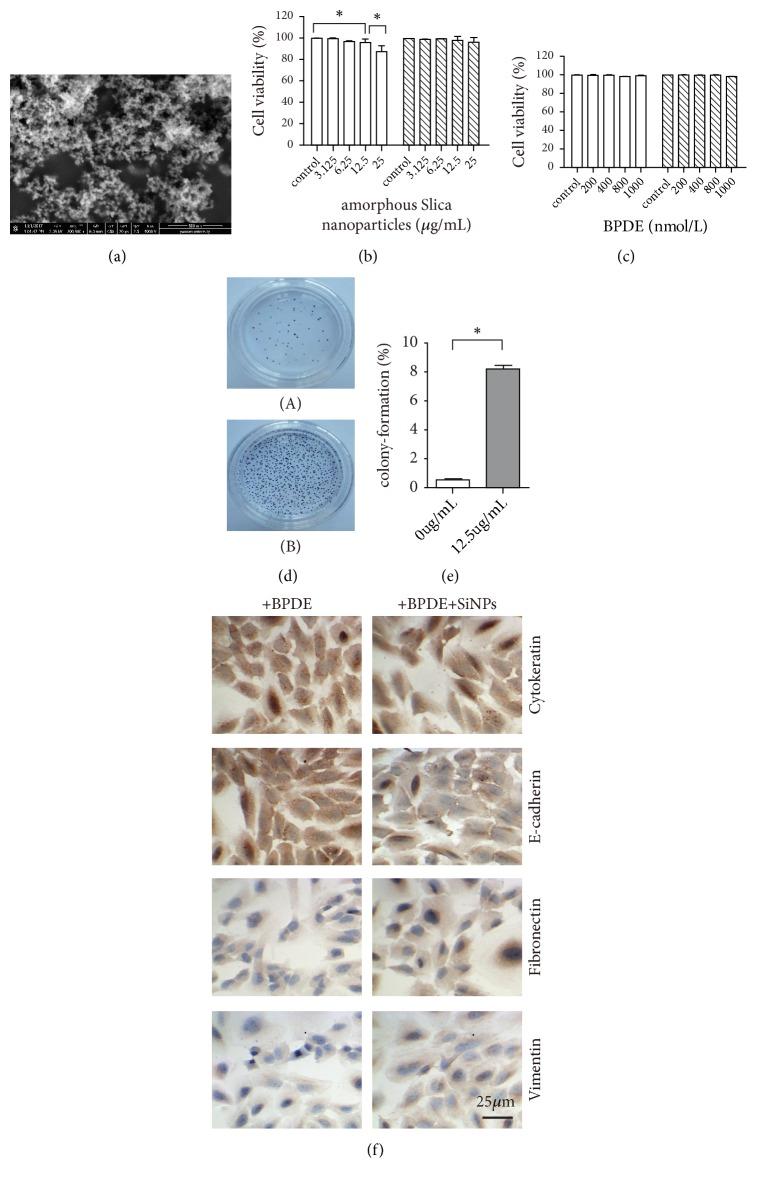
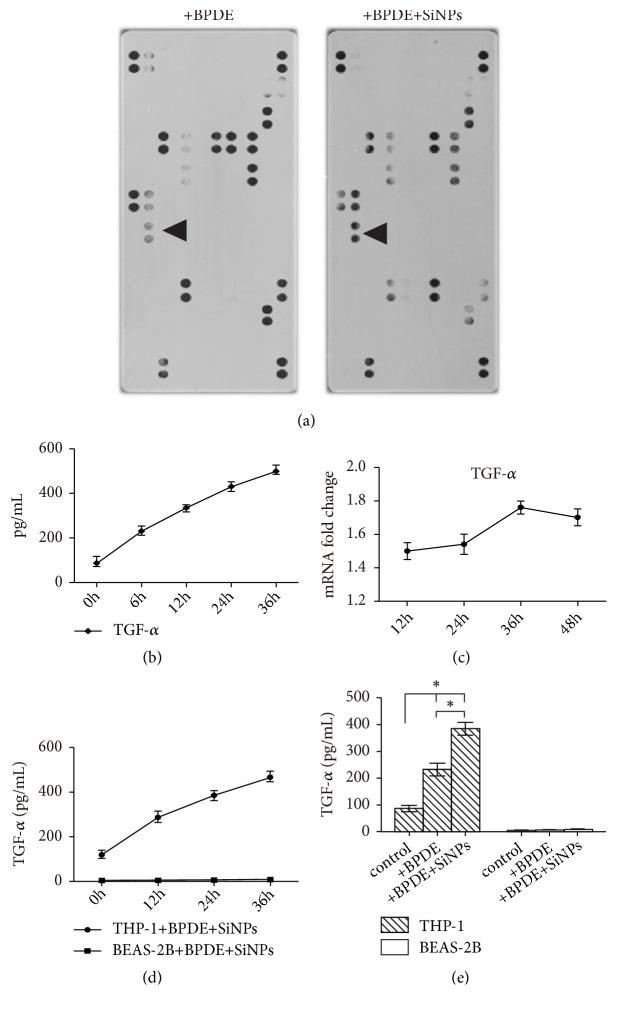
. Xuanwei City in Yunnan province has been one of the towns with highest lung cancer mortality in China. The high content of amorphous silica in the bituminous coal from Xuanwei of Yunnan is mainly present as irregular and spherical silica nanoparticles (SiNPs). It has been reported that silica nanoparticles in bituminous coal correlated with the high incidence of lung cancer in Xuanwei. To explore the role and mechanism of SiNPs in the tumorigenesis of lung cancer in Xuanwei, human mononuclear cells (THP-1) and human bronchial epithelial cells (BEAS-2B) were cocultured in a transwell chamber. Combined with Benzo[]pyrene-7, 8-dihydrodiol-9, and 10-epoxide (BPDE), SiNPs could significantly promote the proliferation and Epithelial-Mesenchymal Transition (EMT) and inhibit apoptosis of BEAS-2B cells and induce the release of TGF- from THP-1 cells. After neutralizing TGF- with antibody, the proliferation and EMT were decreased and enhanced apoptosis of BEAS-2B cells. Furthermore, the results showed that TGF- in the sera of patients with lung adenocarcinoma in Xuanwei were significantly higher than in patients with benign pulmonary lesions in Xuanwei and those with lung adenocarcinoma in outside of Xuanwei of Yunnan. Taken together, our study found that SiNPs promoted the proliferation and EMT of BEAS-2B cells by inducing the release of TGF- from THP-1 cells.
云南省宣威市一直是中国肺癌死亡率最高的城镇之一。云南宣威烟煤中无定形二氧化硅含量高,主要以不规则和球形的二氧化硅纳米颗粒(SiNPs)形式存在。据报道,烟煤中的二氧化硅纳米颗粒与宣威肺癌的高发病率相关。为了探究SiNPs在宣威肺癌发生中的作用及机制,将人单核细胞(THP-1)和人支气管上皮细胞(BEAS-2B)在Transwell小室中共培养。与苯并[a]芘-7,8-二氢二醇-9,10-环氧化物(BPDE)联合,SiNPs可显著促进BEAS-2B细胞的增殖和上皮-间质转化(EMT),抑制其凋亡,并诱导THP-1细胞释放TGF-β。用抗体中和TGF-β后,BEAS-2B细胞的增殖和EMT降低,凋亡增强。此外,结果显示,宣威肺腺癌患者血清中的TGF-β显著高于宣威良性肺病变患者以及云南宣威以外地区的肺腺癌患者。综上所述,我们的研究发现SiNPs通过诱导THP-1细胞释放TGF-β促进BEAS-2B细胞的增殖和EMT。


 Zotero 插件