
评估干预措施增加宫颈癌筛查参与度的效果。
Evaluating the Effectiveness of Interventions on Increasing Participation in Cervical Cancer Screening.
机构信息
PhD, RN, Professor, Department of Obstetrics and Gynecology Nursing, Florence Nightingale Hospital School of Nursing, Demiroglu Bilim University, Istanbul, Turkey.
出版信息
J Nurs Res. 2019 Oct;27(5):e40. doi: 10.1097/jnr.0000000000000317.
BACKGROUND
Although cervical cancer is highly preventable through regular screenings using Pap smear or human papillomavirus-deoxyribonucleic acid tests, cervical cancer remains a prevalent women's health issue across the world. Therefore, encouraging women to screen for cervical cancer is very important for the early detection of cervical cancer.
PURPOSE
The purposes of this study were to (1) assess the effectiveness of three interventions that are typically used to increase the uptake of cervical cancer screening during home visits and (2) determine the participation rate in cervical cancer screenings after invitation, the health promotion perceptions, and the cervical cancer and screening-related knowledge of women. The three interventions noted in Purpose 1 were one-on-one training accompanied by an educational brochure, providing the educational brochure only, and giving an invitation without any relevant information.
METHODS
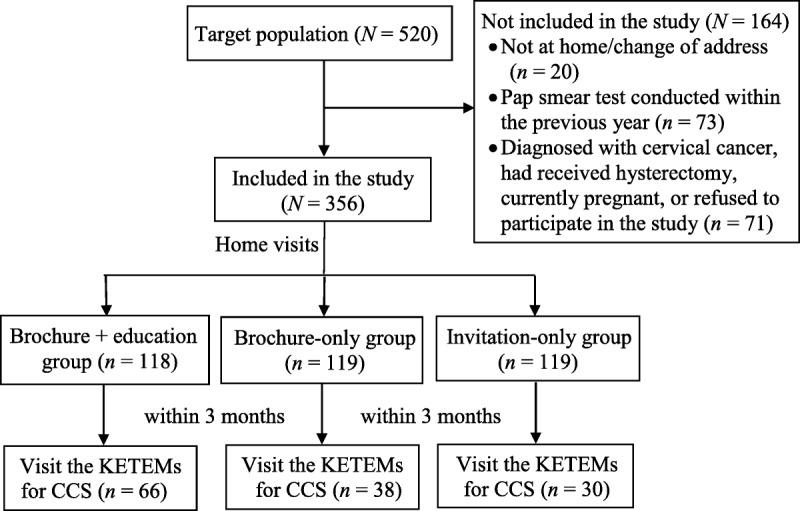
This interventional study was conducted on women who were between the ages of 30 and 65 years in three Turkish provinces (Ankara, Malatya, and Trabzon). Five hundred twenty home visits were made, and 356 women who did not have a Pap smear test within the previous year were invited for cervical cancer screening. Women were randomized into one of three intervention groups, and the participants in each group were invited to attend a national cervical cancer screening program and to undergo a cervical cancer screening using the related intervention type.
RESULTS
The results showed that the interventions used during home visits and knowledge were effective in encouraging women to participate in cervical cancer screening. It was determined that the participants who had received one-on-one training accompanied by an educational brochure had a higher cervical cancer screening rate than their peers who were offered a brochure only or a verbal invitation only.
CONCLUSIONS
Invitations to screenings that are made by providing training accompanied with a brochure were found to be effective in increasing the participation of women in cervical cancer screening.
背景
尽管通过巴氏涂片或人乳头瘤病毒脱氧核糖核酸检测定期筛查可以高度预防宫颈癌,但宫颈癌仍然是全世界普遍存在的女性健康问题。因此,鼓励女性进行宫颈癌筛查对于早期发现宫颈癌非常重要。
目的
本研究的目的是:(1)评估三种干预措施在上门访视中增加宫颈癌筛查参与度的有效性;(2)确定邀请后的宫颈癌筛查参与率、健康促进认知以及妇女的宫颈癌和筛查相关知识。目的 1 中提到的三种干预措施是一对一培训并附有教育手册、仅提供教育手册和仅发出邀请而没有任何相关信息。
方法
这项干预性研究在土耳其三个省份(安卡拉、马拉蒂亚和特拉布宗)的 30 至 65 岁女性中进行。进行了 520 次家访,邀请了 356 名在过去一年中未进行巴氏涂片检查的女性进行宫颈癌筛查。女性被随机分为三组干预组,每组参与者均受邀参加国家宫颈癌筛查计划,并使用相关干预类型进行宫颈癌筛查。
结果
结果表明,家访期间使用的干预措施和知识有效鼓励了女性参与宫颈癌筛查。研究确定,接受一对一培训并附有教育手册的参与者比仅接受手册或口头邀请的参与者进行宫颈癌筛查的比例更高。
结论
提供培训和手册的筛查邀请被发现可有效提高女性参与宫颈癌筛查的积极性。
 Zotero 插件