
线粒体在宫内生长受限及相关心脏重构人类妊娠中的作用。
Mitochondrial implications in human pregnancies with intrauterine growth restriction and associated cardiac remodelling.
机构信息
Muscle Research and Mitochondrial Function Laboratory, Faculty of Medicine and Health Sciences, Internal Medicine Service-Hospital Clínic of Barcelona, Cellex-IDIBAPS, University of Barcelona, Barcelona, Spain.
CIBERER-U722, Madrid, Spain.
出版信息
J Cell Mol Med. 2019 Jun;23(6):3962-3973. doi: 10.1111/jcmm.14282. Epub 2019 Apr 2.
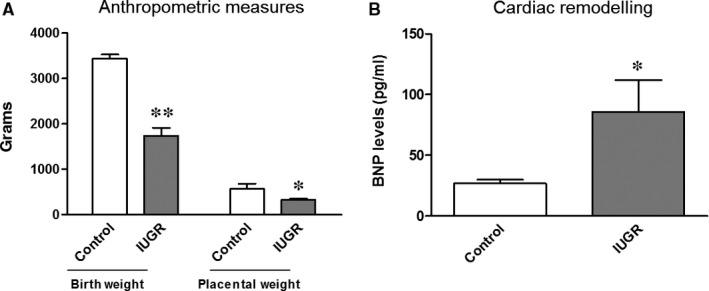
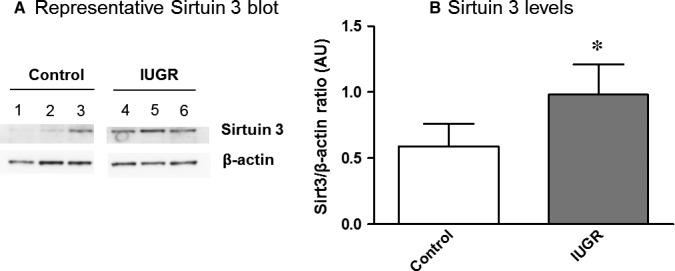
Intrauterine growth restriction (IUGR) is an obstetric complication characterised by placental insufficiency and secondary cardiovascular remodelling that can lead to cardiomyopathy in adulthood. Despite its aetiology and potential therapeutics are poorly understood, bioenergetic deficits have been demonstrated in adverse foetal and cardiac development. We aimed to evaluate the role of mitochondria in human pregnancies with IUGR. In a single-site, cross-sectional and observational study, we included placenta and maternal peripheral and neonatal cord blood mononuclear cells (PBMC and CBMC) from 14 IUGR and 22 control pregnancies. The following mitochondrial measurements were assessed: enzymatic activities of mitochondrial respiratory chain (MRC) complexes I, II, IV, I + III and II + III, oxygen consumption (cell and complex I-stimulated respiration), mitochondrial content (citrate synthase [CS] activity and mitochondrial DNA copy number), total ATP levels and lipid peroxidation. Sirtuin3 expression was evaluated as a potential regulator of bioenergetic imbalance. Intrauterine growth restriction placental tissue showed a significant decrease of MRC CI enzymatic activity (P < 0.05) and CI-stimulated oxygen consumption (P < 0.05) accompanied by a significant increase of Sirtuin3/β-actin protein levels (P < 0.05). Maternal PBMC and neonatal CBMC from IUGR patients presented a not significant decrease in oxygen consumption (cell and CI-stimulated respiration) and MRC enzymatic activities (CII and CIV). Moreover, CS activity was significantly reduced in IUGR new-borns (P < 0.05). Total ATP levels and lipid peroxidation were preserved in all the studied tissues. Altered mitochondrial function of IUGR is especially present at placental and neonatal level, conveying potential targets to modulate obstetric outcome through dietary interventions aimed to regulate Sirtuin3 function.
胎儿宫内生长受限(IUGR)是一种产科并发症,其特征为胎盘功能不全和继发性心血管重塑,可导致成年后患心肌病。尽管其病因和潜在治疗方法尚不清楚,但在不良胎儿和心脏发育中已证实存在生物能量缺陷。我们旨在评估线粒体在 IUGR 人类妊娠中的作用。在一项单站点、横断面和观察性研究中,我们纳入了 14 例 IUGR 和 22 例对照妊娠的胎盘以及产妇外周血和新生儿脐血单核细胞(PBMC 和 CBMC)。评估了以下线粒体测量值:线粒体呼吸链(MRC)复合物 I、II、IV、I+III 和 II+III 的酶活性、氧消耗(细胞和复合物 I 刺激的呼吸)、线粒体含量(柠檬酸合酶[CS]活性和线粒体 DNA 拷贝数)、总 ATP 水平和脂质过氧化。评估了 Sirtuin3 表达作为生物能量失衡的潜在调节剂。IUGR 胎盘组织显示 MRC CI 酶活性(P<0.05)和 CI 刺激的氧消耗(P<0.05)显著降低,同时 Sirtuin3/β-肌动蛋白蛋白水平显著升高(P<0.05)。IUGR 患者的产妇 PBMC 和新生儿 CBMC 的氧消耗(细胞和 CI 刺激的呼吸)和 MRC 酶活性(CII 和 CIV)呈非显著降低。此外,IUGR 新生儿的 CS 活性显著降低(P<0.05)。所有研究组织中的总 ATP 水平和脂质过氧化均保持不变。IUGR 的线粒体功能改变尤其存在于胎盘和新生儿水平,提示通过旨在调节 Sirtuin3 功能的饮食干预来调节产科结局的潜在靶点。




 Zotero 插件