
基于 TCGA 数据的综合分析对肺腺癌组织细胞因子表达的临床病理预后意义的系统评估。
Systematic assessment of the clinicopathological prognostic significance of tissue cytokine expression for lung adenocarcinoma based on integrative analysis of TCGA data.
机构信息
Department of Medical Oncology, Chinese People's Liberation Army General Hospital, Beijing, 100853, China.
The 5th Medical Center, Chinese People's Liberation Army General Hospital, Beijing, 100039, China.
出版信息
Sci Rep. 2019 Apr 19;9(1):6301. doi: 10.1038/s41598-019-42345-0.
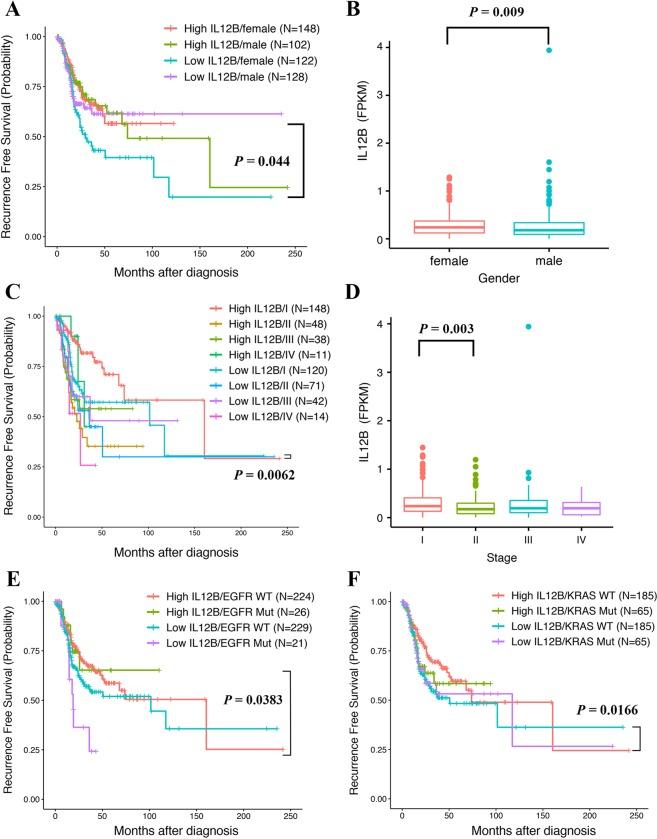
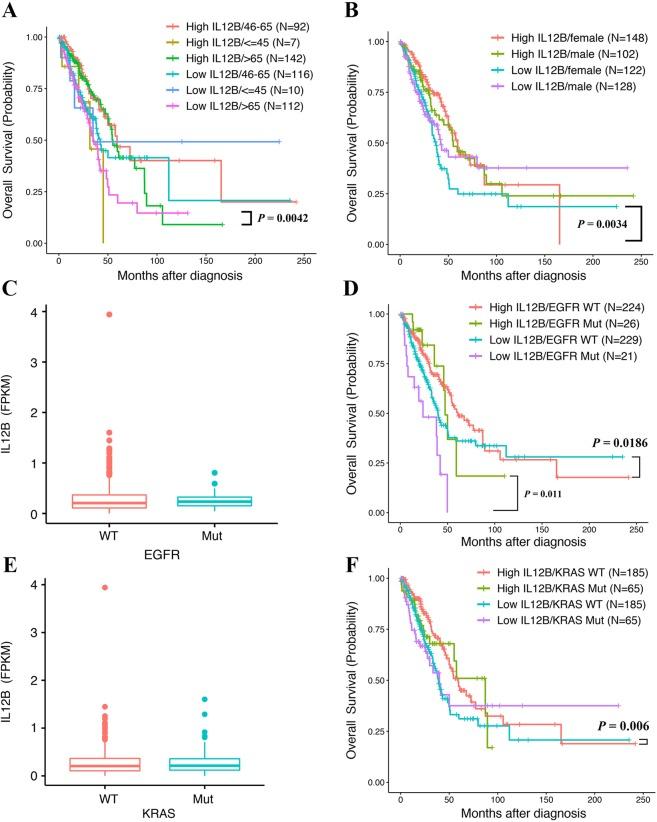
Dysregulated intratumoral immune reactions are shaped by complex networks of cytokines, which coordinate with tumor cells to determine tumor progression and aggressiveness. In lung adenocarcinoma (LUAD), the role of intratumoral cytokine gene expression for stratifying prognosis has not been systematically investigated. Using high-dimensional datasets of cancer specimens from clinical patients in The Cancer Genome Atlas (TCGA), we explored the transcript abundance and prognostic impact of 27 clinically evaluable cytokines in 500 LUAD tumor samples according to clinicopathological features and two common driver mutations (EGFR and KRAS). We found that reduced expression of IL12B presented as the single prognostic factor for both poor overall survival (OS) and recurrence free survival (RFS) with high hazard ratios. Moreover, we identified that elevated expression of IL6, CXCL8 and CSF3 were additional independent predictors of poor RFS in LUAD patients. Their prognostic significance was further strengthened by their ability to stratify within clinicopathological factors. Notably, we prioritized high risk cytokines for patients with or without mutations in EGFR and KRAS. Our results provide integrative associations of cytokine gene expression with patient survival and tumor recurrence and demonstrate the necessity and validity of relating clinicopathological and genetic disposition factors for precise and personalized disease prognosis.
肿瘤内免疫反应失调受细胞因子的复杂网络调控,这些细胞因子与肿瘤细胞协同作用,决定肿瘤的进展和侵袭性。在肺腺癌 (LUAD) 中,肿瘤内细胞因子基因表达在分层预后方面的作用尚未得到系统研究。本研究使用癌症基因组图谱 (TCGA) 中临床患者的癌症标本的高维数据集,根据临床病理特征和两种常见驱动突变(EGFR 和 KRAS),在 500 个 LUAD 肿瘤样本中探索了 27 种可临床评估细胞因子的转录丰度及其对预后的影响。结果发现,IL12B 的低表达是总体生存 (OS) 和无复发生存 (RFS) 不良的单一预后因素,其风险比很高。此外,还发现 IL6、CXCL8 和 CSF3 的高表达是 LUAD 患者 RFS 不良的另外两个独立预测因子。它们在临床病理因素内分层的能力进一步加强了其预后意义。值得注意的是,本研究对 EGFR 和 KRAS 突变患者分别进行了高风险细胞因子的优先级排序。本研究结果提供了细胞因子基因表达与患者生存和肿瘤复发的综合关联,并证明了将临床病理和遗传特征因素相关联对于准确和个体化疾病预后的必要性和有效性。


 Zotero 插件