
在喀麦隆的夜蛾科(鳞翅目):关于其分布、危害、农药使用、遗传分化和寄主植物的案例研究。
Spodoptera frugiperda Smith (Lepidoptera: Noctuidae) in Cameroon: Case study on its distribution, damage, pesticide use, genetic differentiation and host plants.
机构信息
International Institute of Tropical Agriculture (IITA), Yaoundé, Cameroon.
University of Maroua, Faculty of Science, Maroua, Cameroon.
出版信息
PLoS One. 2019 Apr 29;14(4):e0215749. doi: 10.1371/journal.pone.0215749. eCollection 2019.
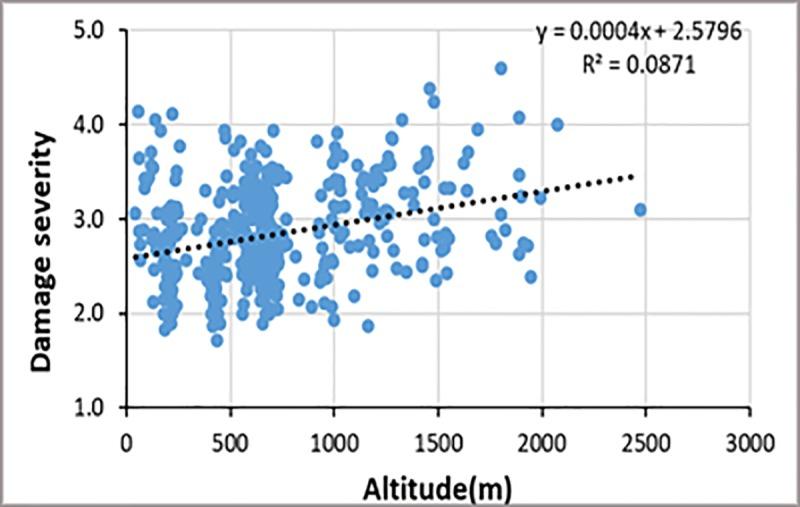
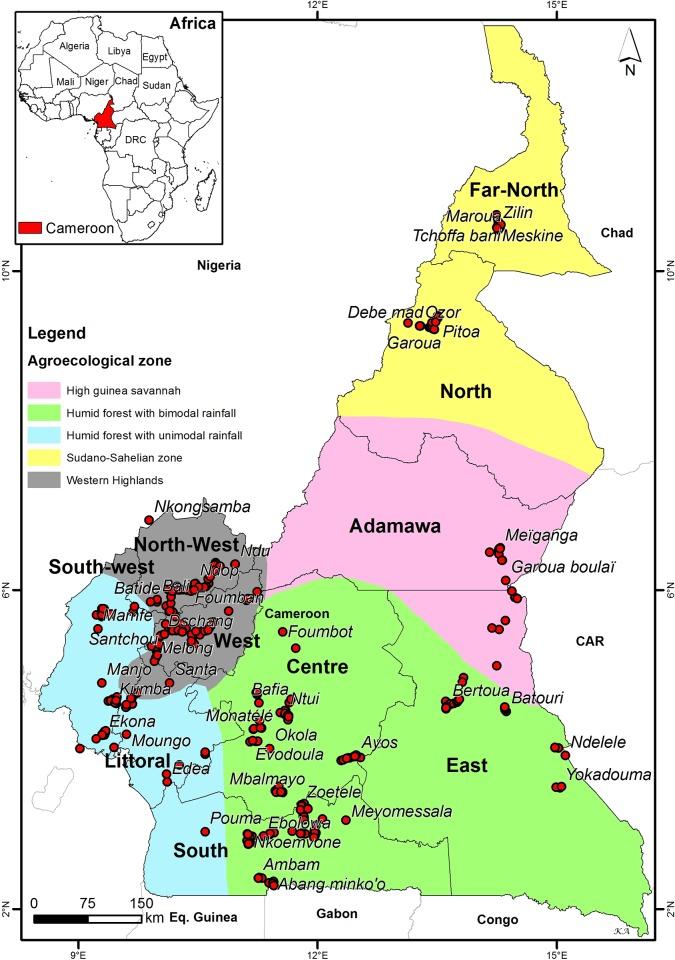
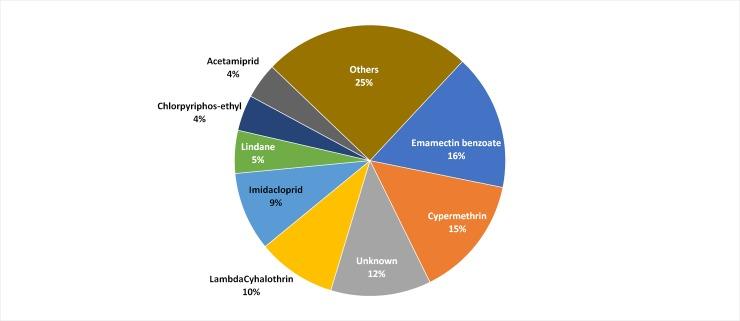
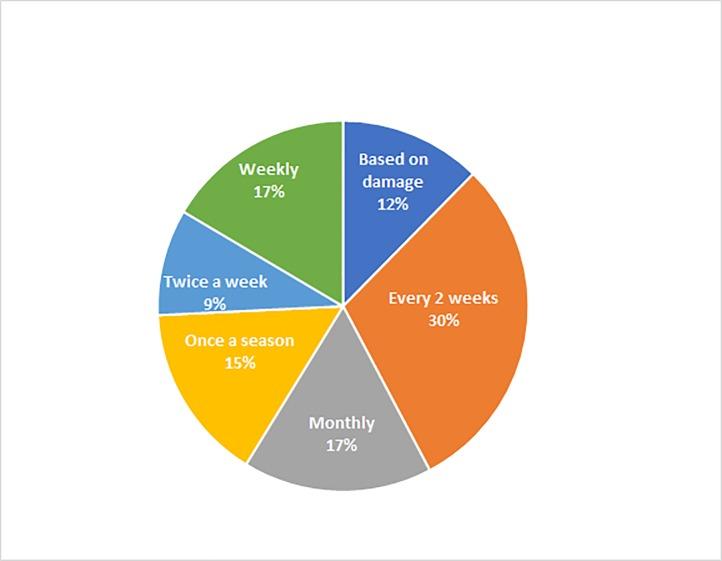
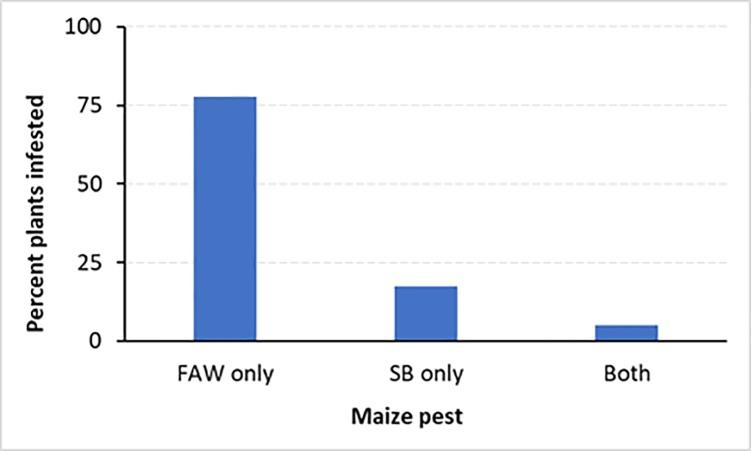
Maize farmers in sub-Saharan Africa recently experienced unusual damage in their farms, attributed to the fall armyworm (FAW) Spodoptera frugiperda (J. E. Smith). This pest was first recorded in Africa in 2016, but detailed information on its distribution and damage and farmer's response in invaded areas are largely lacking. In this study, we determined FAW distribution, genetic diversity, host plants, crop damage, and farmers' responses. S. frugiperda was recorded in the 10 regions of Cameroon. Average percentage of infested plants and damage severity (on a scale of 1 to 5) were lowest-20.7 ± 7.4% and 2.1 ± 0.1 respectively-in the Sahelian regions and greatest-69.0 ± 4.3% and 3.1 ± 0.1 respectively-in the Western Highlands. Altitude did not influence FAW incidence and severity and its larvae infrequently co-occurred with maize stemborers on the same plants, suggesting possible direct and/or indirect competition between the two groups of maize pests. In response to this new threat to maize production, farmers have opted for the application of synthetic pesticides. Although our experiments were not designed to determine pesticide efficacy, as parameters such as time since application were not considered, our observations suggest lack of a drastic effect on S. frugiperda infestations on maize. There were two haplotypes of FAW co-occurring in Cameroon corresponding to the rice and corn strains and separated by 1.7% sequence divergence, which does not support the existence of cryptic species. S. frugiperda larvae were also recorded on Sorghum bicolor (L.) Moench (10.6%), Solanum tuberosum L. (2.8%), Ipomoea batatas (L.) Lam. (1.9%), Saccharum officinarum L (0.8%), Phaseolus vulgaris L. (0.4%) and Gossypium hirsutum L. (1.9%). This study show that two strains are present in all agroecological zones in Cameroon, and probably in neighboring countries of central Africa sharing the same agroecologies. Management options should therefore consider the use of specific natural enemies and an informed decision of intervention based on strain capture and damage threshold, to avoid pesticide resistance that may arise from inadequate use of chemicals. Further studies should also be undertaken to assess the response of the two S. frugiperda strains to biopesticides and botanical insecticides.
撒哈拉以南非洲的玉米种植户最近在农场中遭遇了异常的破坏,被归咎于草地贪夜蛾(FAW)Spodoptera frugiperda(J. E. Smith)。这种害虫于 2016 年首次在非洲被记录到,但关于其在入侵地区的分布、损害和农民应对措施的详细信息仍然严重缺乏。在这项研究中,我们确定了草地贪夜蛾的分布、遗传多样性、寄主植物、作物损害和农民的应对措施。S. frugiperda 在喀麦隆的 10 个地区都有记录。在萨赫勒地区,受感染植物的平均百分比和损害严重程度(1 到 5 级)最低,分别为 20.7%±7.4%和 2.1%±0.1%;而在西部高地,这两个数字最高,分别为 69.0%±4.3%和 3.1%±0.1%。海拔高度并不影响草地贪夜蛾的发病率和严重程度,而且其幼虫很少与玉米螟同时出现在同一植株上,这表明这两组玉米害虫之间可能存在直接和/或间接的竞争。针对玉米生产面临的这一新威胁,农民选择使用合成农药。尽管我们的实验并非旨在确定农药的功效,因为没有考虑施药时间等参数,但我们的观察结果表明,这对玉米上草地贪夜蛾的种群没有明显的抑制作用。在喀麦隆,有两种草地贪夜蛾的单倍型共存,对应于水稻和玉米株系,它们之间的序列差异为 1.7%,这并不支持隐种的存在。S. frugiperda 的幼虫也在 Sorghum bicolor(L.)Moench(10.6%)、Solanum tuberosum L.(2.8%)、Ipomoea batatas(L.)Lam.(1.9%)、Saccharum officinarum L(0.8%)、Phaseolus vulgaris L.(0.4%)和 Gossypium hirsutum L.(1.9%)上被记录到。本研究表明,在喀麦隆的所有农业生态区,以及可能在具有相同农业生态区的中非邻国中,都存在两种株系。因此,管理方案应考虑使用特定的天敌,并根据株系的捕获和损害阈值做出明智的干预决策,以避免因化学物质使用不当而产生的农药抗性。还应进一步开展研究,以评估两种 S. frugiperda 株系对生物农药和植物性杀虫剂的反应。


 Zotero 插件