
使用机器学习绘制认知训练的差异反应图。
Mapping differential responses to cognitive training using machine learning.
机构信息
MRC Cognition and Brain Sciences Unit, University of Cambridge, Cambridge, UK.
出版信息
Dev Sci. 2020 Jul;23(4):e12868. doi: 10.1111/desc.12868. Epub 2019 Jul 22.
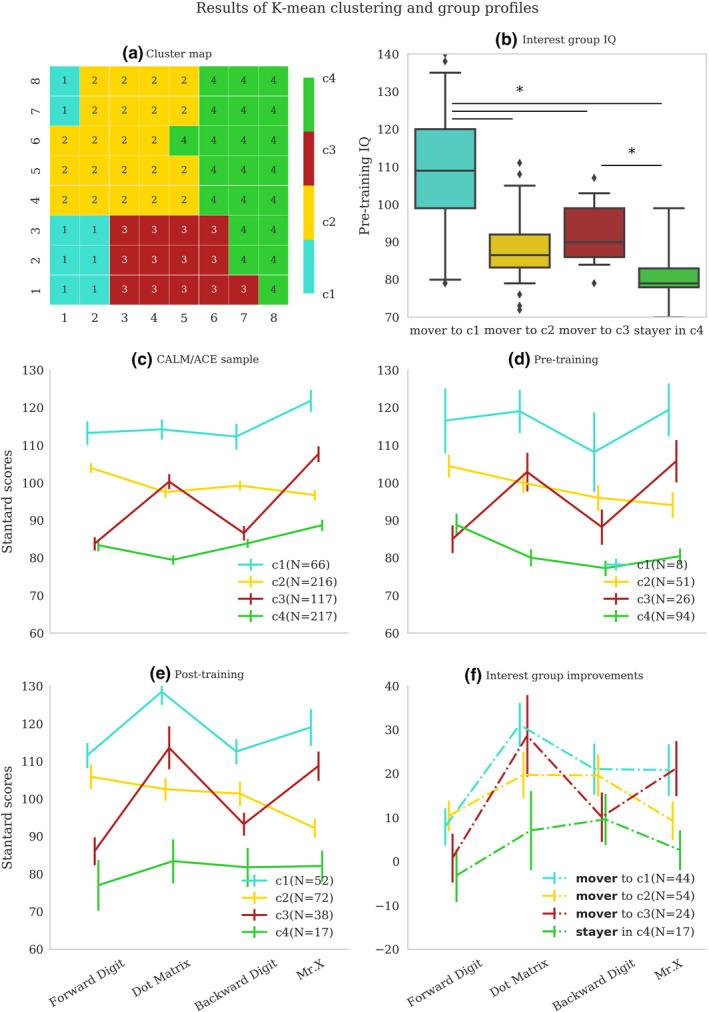
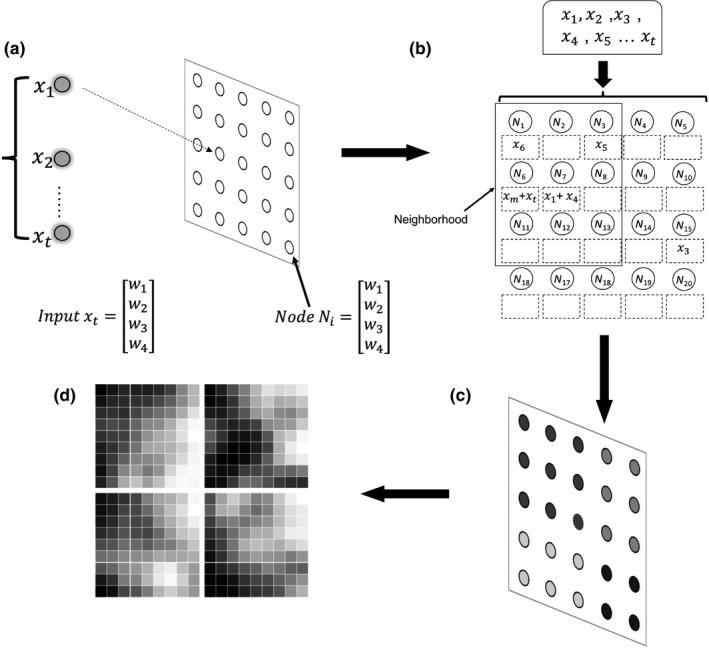
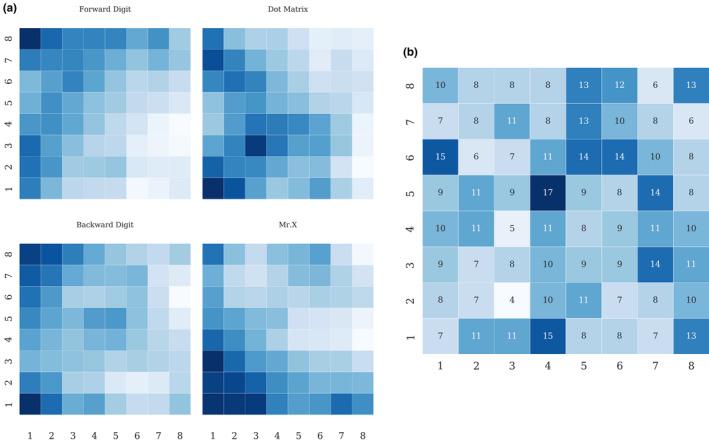
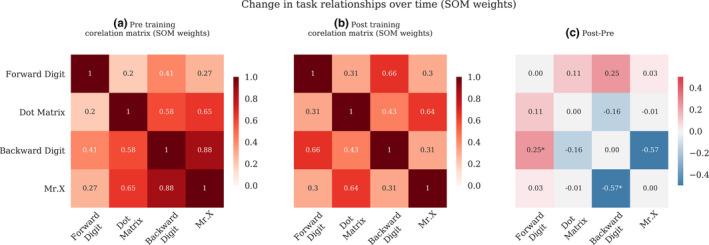
We used two simple unsupervised machine learning techniques to identify differential trajectories of change in children who undergo intensive working memory (WM) training. We used self-organizing maps (SOMs)-a type of simple artificial neural network-to represent multivariate cognitive training data, and then tested whether the way tasks are represented changed as a result of training. The patterns of change we observed in the SOM weight matrices implied that the processes drawn upon to perform WM tasks changed following training. This was then combined with K-means clustering to identify distinct groups of children who respond to the training in different ways. Firstly, the K-means clustering was applied to an independent large sample (N = 616, M = 9.16 years, range = 5.16-17.91 years) to identify subgroups. We then allocated children who had been through cognitive training (N = 179, M = 9.00 years, range = 7.08-11.50 years) to these same four subgroups, both before and after their training. In doing so, we were able to map their improvement trajectories. Scores on a separate measure of fluid intelligence were predictive of a child's improvement trajectory. This paper provides an alternative approach to analysing cognitive training data that go beyond considering changes in individual tasks. This proof-of-principle demonstrates a potentially powerful way of distinguishing task-specific from domain-general changes following training and of establishing different profiles of response to training.
我们使用了两种简单的无监督机器学习技术来识别接受强化工作记忆 (WM) 训练的儿童变化轨迹的差异。我们使用自组织映射 (SOM)——一种简单的人工神经网络——来表示多变量认知训练数据,然后测试任务表示方式是否因训练而改变。我们在 SOM 权重矩阵中观察到的变化模式表明,执行 WM 任务所依赖的过程在训练后发生了变化。然后将其与 K-均值聚类相结合,以识别以不同方式对训练做出反应的不同儿童群体。首先,将 K-均值聚类应用于一个独立的大样本(N=616,M=9.16 岁,范围=5.16-17.91 岁),以识别亚组。然后,我们将接受过认知训练的儿童(N=179,M=9.00 岁,范围=7.08-11.50 岁)分配到这四个亚组中,包括训练前后。通过这样做,我们能够绘制他们的改进轨迹。流体智力的单独衡量标准的分数可以预测孩子的改进轨迹。本文提供了一种分析认知训练数据的替代方法,超越了考虑单个任务变化的范围。这一原理证明提供了一种有潜力的强大方法,可以区分训练后的特定任务和一般领域的变化,并确定对训练的不同反应模式。
 Zotero 插件