
mRNA 甲基化在人类癌症中的作用。
The role of mA RNA methylation in human cancer.
机构信息
Department of Gastroenterology, Shanghai Jiao Tong University Affiliated Sixth People's Hospital, Yishan Road 600, Shanghai, 200233, China.
出版信息
Mol Cancer. 2019 May 29;18(1):103. doi: 10.1186/s12943-019-1033-z.
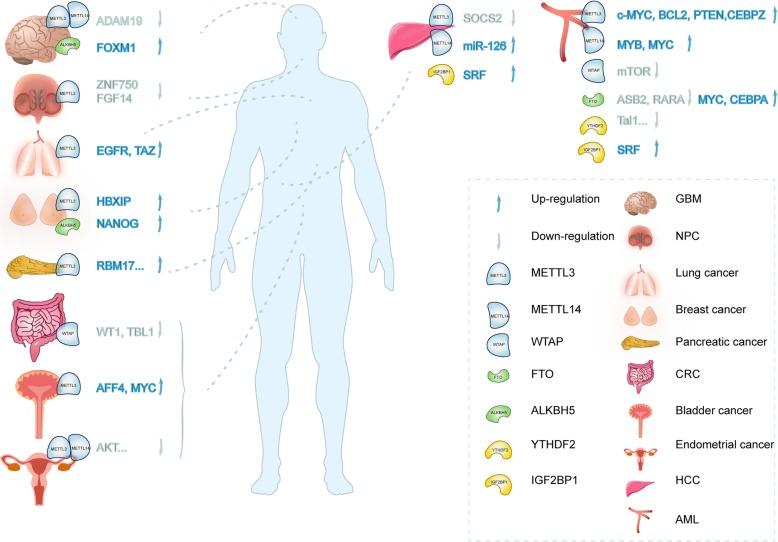
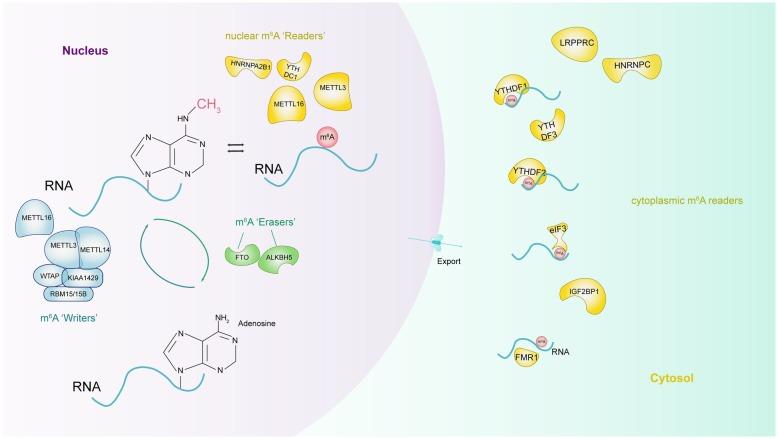
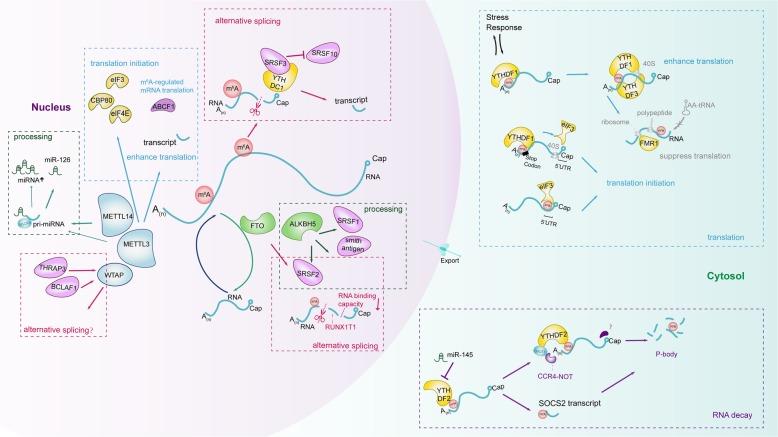
N-methyladenosine (mA) is identified as the most common, abundant and conserved internal transcriptional modification, especially within eukaryotic messenger RNAs (mRNAs). MA modification is installed by the mA methyltransferases (METTL3/14, WTAP, RBM15/15B and KIAA1429, termed as "writers"), reverted by the demethylases (FTO and ALKBH5, termed as "erasers") and recognized by mA binding proteins (YTHDF1/2/3, IGF2BP1 and HNRNPA2B1, termed as "readers"). Acumulating evidence shows that, mA RNA methylation has an outsize effect on RNA production/metabolism and participates in the pathogenesis of multiple diseases including cancers. Until now, the molecular mechanisms underlying mA RNA methylation in various tumors have not been comprehensively clarified. In this review, we mainly summarize the recent advances in biological function of mA modifications in human cancer and discuss the potential therapeutic strategies.
N6-甲基腺苷(m6A)被鉴定为最常见、最丰富和最保守的内部转录修饰,特别是在真核信使 RNA(mRNA)中。mA 修饰由 mA 甲基转移酶(METTL3/14、WTAP、RBM15/15B 和 KIAA1429,称为“写入器”)安装,由去甲基酶(FTO 和 ALKBH5,称为“橡皮擦”)逆转,并由 mA 结合蛋白(YTHDF1/2/3、IGF2BP1 和 HNRNPA2B1,称为“读取器”)识别。越来越多的证据表明,mA RNA 甲基化对 RNA 产生/代谢有很大的影响,并参与多种疾病(包括癌症)的发病机制。到目前为止,各种肿瘤中 mA RNA 甲基化的分子机制尚未得到全面阐明。在这篇综述中,我们主要总结了 mA 修饰在人类癌症中的生物学功能的最新进展,并讨论了潜在的治疗策略。
 Zotero 插件