
肥胖和2型糖尿病的脂肪组织衍生特征:脂肪因子、褐色脂肪因子和微小RNA
Adipose Tissue-Derived Signatures for Obesity and Type 2 Diabetes: Adipokines, Batokines and MicroRNAs.
作者信息
Lee Min-Woo, Lee Mihye, Oh Kyoung-Jin
机构信息
Soonchunhyang Institute of Medi-bio Science, Soonchunhyang University, Cheonan 31151, Korea.
Metabolic Regulation Research Center, Korea Research Institute of Bioscience and Biotechnology (KRIBB), 125 Gwahak-ro, Yuseong-gu, Daejeon 34141, Korea.
出版信息
J Clin Med. 2019 Jun 14;8(6):854. doi: 10.3390/jcm8060854.
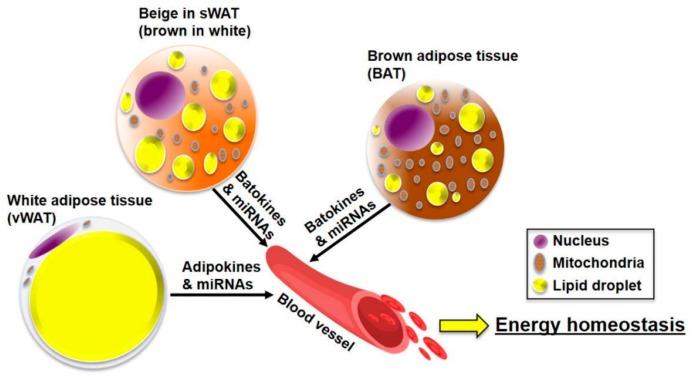
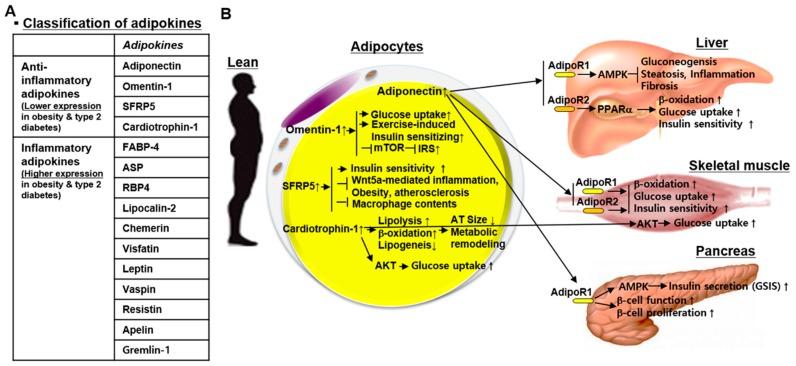
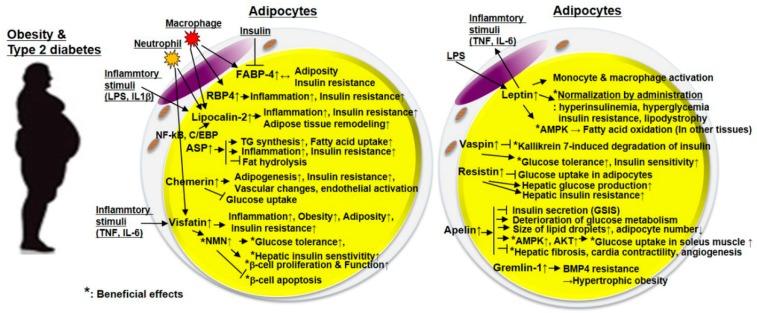
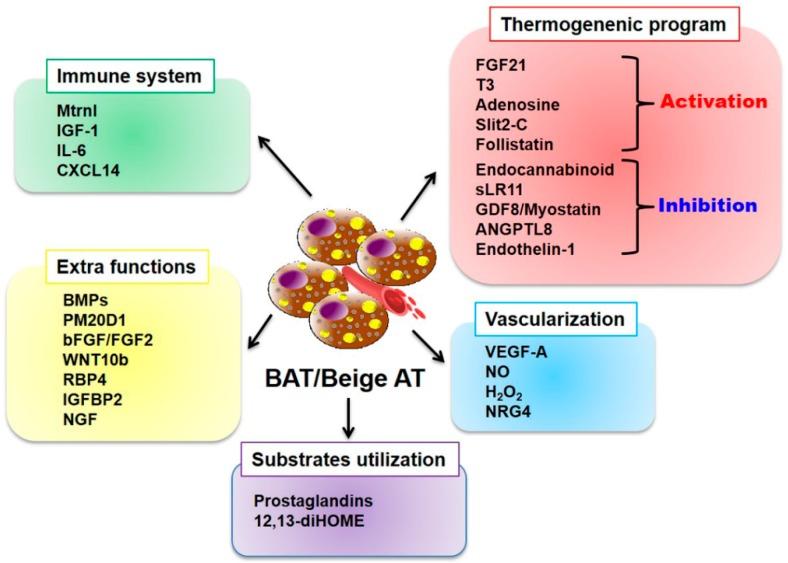
Obesity is one of the main risk factors for type 2 diabetes mellitus (T2DM). It is closely related to metabolic disturbances in the adipose tissue that primarily functions as a fat reservoir. For this reason, adipose tissue is considered as the primary site for initiation and aggravation of obesity and T2DM. As a key endocrine organ, the adipose tissue communicates with other organs, such as the brain, liver, muscle, and pancreas, for the maintenance of energy homeostasis. Two different types of adipose tissues-the white adipose tissue (WAT) and brown adipose tissue (BAT)-secrete bioactive peptides and proteins, known as "adipokines" and "batokines," respectively. Some of them have beneficial anti-inflammatory effects, while others have harmful inflammatory effects. Recently, "exosomal microRNAs (miRNAs)" were identified as novel adipokines, as adipose tissue-derived exosomal miRNAs can affect other organs. In the present review, we discuss the role of adipose-derived secretory factors-adipokines, batokines, and exosomal miRNA-in obesity and T2DM. It will provide new insights into the pathophysiological mechanisms involved in disturbances of adipose-derived factors and will support the development of adipose-derived factors as potential therapeutic targets for obesity and T2DM.
肥胖是2型糖尿病(T2DM)的主要危险因素之一。它与主要作为脂肪储存库的脂肪组织中的代谢紊乱密切相关。因此,脂肪组织被认为是肥胖和T2DM发生及加重的主要部位。作为一个关键的内分泌器官,脂肪组织与大脑、肝脏、肌肉和胰腺等其他器官进行交流,以维持能量稳态。两种不同类型的脂肪组织——白色脂肪组织(WAT)和棕色脂肪组织(BAT)——分别分泌生物活性肽和蛋白质,即“脂肪因子”和“褐脂因子”。其中一些具有有益的抗炎作用,而另一些则具有有害的炎症作用。最近,“外泌体微小RNA(miRNA)”被鉴定为新型脂肪因子,因为脂肪组织来源的外泌体miRNA可以影响其他器官。在本综述中,我们讨论了脂肪来源的分泌因子——脂肪因子、褐脂因子和外泌体miRNA——在肥胖和T2DM中的作用。这将为脂肪来源因子紊乱所涉及的病理生理机制提供新的见解,并将支持将脂肪来源因子开发为肥胖和T2DM的潜在治疗靶点。

 Zotero 插件