
泰国马诺皮洞穴的 shotgun 宏基因组测序揭示了微生物群落结构及其代谢潜力的深入了解。
Shotgun metagenomic sequencing from Manao-Pee cave, Thailand, reveals insight into the microbial community structure and its metabolic potential.
机构信息
Institute of Molecular Biosciences, Mahidol University, Salaya Campus, Phuttamonthon 4 Rd, Salaya, Nakhon Pathom, 73170, Thailand.
National Center for Genetic Engineering and Biotechnology (BIOTEC), 133 Thailand Science Park, Paholyothin Rd, Klong 1, Klongluang, Pathumthani, 12120, Thailand.
出版信息
BMC Microbiol. 2019 Jun 27;19(1):144. doi: 10.1186/s12866-019-1521-8.
BACKGROUND
Due to the cave oligotrophic environment, this habitat presents a challenge for microorganisms to colonize and thrive. However, it has been well documented that microorganisms play important roles in cave development. Survival of microbes in this unique habitat likely involves a broad range of adaptive capabilities. Recently, cave microbiomes all over the world are of great scientific interest. However, the majority of investigations focused mostly on small subunit ribosomal RNA (16S rRNA) gene, leaving the ecological role of the microbial community largely unknown. Here, we are particularly interested in exploring the taxonomic composition and metabolic potential of microorganisms in soil from Manao-Pee cave, a subterranean limestone cave in the western part of Thailand, by using high-throughput shotgun metagenomic sequencing.
RESULTS
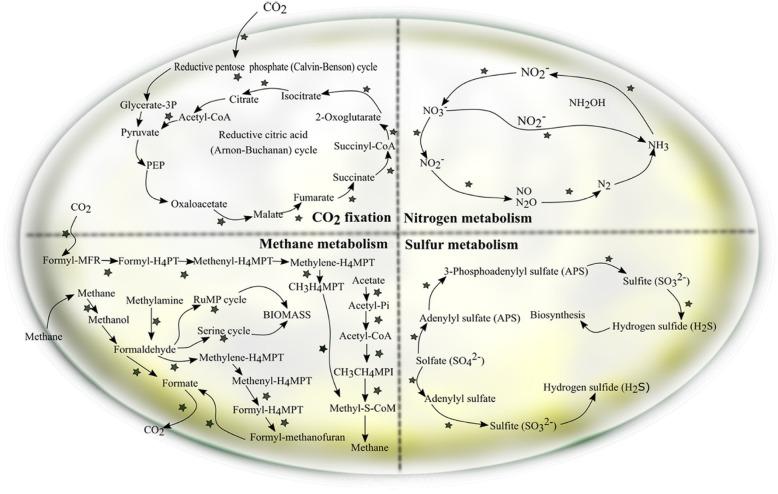
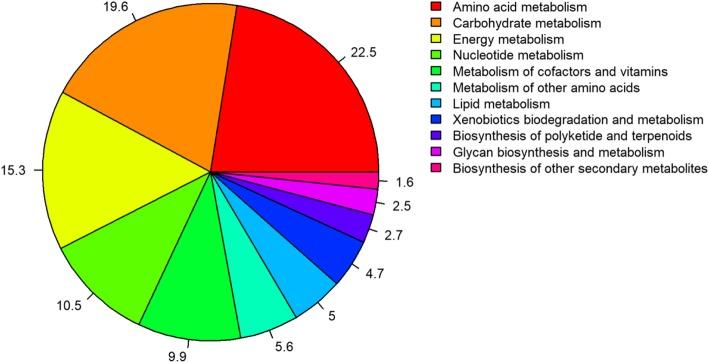
From taxonomic composition analysis using ribosomal RNA genes (rRNA), the results confirmed that Actinobacteria (51.2%) and Gammaproteobacteria (24.4%) were the dominant bacterial groups in the cave soil community. Metabolic potential analysis, based on six functional modules of the Kyoto Encyclopedia of Genes and Genomes (KEGG) database, revealed that functional genes involved in microbial metabolisms are highly represented in this community (40.6%). To better understand how microbes thrive under unfavorable cave condition, we focused on microbial energy metabolism. The results showed that microbial genes involved in oxidative phosphorylation were the most dominant (28.8%) in Manao-Pee cave, and were followed by methane metabolism (20.5%), carbon fixation (16.0%), nitrogen metabolism (14.7%), and sulfur metabolism (6.3%). In addition, microbial genes involved in xenobiotic biodegradation (26 pathways) and in production of secondary metabolites (27 pathways) were also identified.
CONCLUSION
In addition to providing information on microbial diversity, we also gained insights into microbial adaptations and survival strategies under cave conditions. Based on rRNA genes, the results revealed that bacteria belonging to the Actinobacteria and Gammaproteobacteria were the most abundant in this community. From metabolic potential analysis, energy and nutrient sources that sustain diverse microbial population in this community might be atmospheric gases (methane, carbon dioxide, nitrogen), inorganic sulfur, and xenobiotic compounds. In addition, the presence of biosynthetic pathways of secondary metabolites suggested that they might play important ecological roles in the cave microbiome.
背景
由于洞穴的寡营养环境,这一栖息地对微生物的定殖和生长提出了挑战。然而,有大量文献记载表明,微生物在洞穴发育中起着重要作用。微生物在这种独特的栖息地中生存,可能涉及到广泛的适应性能力。最近,世界各地的洞穴微生物组都引起了极大的科学兴趣。然而,大多数研究主要集中在小亚基核糖体 RNA(16S rRNA)基因上,而微生物群落的生态作用在很大程度上仍不清楚。在这里,我们特别感兴趣的是通过高通量 shotgun 宏基因组测序来探索泰国西部地下石灰岩洞——Manao-Pee 洞穴土壤中微生物的分类组成和代谢潜能。
结果
通过核糖体 RNA(rRNA)基因的分类组成分析,结果证实了放线菌(51.2%)和γ-变形菌(24.4%)是洞穴土壤群落中的主要细菌群。基于京都基因与基因组百科全书(KEGG)数据库的六个功能模块的代谢潜能分析表明,该群落中高度代表了参与微生物代谢的功能基因(40.6%)。为了更好地了解微生物在不利的洞穴条件下是如何茁壮成长的,我们专注于微生物的能量代谢。结果表明,微生物参与氧化磷酸化的基因在 Manao-Pee 洞穴中最为占优势(28.8%),其次是甲烷代谢(20.5%)、碳固定(16.0%)、氮代谢(14.7%)和硫代谢(6.3%)。此外,还鉴定到了参与外来生物降解(26 条途径)和次生代谢产物合成(27 条途径)的微生物基因。
结论
除了提供微生物多样性的信息外,我们还深入了解了微生物在洞穴条件下的适应和生存策略。基于 rRNA 基因,结果表明,该群落中丰度最高的细菌属于放线菌和γ-变形菌。从代谢潜能分析来看,维持该群落中多样化微生物种群的能源和营养物质可能是大气气体(甲烷、二氧化碳、氮气)、无机硫和外来化合物。此外,次生代谢产物生物合成途径的存在表明它们可能在洞穴微生物组中发挥着重要的生态作用。



 Zotero 插件