
验证一种基于二氧化碳的低成本冷冻消融系统用于经皮肿瘤消融。
Validation of a low-cost, carbon dioxide-based cryoablation system for percutaneous tumor ablation.
机构信息
Department of Biomedical Engineering, Johns Hopkins University, Baltimore, Maryland, United States of America.
Department of Oncology, Johns Hopkins Medicine, Baltimore, Maryland, United States of America.
出版信息
PLoS One. 2019 Jul 3;14(7):e0207107. doi: 10.1371/journal.pone.0207107. eCollection 2019.
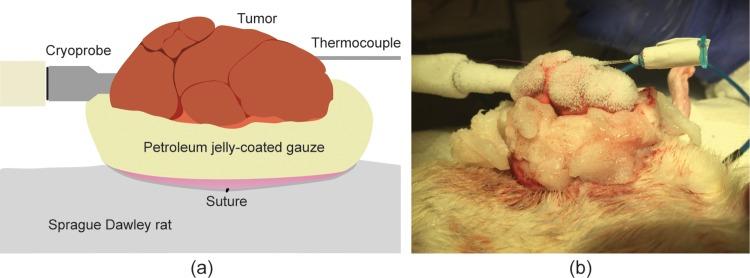
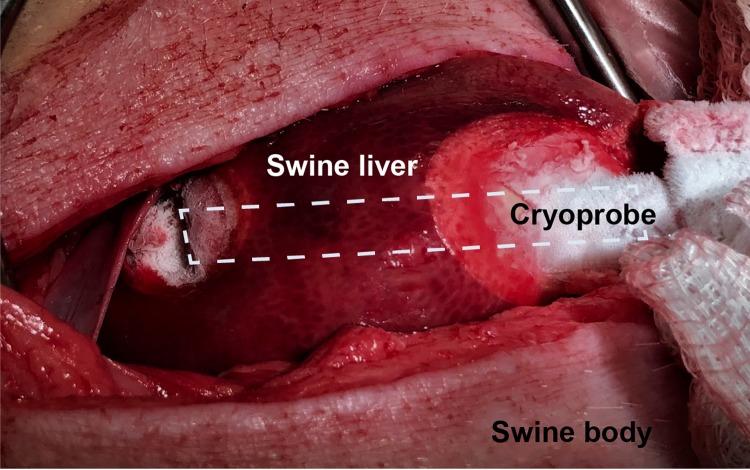
Breast cancer rates are rising in low- and middle-income countries (LMICs), yet there is a lack of accessible and cost-effective treatment. As a result, the cancer burden and death rates are highest in LMICs. In an effort to meet this need, our work presents the design and feasibility of a low-cost cryoablation system using widely-available carbon dioxide as the only consumable. This system uses an 8-gauge outer-diameter needle and Joule-Thomson expansion to percutaneously necrose tissue with cryoablation. Bench top experiments characterized temperature dynamics in ultrasound gel demonstrated that isotherms greater than 2 cm were formed. Further, this system was applied to mammary tumors in an in vivo rat model and necrosis was verified by histopathology. Finally, freezing capacity under a large heat load was assessed with an in vivo porcine study, where volumes of necrosis greater than 1.5 cm in diameter confirmed by histopathology were induced in a highly perfused liver after two 7-minute freeze cycles. These results demonstrate the feasibility of a carbon-dioxide based cryoablation system for improving solid tumor treatment options in resource-constrained environments.
乳腺癌在中低收入国家(LMICs)的发病率正在上升,但缺乏可及且经济有效的治疗方法。因此,癌症负担和死亡率在 LMICs 中最高。为了满足这一需求,我们的工作提出了一种使用广泛可用的二氧化碳作为唯一消耗品的低成本冷冻消融系统的设计和可行性。该系统使用 8 号外径的针和焦耳-汤姆逊膨胀,通过冷冻消融经皮使组织坏死。在超声凝胶的台式实验中,对温度动态进行了特征描述,结果表明形成了大于 2 厘米的等温线。此外,该系统应用于体内大鼠模型的乳腺肿瘤,通过组织病理学验证了坏死。最后,通过体内猪研究评估了在大热量负荷下的冷冻能力,其中在两次 7 分钟的冷冻循环后,在高灌注的肝脏中诱导了直径大于 1.5 厘米的坏死体积,这通过组织病理学得到证实。这些结果表明,基于二氧化碳的冷冻消融系统具有改善资源受限环境中实体瘤治疗选择的可行性。


 Zotero 插件