
精油中萜类和萜烯醇的抗菌活性。
Antibacterial Activity of Terpenes and Terpenoids Present in Essential Oils.
机构信息
Pharmaceutical Sciences Graduate Program, Universidade Vila Velha, Espírito Santo 29102-770, Brazil.
Department of Morphology, Federal University of Espírito Santo, Espírito Santo 29043-090, Brazil.
出版信息
Molecules. 2019 Jul 5;24(13):2471. doi: 10.3390/molecules24132471.
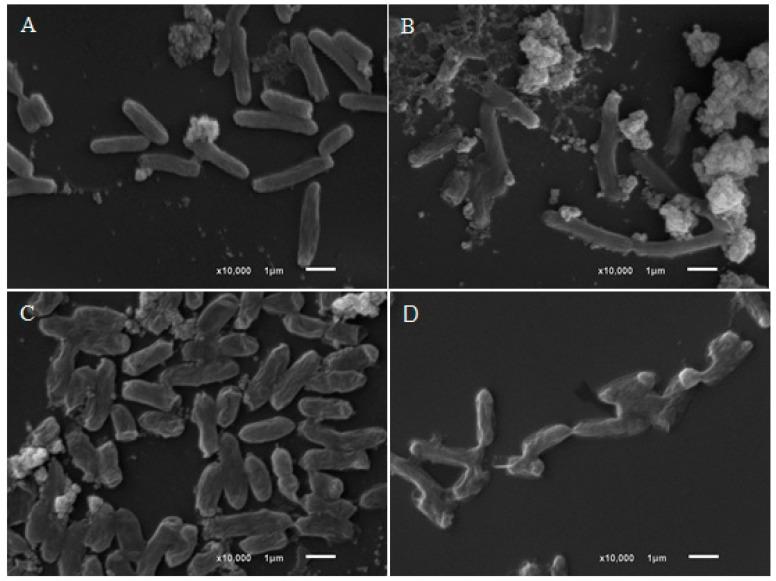
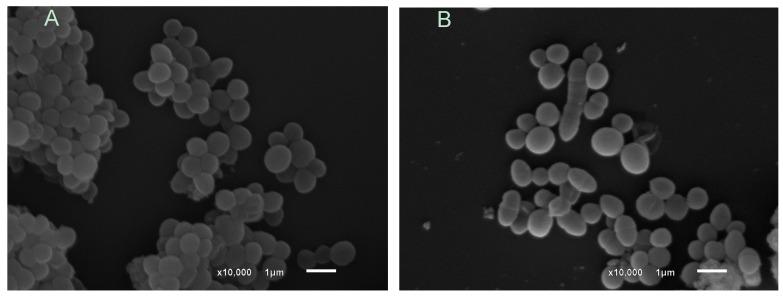
The antimicrobial activity of essential oils has been reported in hundreds of studies, however, the great majority of these studies attribute the activity to the most prevalent compounds without analyzing them independently. Therefore, the aim was to investigate the antibacterial activity of 33 free terpenes commonly found in essential oils and evaluate the cellular ultrastructure to verify possible damage to the cellular membrane. Screening was performed to select substances with possible antimicrobial activity, then the minimal inhibitory concentrations, bactericidal activity and 24-h time-kill curve studies were evaluated by standard protocols. In addition, the ultrastructure of control and death bacteria were evaluated by scanning electron microscopy. Only 16 of the 33 compounds had antimicrobial activity at the initial screening. Eugenol exhibited rapid bactericidal action against serovar Typhimurium (2 h). Terpineol showed excellent bactericidal activity against strains. Carveol, citronellol and geraniol presented a rapid bactericidal effect against . The higher antimicrobial activity was related to the presence of hydroxyl groups (phenolic and alcohol compounds), whereas hydrocarbons resulted in less activity. The first group, such as carvacrol, l-carveol, eugenol, -geraniol, and thymol, showed higher activity when compared to sulfanilamide. Images obtained by scanning electron microscopy indicate that the mechanism causing the cell death of the evaluated bacteria is based on the loss of cellular membrane integrity of function. The present study brings detailed knowledge about the antimicrobial activity of the individual compounds present in essential oils, that can provide a greater understanding for the future researches.
已有数百项研究报告了精油的抗菌活性,但绝大多数研究都将活性归因于最常见的化合物,而没有对其进行独立分析。因此,本研究旨在研究 33 种常见于精油中的游离萜烯的抗菌活性,并评估细胞超微结构,以验证细胞膜是否受损。通过筛选选择具有潜在抗菌活性的物质,然后通过标准方案评估最小抑菌浓度、杀菌活性和 24 小时时程杀灭曲线研究。此外,通过扫描电子显微镜评估对照和死亡细菌的超微结构。在初始筛选中,只有 33 种化合物中的 16 种具有抗菌活性。丁香酚对肠炎沙门氏菌(血清型 Typhimurium)具有快速杀菌作用(2 小时)。萜品醇对 菌株表现出极好的杀菌活性。香芹酚、香茅醇和香叶醇对 表现出快速杀菌作用。较高的抗菌活性与羟基(酚类和醇类化合物)的存在有关,而烃类则活性较低。第一组化合物,如香芹酚、l-香芹酚、丁香酚、β-香叶醇和百里酚,与磺胺嘧啶相比,活性更高。扫描电子显微镜获得的图像表明,评估细菌细胞死亡的机制是基于细胞膜完整性和功能的丧失。本研究详细介绍了精油中存在的各个化合物的抗菌活性,可为未来的研究提供更深入的了解。


 Zotero 插件