
持久性热点:在吡喹酮大规模药物治疗四年后获得和维持血吸虫病控制的血吸虫病合作研究和评价行动。
Persistent Hotspots in Schistosomiasis Consortium for Operational Research and Evaluation Studies for Gaining and Sustaining Control of Schistosomiasis after Four Years of Mass Drug Administration of Praziquantel.
机构信息
Schistosomiasis Consortium for Operational Research and Evaluation (SCORE), Center for Tropical and Emerging Global Diseases, University of Georgia, Athens, Georgia.
Center for Global Health and Diseases, Case Western Reserve University, Cleveland, Ohio.
出版信息
Am J Trop Med Hyg. 2019 Sep;101(3):617-627. doi: 10.4269/ajtmh.19-0193.
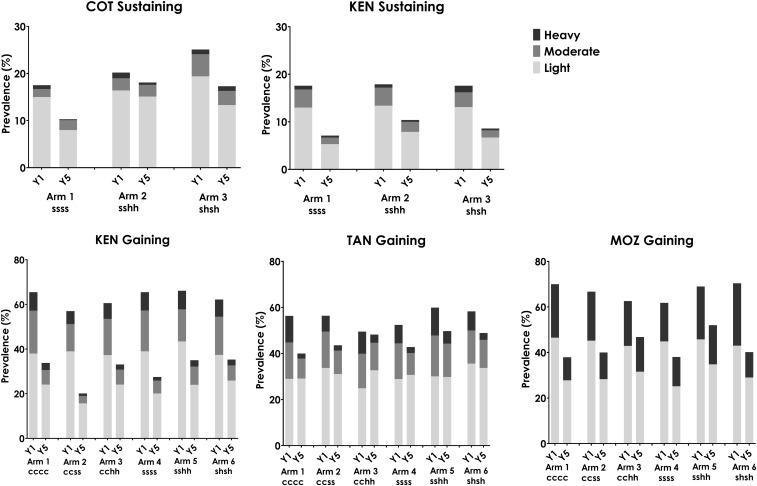
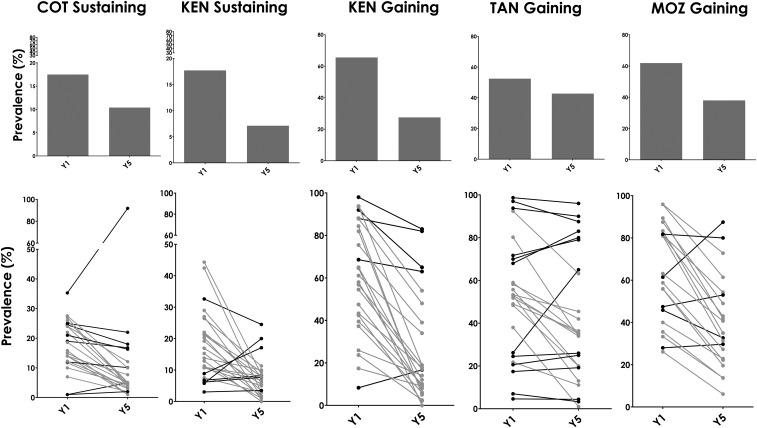
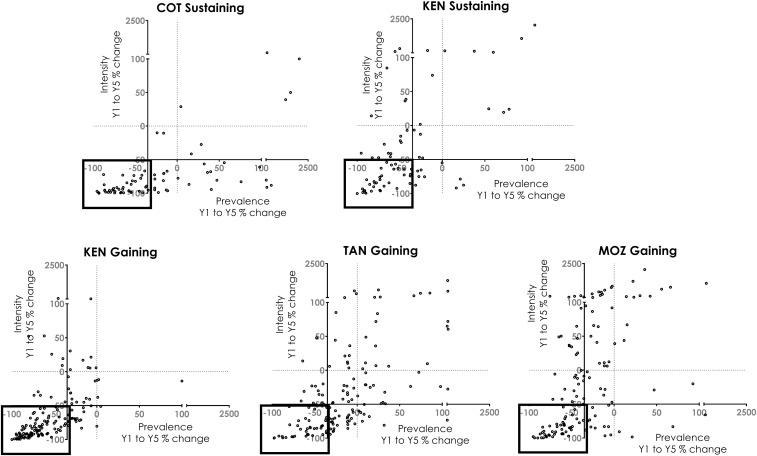
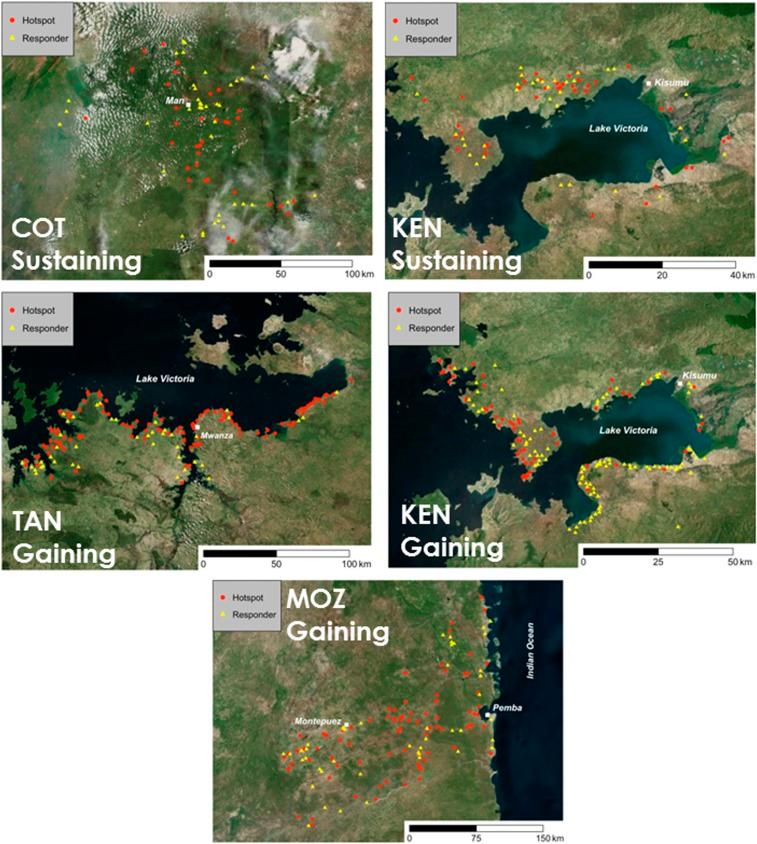
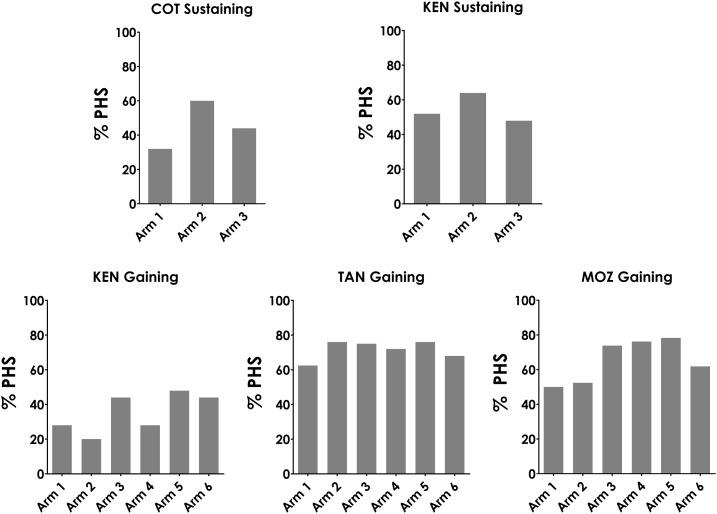
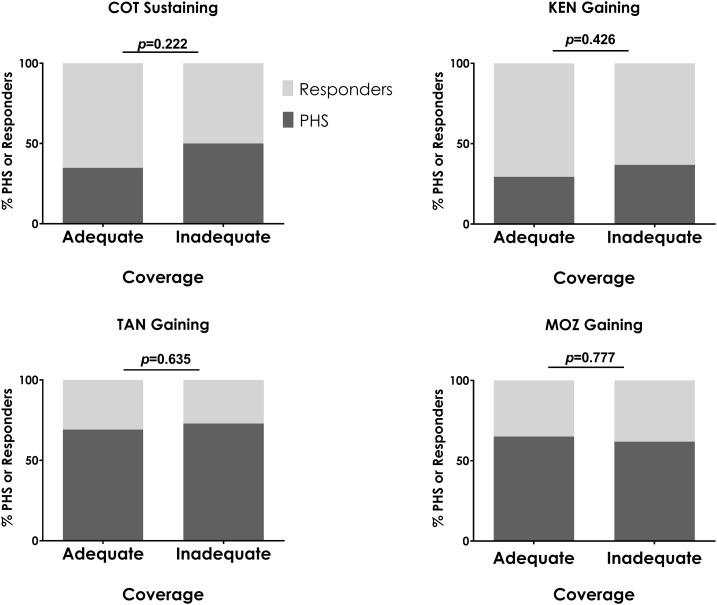
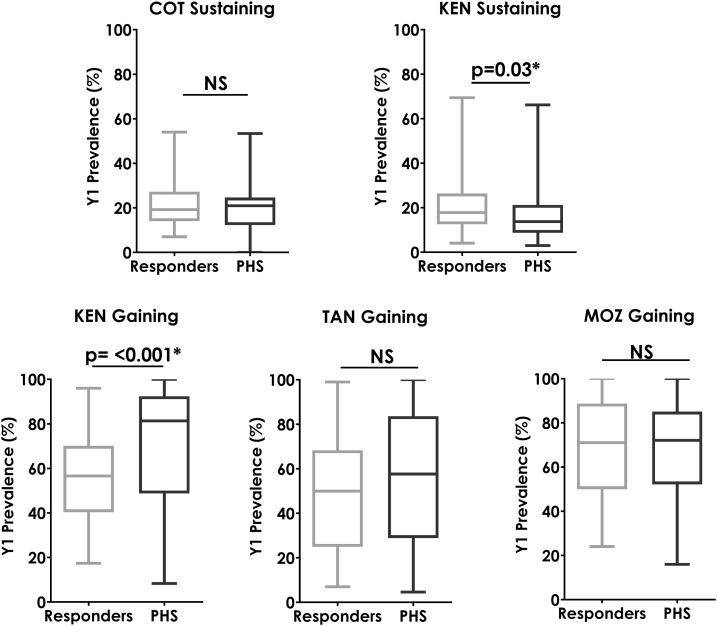
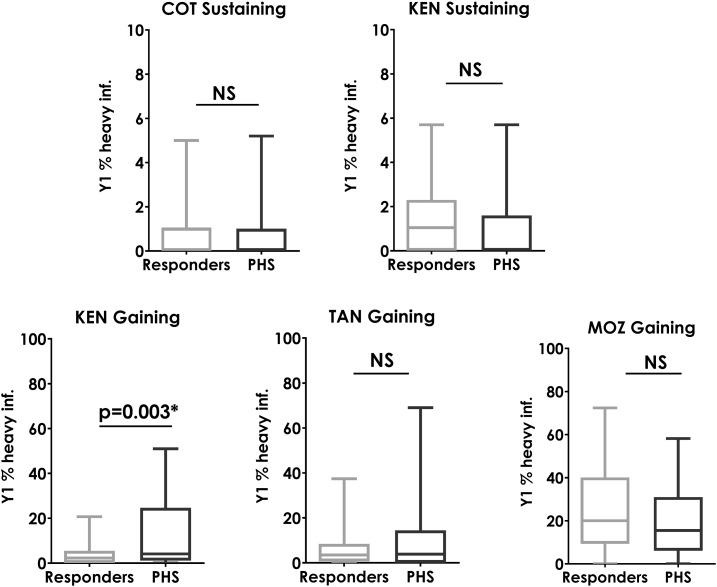
Control of schistosomiasis presently relies largely on preventive chemotherapy with praziquantel through mass drug administration (MDA) programs. The Schistosomiasis Consortium for Operational Research and Evaluation has concluded five studies in four countries (Côte d'Ivoire, Kenya, Mozambique, and Tanzania) to evaluate alternative approaches to MDA. Studies involved four intervention years, with final evaluation in the fifth year. Mass drug administration given annually or twice over 4 years reduced average prevalence and intensity of schistosome infections, but not all villages that were treated in the same way responded similarly. There are multiple ways by which responsiveness to MDA, or the lack thereof, could be measured. In the analyses presented here, we defined persistent hotspots (PHS) as villages that achieved less than 35% reduction in prevalence and/or less than 50% reduction in infection intensity after 4 years of either school-based or community-wide MDA, either annually or twice in 4 years. By this definition, at least 30% of villages in each of the five studies were PHSs. We found no consistent relationship between PHSs and the type or frequency of intervention, adequacy of reported MDA coverage, and prevalence or intensity of infection at baseline. New research is warranted to identify PHSs after just one or a few rounds of MDA, and new adaptive strategies need to be advanced and validated for turning PHSs into responder villages.
目前,血吸虫病的控制主要依赖于用吡喹酮进行大规模药物治疗(MDA)的预防性化疗。血吸虫病运营研究与评价联盟已经在四个国家(科特迪瓦、肯尼亚、莫桑比克和坦桑尼亚)完成了五项研究,以评估 MDA 的替代方法。这些研究涉及四个干预年,最终评估在第五年进行。每年或每四年两次进行 MDA 可降低血吸虫感染的平均流行率和强度,但并非所有以相同方式治疗的村庄都有类似的反应。有多种方法可以衡量对 MDA 的反应性或缺乏反应性。在本文呈现的分析中,我们将持续热点(PHS)定义为在经过 4 年的学校或社区范围的 MDA(每年或每四年两次)后,患病率降低幅度低于 35%和/或感染强度降低幅度低于 50%的村庄。根据这一定义,五项研究中至少有 30%的村庄属于 PHS。我们没有发现 PHS 与干预的类型或频率、报告的 MDA 覆盖率的充分性以及基线时的感染流行率或强度之间存在一致的关系。有必要开展新的研究,以确定在仅进行一轮或几轮 MDA 后出现的 PHS,并需要提出和验证新的适应性策略,将 PHS 转变为有反应的村庄。

 Zotero 插件