
肿瘤衍生外泌体(TDEs):如何避免潜在的风险。
Tumor-derived exosomes (TDEs): How to avoid the sting in the tail.
机构信息
Department of Integrated Traditional Chinese and Western Medicine, West China Hospital of Sichuan University, Chengdu, Sichuan, China.
Center for Molecular Design and Biomimetics, The Biodesign Institute, Arizona State University, Tempe, Arizona.
出版信息
Med Res Rev. 2020 Jan;40(1):385-412. doi: 10.1002/med.21623. Epub 2019 Jul 18.
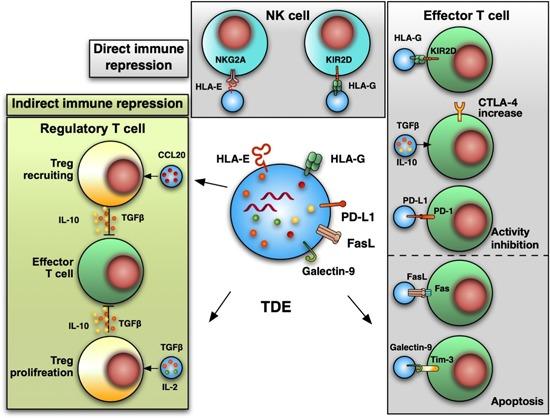
Exosomes are abundantly secreted extracellular vesicles that accumulate in the circulation and are of great interest for disease diagnosis and evaluation since their contents reflects the phenotype of their cell of origin. Tumor-derived exosomes (TDEs) are of particular interest for cancer diagnosis and therapy, since most tumor demonstrate highly elevated exosome secretion rates and provide specific information about the genotype of a tumor and its response to treatment. TDEs also contain regulatory factors that can alter the phenotypes of local and distant tissue sites and alter immune cell functions to promote tumor progression. The abundance, information content, regulatory potential, in vivo half-life, and physical durability of exosomes suggest that TDEs may represent a superior source of diagnostic biomarkers and treatment targets than other materials currently under investigation. This review will summarize current information on mechanisms that may differentially regulate TDE biogenesis, TDE effects on the immune system that promote tumor survival, growth, and metastasis, and new approaches understudy to counteract or utilize TDE properties in cancer therapies.
外泌体是大量分泌的细胞外囊泡,在循环中积累,由于其内容反映了其起源细胞的表型,因此非常适合用于疾病的诊断和评估。肿瘤来源的外泌体 (TDE) 特别适合用于癌症的诊断和治疗,因为大多数肿瘤显示出高度升高的外泌体分泌率,并提供有关肿瘤基因型及其对治疗反应的具体信息。TDE 还包含调节因子,可改变局部和远处组织部位的表型,并改变免疫细胞功能以促进肿瘤进展。外泌体的丰度、信息含量、调节潜力、体内半衰期和物理耐久性表明,TDE 可能代表比其他正在研究的材料更优越的诊断生物标志物和治疗靶点来源。这篇综述将总结目前关于可能差异调节 TDE 生物发生的机制、TDE 对促进肿瘤存活、生长和转移的免疫系统的影响,以及正在研究的用于对抗或利用 TDE 在癌症治疗中特性的新方法的信息。



 Zotero 插件