
皮肤黑色素瘤发生与进展的分子背景:治疗意义
Molecular background of skin melanoma development and progression: therapeutic implications.
作者信息
Olbryt Magdalena
机构信息
Maria Sklodowska-Curie Institute - Oncology Center, Gliwice Branch, Centre for Translational Research and Molecular Biology of Cancer, Gliwice, Poland.
出版信息
Postepy Dermatol Alergol. 2019 Apr;36(2):129-138. doi: 10.5114/ada.2019.84590. Epub 2019 May 14.
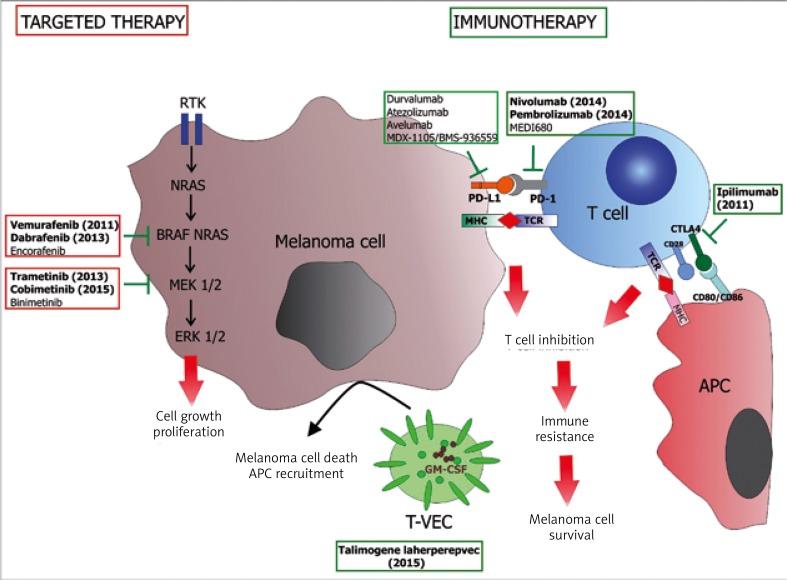
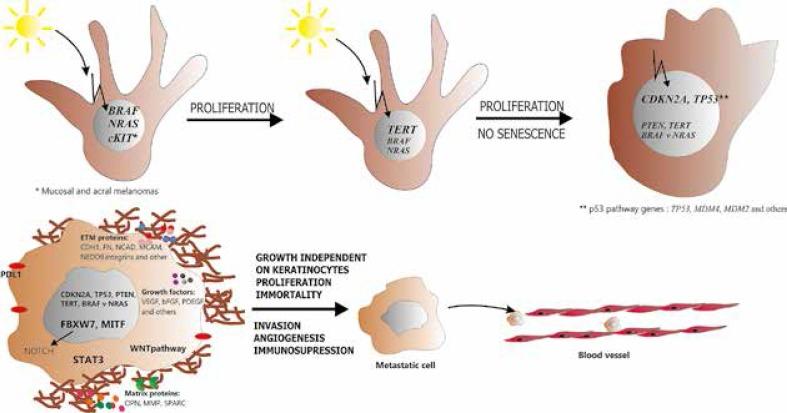
Melanoma is the most aggressive skin cancer with an increasing number of cases worldwide and curable mostly in its early stage. The improvement in patients' survival in advanced melanoma has been achieved only recently, due to development of new biological drugs for targeted therapies and immunotherapy. Further progress in the treatment of melanoma is clearly dependent on the better understanding of its complex biology. This review describes the most important molecular mechanisms and genetic events underlying skin melanoma development and progression, depicts the way of action of newly developed drugs and indicates new potential therapeutic targets.
黑色素瘤是最具侵袭性的皮肤癌,全球病例数不断增加,且大多在早期阶段可治愈。由于用于靶向治疗和免疫治疗的新型生物药物的研发,晚期黑色素瘤患者的生存率直到最近才有所提高。黑色素瘤治疗的进一步进展显然依赖于对其复杂生物学的更好理解。本综述描述了皮肤黑色素瘤发生和进展背后最重要的分子机制和基因事件,阐述了新研发药物的作用方式,并指出了新的潜在治疗靶点。
 Zotero 插件