
水黄皮碱通过抑制 NF-κB 和 Akt 信号通路抑制破骨细胞生成来预防 LPS 诱导的骨丢失。
Stachydrine prevents LPS-induced bone loss by inhibiting osteoclastogenesis via NF-κB and Akt signalling.
机构信息
Department of Orthopedic Surgery, The Second Affiliated Hospital, Zhejiang University School of Medicine, Hangzhou, China.
Orthopedic Research Institute of Zhejiang University, Hangzhou, China.
出版信息
J Cell Mol Med. 2019 Oct;23(10):6730-6743. doi: 10.1111/jcmm.14551. Epub 2019 Jul 21.
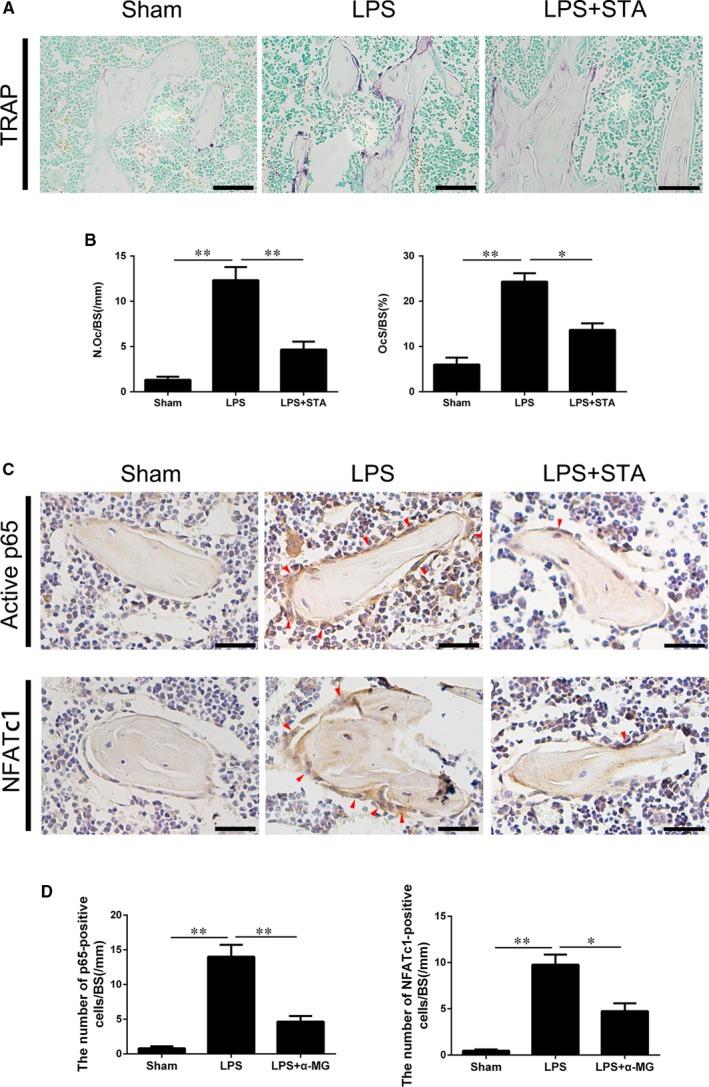
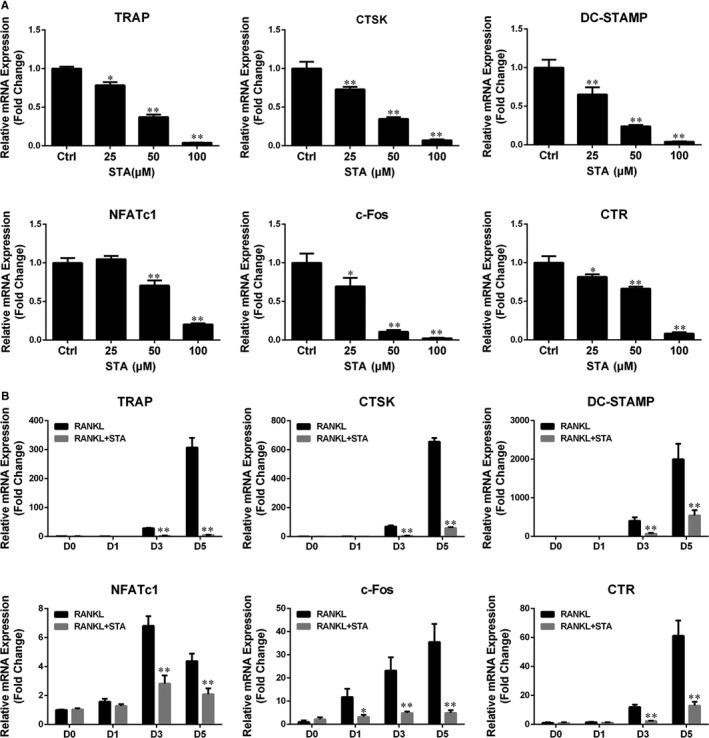
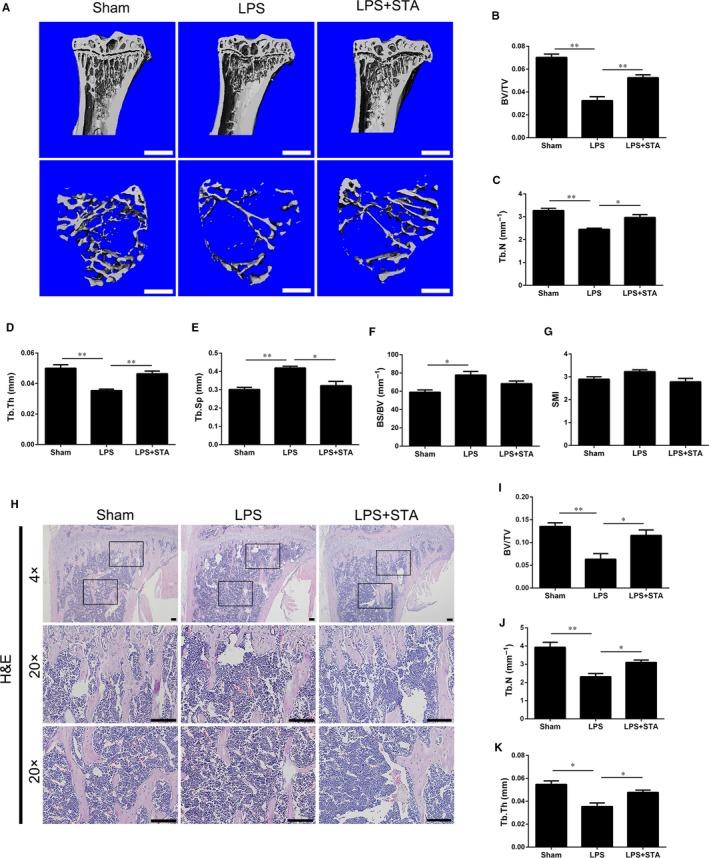
Osteoclast overactivation-induced imbalance in bone remodelling leads to pathological bone destruction, which is a characteristic of many osteolytic diseases such as rheumatoid arthritis, osteoporosis, periprosthetic osteolysis and periodontitis. Natural compounds that suppress osteoclast formation and function have therapeutic potential for treating these diseases. Stachydrine (STA) is a bioactive alkaloid isolated from Leonurus heterophyllus Sweet and possesses antioxidant, anti-inflammatory, anticancer and cardioprotective properties. However, its effects on osteoclast formation and function have been rarely described. In the present study, we found that STA suppressed receptor activator of nuclear factor-κB (NF-κB) ligand (RANKL)-induced osteoclast formation and bone resorption, and reduced osteoclast-related gene expression in vitro. Mechanistically, STA inhibited RANKL-induced activation of NF-κB and Akt signalling, thus suppressing nuclear factor of activated T cells c1 induction and nuclear translocation. In addition, STA alleviated bone loss and reduced osteoclast number in a murine model of LPS-induced inflammatory bone loss. STA also inhibited the activities of NF-κB and NFATc1 in vivo. Together, these results suggest that STA effectively inhibits osteoclastogenesis both in vitro and in vivo and therefore is a potential option for treating osteoclast-related diseases.
破骨细胞过度激活导致骨重建失衡,从而引发病理性骨破坏,这是许多溶骨性疾病的特征,如类风湿性关节炎、骨质疏松症、假体周围骨溶解和牙周炎。抑制破骨细胞形成和功能的天然化合物具有治疗这些疾病的潜力。水苏碱(STA)是从益母草中分离得到的一种生物活性生物碱,具有抗氧化、抗炎、抗癌和心脏保护作用。然而,其对破骨细胞形成和功能的影响鲜有描述。在本研究中,我们发现 STA 抑制核因子-κB 受体激活剂配体(RANKL)诱导的破骨细胞形成和骨吸收,并降低体外破骨细胞相关基因的表达。机制上,STA 抑制了 RANKL 诱导的 NF-κB 和 Akt 信号通路的激活,从而抑制了激活 T 细胞核因子 c1 的诱导和核转位。此外,STA 减轻了 LPS 诱导的炎症性骨丢失小鼠模型中的骨丢失并减少了破骨细胞数量。STA 还抑制了体内 NF-κB 和 NFATc1 的活性。综上所述,这些结果表明 STA 可有效抑制体外和体内的破骨细胞生成,因此是治疗破骨细胞相关疾病的一种潜在选择。




 Zotero 插件