
低升糖指数饮食对 2 型糖尿病和妊娠糖尿病患者心血管代谢和炎症参数的影响:系统评价和随机对照试验的荟萃分析。
The Effects of a Low GI Diet on Cardiometabolic and Inflammatory Parameters in Patients with Type 2 and Gestational Diabetes: A Systematic Review and Meta-Analysis of Randomised Controlled Trials.
机构信息
Faculty of Education and Health, Department of Adult Nursing and Paramedic Science, University of Greenwich, London SE9 2UG, UK.
South London and Maudsley NHS Foundation Trust, University Hospital, Lewisham High Street, London SE13 6LH, UK.
出版信息
Nutrients. 2019 Jul 12;11(7):1584. doi: 10.3390/nu11071584.
UNLABELLED
The prevalence of diabetes is increasing globally, and its effect on patients and the healthcare system can be significant. Gestational diabetes mellitus (GDM) and type 2 diabetes are well established risk factors for cardiovascular disease, and strategies for managing these conditions include dietary interventions, such as the use of a low glycemic index (GI) diet.
AIMS
This review aimed to evaluate the effects of a low GI diet on the cardio-metabolic and inflammatory parameters in patients with type 2 diabetes and women with GDM and assess whether the effects are different in these conditions.
METHODS
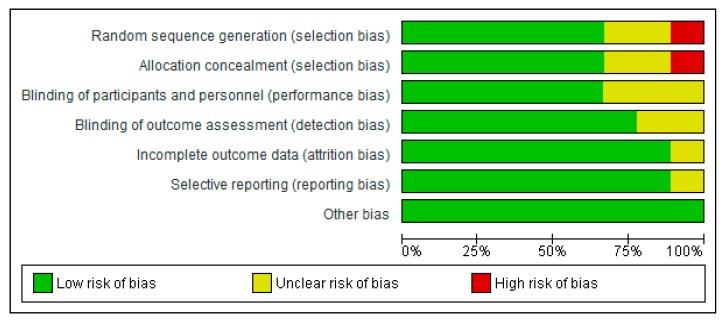
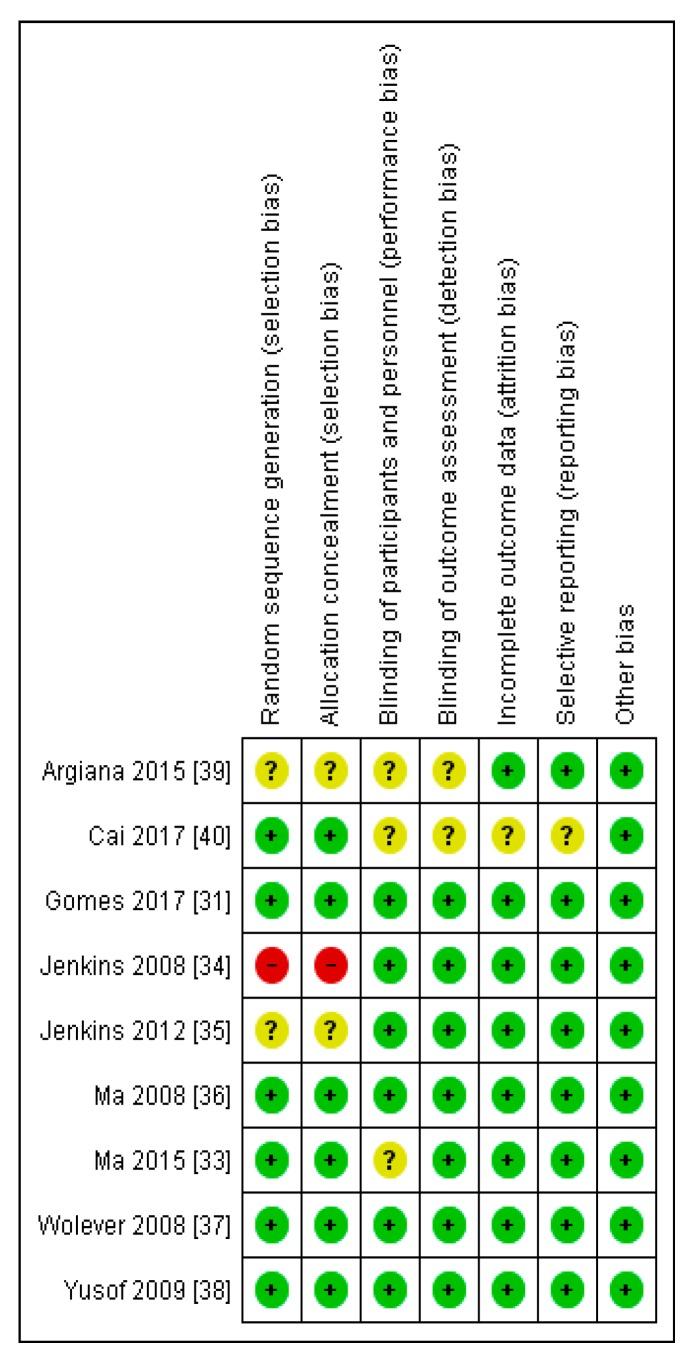
This review was based on the preferred reporting items for systematic reviews and meta-analyses (PRISMA) guidelines. Three databases (EMBASE, Pubmed, and PsycINFO) were searched from inception to 20 February 2019 using search terms that included synonyms and Medical Subject Headings (MeSH) in line with the population, intervention, comparator, outcomes, and studies (PICOS) framework. Studies were evaluated for the quality and risk of bias.
RESULTS
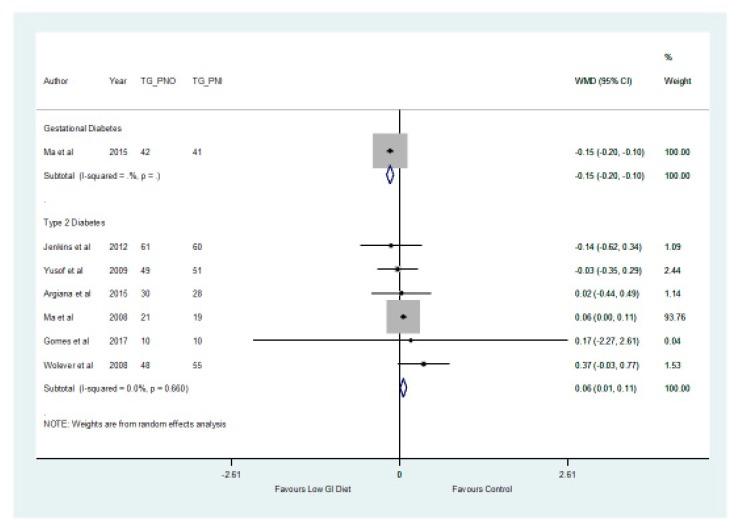
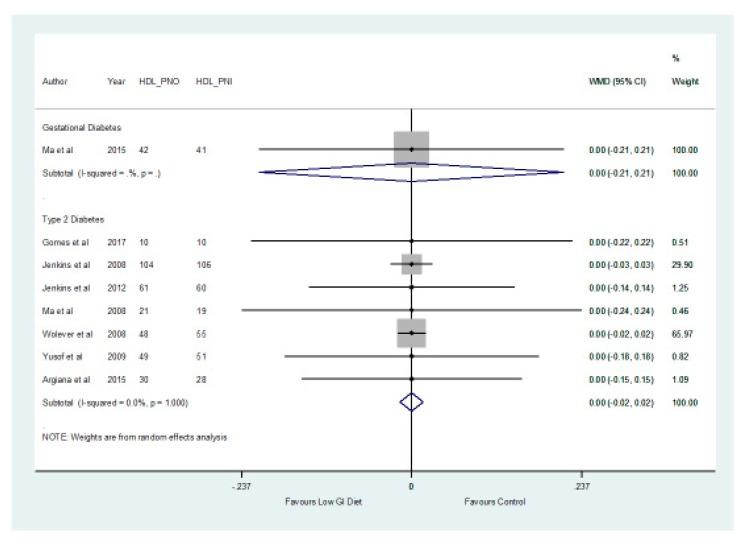
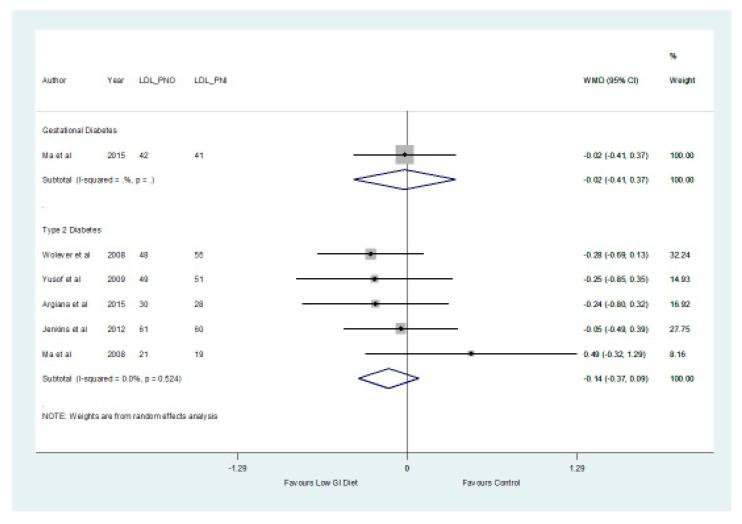
10 randomised controlled studies were included in the systematic review, while 9 were selected for the meta-analysis. Two distinct areas were identified: the effect of a low GI diet on lipid profile and the effect of a low GI diet on inflammatory parameters. The results of the meta-analysis showed that there were no significant differences ( > 0.05) between the low GI and higher GI diets with respect to total cholesterol, HDL, and LDL cholesterol in patients with type 2 diabetes. However, there was a significant difference ( = 0.027) with respect to triglyceride which increased by a mean of 0.06 mmol/L (0.01, 0.11) in patients with type 2 diabetes on higher GI diet. With respect to the women with GDM, the findings from the systematic review were not consistent in terms of the effect of a low GI diet on the lipid profile. The results of the meta-analysis did not show significant differences ( > 0.05) between low GI and higher GI diets with respect to adiponectin and C-reactive proteins in patients with type 2 diabetes, but a significant difference ( < 0.001) was observed between the two groups in relation to interleukin-6.
CONCLUSION
This systematic review and meta-analysis have demonstrated that there were no significant differences ( > 0.05) between the low GI and higher GI diets in relation to total cholesterol-HDL and LDL cholesterol-in patients with type 2 diabetes. However, a significant difference ( < 0.05) was observed between the two groups with respect to triglyceride in patients with type 2 diabetes. The results of the effect of a low GI diet on the lipid profile in patients with GDM were not consistent. With respect to the inflammatory parameters, the low GI diet significantly decreased interleukin-6 in patients with type 2 diabetes compared to the higher GI diet. More studies are needed in this area of research.
目的
本综述旨在评估低升糖指数(GI)饮食对 2 型糖尿病患者和妊娠期糖尿病(GDM)女性的心血管代谢和炎症参数的影响,并评估在这些情况下,这种影响是否存在差异。
方法
本综述基于系统评价和荟萃分析的首选报告项目(PRISMA)指南。从开始到 2019 年 2 月 20 日,我们使用同义词和符合人群、干预、比较、结局和研究(PICOS)框架的医学主题词(MeSH),在三个数据库(EMBASE、PubMed 和 PsycINFO)中进行了搜索。我们评估了研究的质量和偏倚风险。
结果
系统评价纳入了 10 项随机对照研究,荟萃分析纳入了 9 项研究。确定了两个不同的领域:低 GI 饮食对血脂谱的影响,以及低 GI 饮食对炎症参数的影响。荟萃分析结果显示,在 2 型糖尿病患者中,低 GI 饮食与高 GI 饮食在总胆固醇、高密度脂蛋白胆固醇和低密度脂蛋白胆固醇方面无显著差异(>0.05)。然而,在甘油三酯方面存在显著差异(=0.027),高 GI 饮食组的患者甘油三酯平均增加 0.06mmol/L(0.01,0.11)。对于患有 GDM 的女性,低 GI 饮食对血脂谱影响的系统评价结果不一致。荟萃分析的结果显示,低 GI 饮食与高 GI 饮食在 2 型糖尿病患者的脂联素和 C 反应蛋白方面无显著差异(>0.05),但两组间白细胞介素-6 存在显著差异(<0.001)。
结论
本系统评价和荟萃分析表明,在 2 型糖尿病患者中,低 GI 饮食与高 GI 饮食在总胆固醇-高密度脂蛋白胆固醇和低密度脂蛋白胆固醇方面无显著差异(>0.05)。然而,在 2 型糖尿病患者中,两组间甘油三酯存在显著差异(<0.05)。GDM 患者低 GI 饮食对血脂谱影响的结果不一致。在炎症参数方面,与高 GI 饮食相比,低 GI 饮食显著降低了 2 型糖尿病患者的白细胞介素-6。这一领域需要更多的研究。


 Zotero 插件