
KymoButler,一款用于自动示波图分析的深度学习软件。
KymoButler, a deep learning software for automated kymograph analysis.
机构信息
Department of Physiology, Development and Neuroscience, University of Cambridge, Cambridge, United Kingdom.
出版信息
Elife. 2019 Aug 13;8:e42288. doi: 10.7554/eLife.42288.
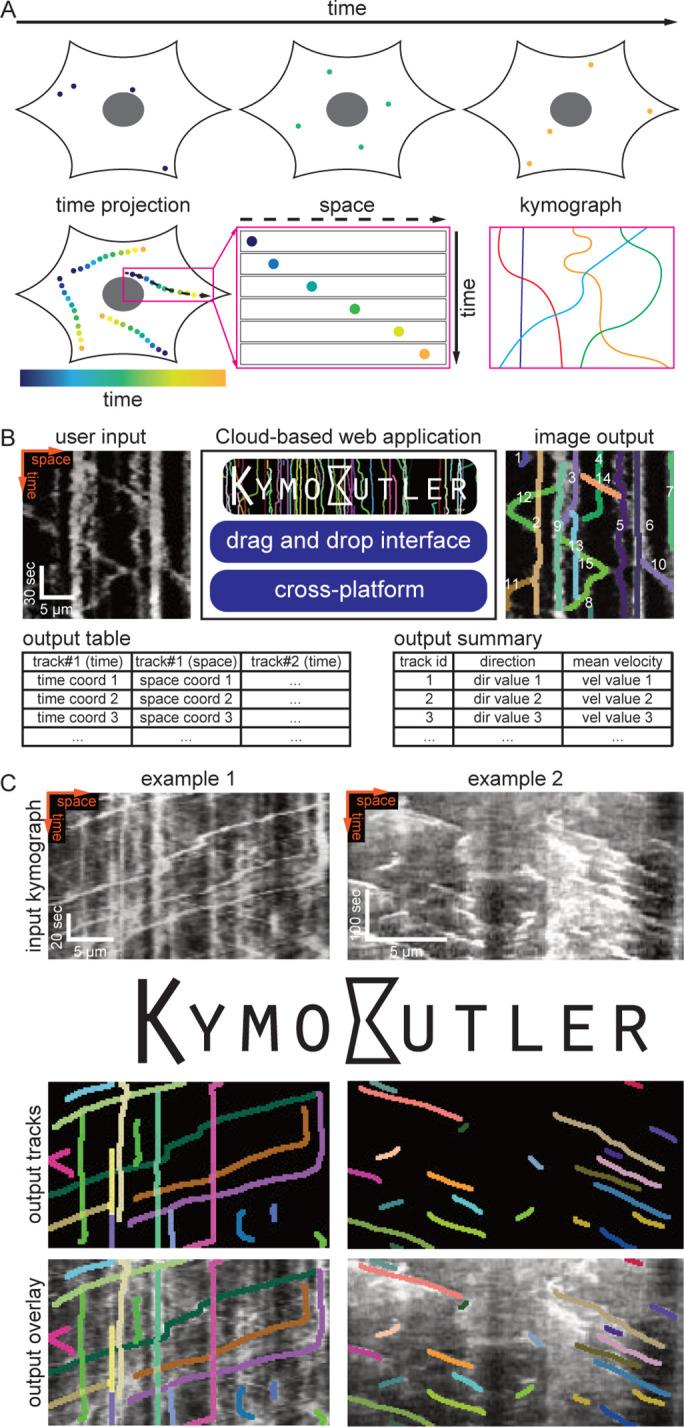
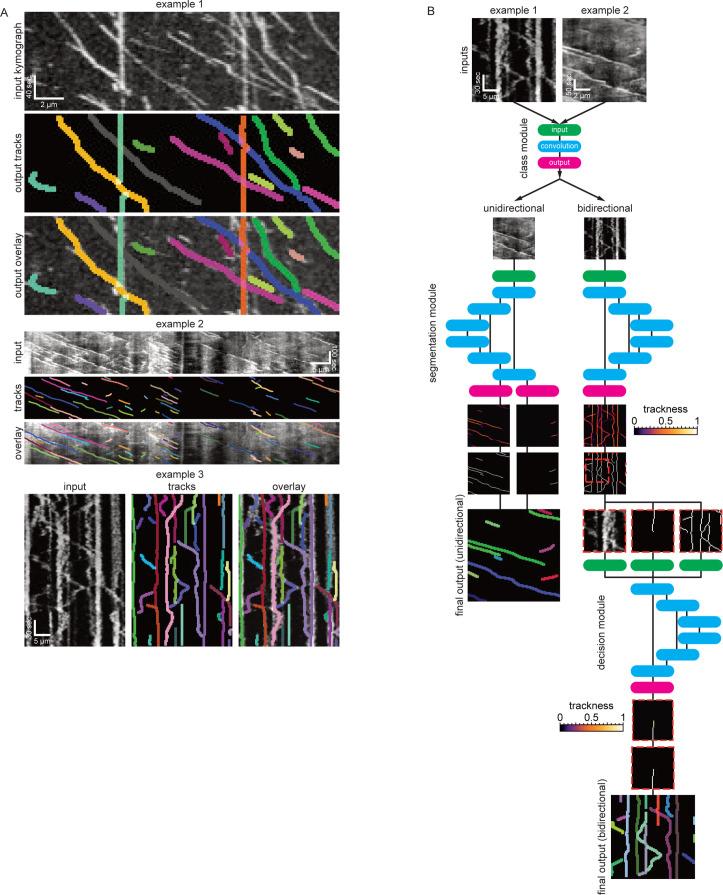
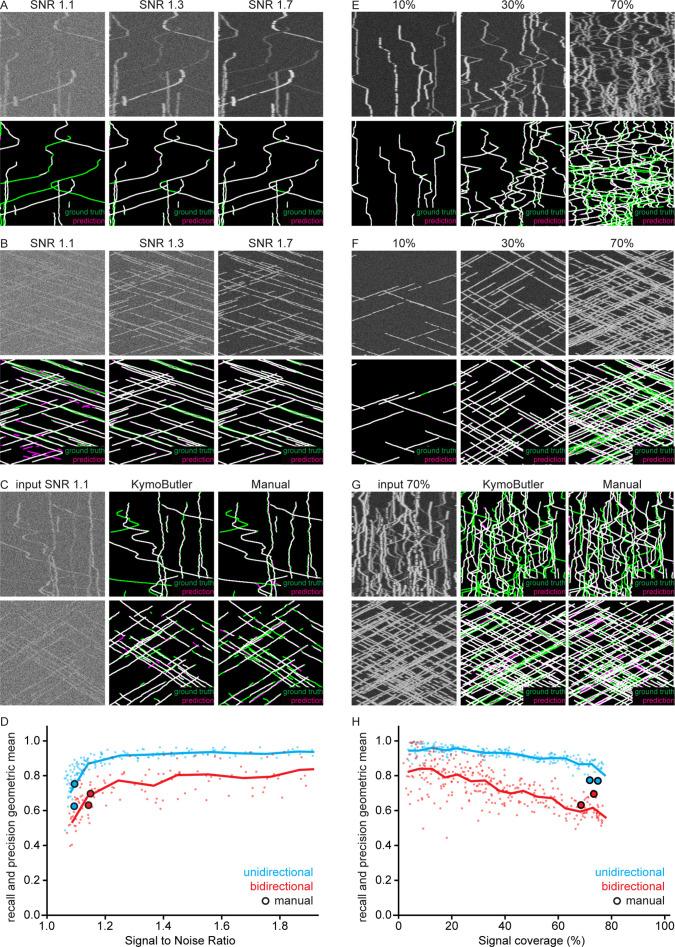
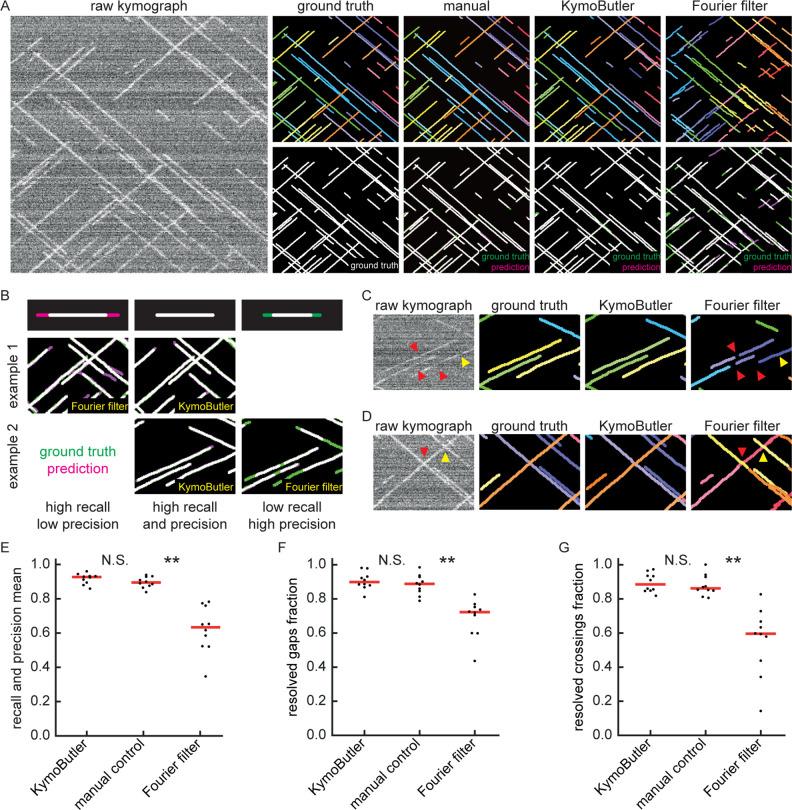
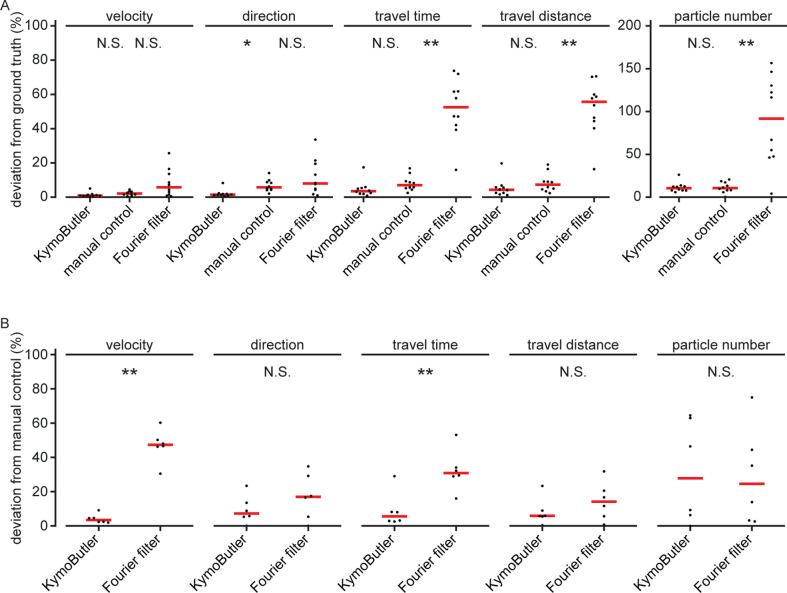
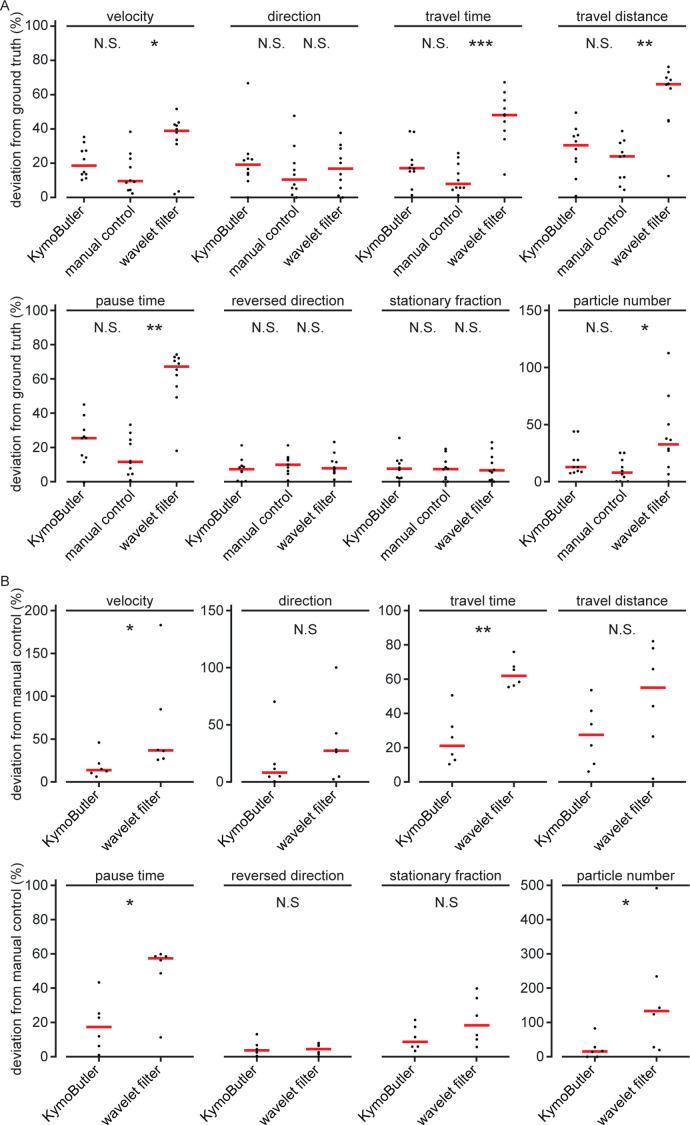
Kymographs are graphical representations of spatial position over time, which are often used in biology to visualise the motion of fluorescent particles, molecules, vesicles, or organelles moving along a predictable path. Although in kymographs tracks of individual particles are qualitatively easily distinguished, their automated quantitative analysis is much more challenging. Kymographs often exhibit low signal-to-noise-ratios (SNRs), and available tools that automate their analysis usually require manual supervision. Here we developed KymoButler, a Deep Learning-based software to automatically track dynamic processes in kymographs. We demonstrate that KymoButler performs as well as expert manual data analysis on kymographs with complex particle trajectories from a variety of different biological systems. The software was packaged in a web-based 'one-click' application for use by the wider scientific community (http://kymobutler.deepmirror.ai). Our approach significantly speeds up data analysis, avoids unconscious bias, and represents another step towards the widespread adaptation of Machine Learning techniques in biological data analysis.
时间-空间轨迹图是一种随时间变化的空间位置的图形表示,常用于生物学中可视化荧光粒子、分子、囊泡或细胞器沿可预测路径运动。尽管在时间-空间轨迹图中,单个粒子的轨迹可以定性地轻松区分,但它们的自动定量分析要困难得多。时间-空间轨迹图通常表现出低信噪比(SNR),并且可用的自动分析工具通常需要手动监督。在这里,我们开发了基于深度学习的 KymoButler 软件,用于自动跟踪时间-空间轨迹图中的动态过程。我们证明,KymoButler 在分析来自各种不同生物系统的具有复杂粒子轨迹的时间-空间轨迹图时,其表现与专家手动数据分析一样好。该软件被打包成一个基于网络的“一键式”应用程序,供更广泛的科学界使用(http://kymobutler.deepmirror.ai)。我们的方法大大加快了数据分析速度,避免了无意识的偏见,是机器学习技术在生物数据分析中广泛应用的又一步。






 Zotero 插件