
嗜酸性粒细胞的增强黏附与其在哮喘中的延长存活能力和促增殖作用相关。
The Enhanced Adhesion of Eosinophils Is Associated with Their Prolonged Viability and Pro-Proliferative Effect in Asthma.
作者信息
Januskevicius Andrius, Janulaityte Ieva, Kalinauskaite-Zukauske Virginija, Gosens Reinoud, Malakauskas Kestutis
机构信息
Department of Pulmonology, Lithuanian University of Health Sciences, LT-44307 Kaunas, Lithuania.
Laboratory of Pulmonology, Department of Pulmonology, Lithuanian University of Health Sciences, LT-44307 Kaunas, Lithuania.
出版信息
J Clin Med. 2019 Aug 22;8(9):1274. doi: 10.3390/jcm8091274.
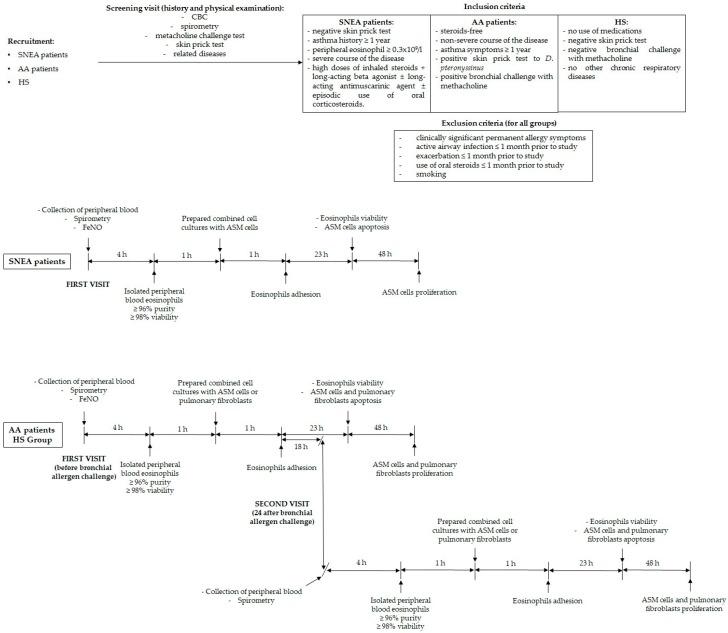
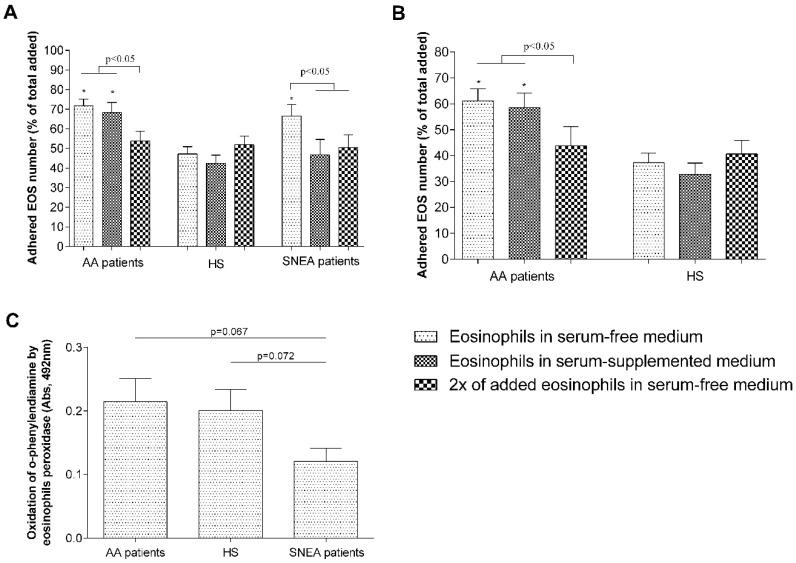
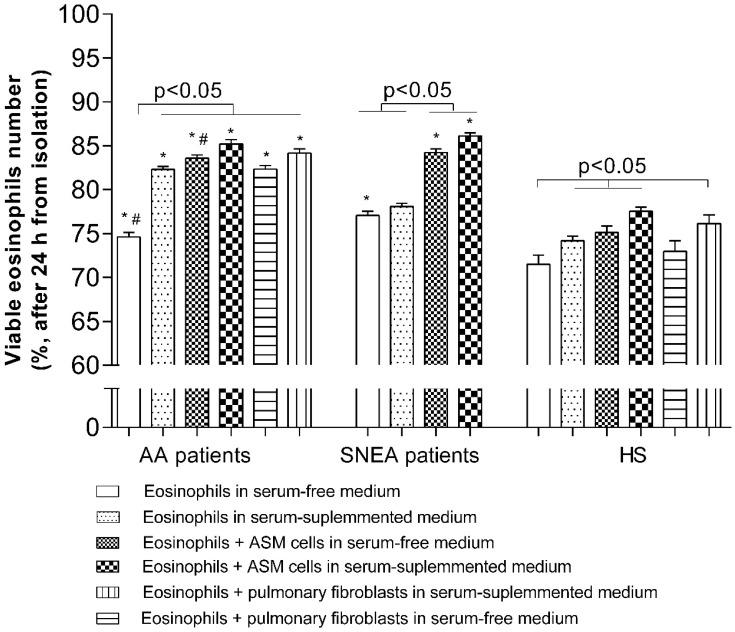
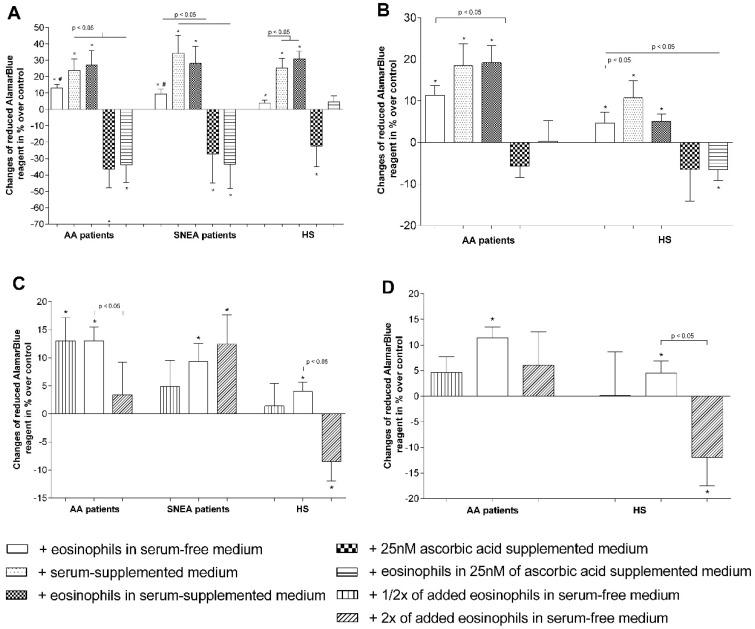
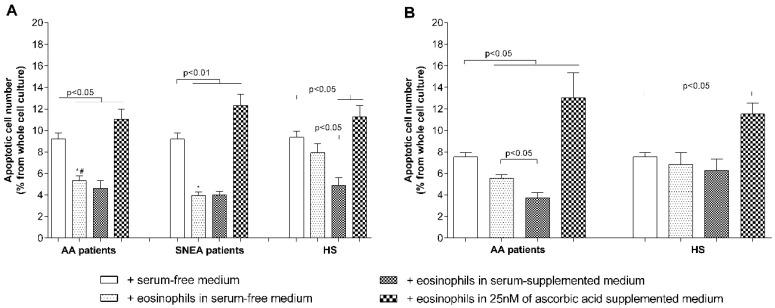
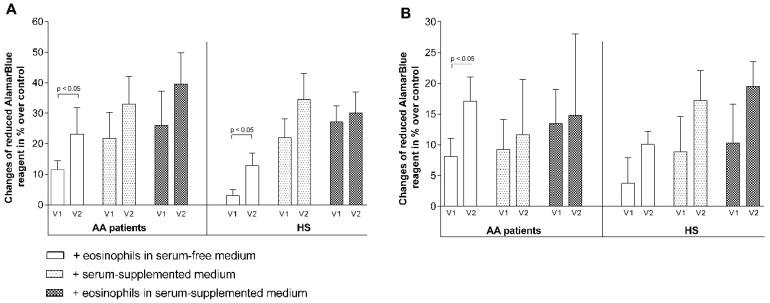
Before eosinophils migrate into the bronchial lumen, they promote airway structural changes after contact with pulmonary cells and extracellular matrix components. We aimed to investigate the impact of eosinophil adhesion to their viability and pro-proliferative effect on airway smooth muscle (ASM) cells and pulmonary fibroblasts during different asthma phenotypes. A total of 39 individuals were included: 14 steroid-free non-severe allergic asthma (AA) patients, 10 severe non-allergic eosinophilic asthma (SNEA) patients, and 15 healthy control subjects (HS). For AA patients and HS groups, a bronchial allergen challenge with was performed. Individual combined cells cultures were prepared between isolated peripheral blood eosinophils and ASM cells or pulmonary fibroblasts. Eosinophil adhesion was measured by evaluating their peroxidase activity, cell viability was performed by annexin V and propidium iodide staining, and proliferation by Alamar blue assay. We found that increased adhesion of eosinophils was associated with prolonged viability ( < 0.05) and an enhanced pro-proliferative effect on ASM cells and pulmonary fibroblasts in asthma ( < 0.05). However, eosinophils from SNEA patients demonstrated higher viability and inhibition of pulmonary structural cell apoptosis, compared to the AA group ( < 0.05), while their adhesive and pro-proliferative properties were similar. Finally, in the AA group, in vivo allergen-activated eosinophils demonstrated a higher adhesion, viability, and pro-proliferative effect on pulmonary structural cells compared to non-activated eosinophils ( < 0.05).
在嗜酸性粒细胞迁移至支气管腔之前,它们在与肺细胞和细胞外基质成分接触后会促进气道结构改变。我们旨在研究嗜酸性粒细胞黏附对不同哮喘表型期间其活力以及对气道平滑肌(ASM)细胞和肺成纤维细胞的促增殖作用的影响。总共纳入了39名个体:14名未使用类固醇的非重度过敏性哮喘(AA)患者、10名重度非过敏性嗜酸性粒细胞性哮喘(SNEA)患者和15名健康对照者(HS)。对AA患者和HS组进行了支气管过敏原激发试验。在分离的外周血嗜酸性粒细胞与ASM细胞或肺成纤维细胞之间制备个体联合细胞培养物。通过评估其过氧化物酶活性来测量嗜酸性粒细胞黏附,通过膜联蛋白V和碘化丙啶染色来检测细胞活力,通过alamar蓝法检测增殖情况。我们发现,嗜酸性粒细胞黏附增加与活力延长(P<0.05)以及对哮喘患者的ASM细胞和肺成纤维细胞的促增殖作用增强(P<0.05)相关。然而,与AA组相比,SNEA患者的嗜酸性粒细胞表现出更高的活力以及对肺结构细胞凋亡的抑制作用(P<0.05),而它们的黏附性和促增殖特性相似。最后,在AA组中,与未活化的嗜酸性粒细胞相比,体内过敏原激活的嗜酸性粒细胞对肺结构细胞表现出更高的黏附性、活力和促增殖作用(P<0.05)。



 Zotero 插件