
利用真实世界的粪便检测结果制定肠道炎症相关菌群失调指数评分
Development of an Index Score for Intestinal Inflammation-Associated Dysbiosis Using Real-World Stool Test Results.
作者信息
Chen Lihong, Reynolds Courtney, David Robert, Peace Brewer Amy
机构信息
Department of Clinical Evidence Development, Genova Diagnostics, Inc, 63 Zillicoa Street, Asheville, NC, 28801, USA.
Department of Medicine, UCLA School of Medicine, Los Angeles, CA, USA.
出版信息
Dig Dis Sci. 2020 Apr;65(4):1111-1124. doi: 10.1007/s10620-019-05828-8. Epub 2019 Sep 16.
BACKGROUND
Gut microbiota play an important role in human health. However, the application of gut microbiome in regular clinical practice is limited by interindividual variations and complexity of test results.
HYPOTHESIS
It is possible to address interindividual variation by using large data-based exploratory-pattern analysis.
METHODS
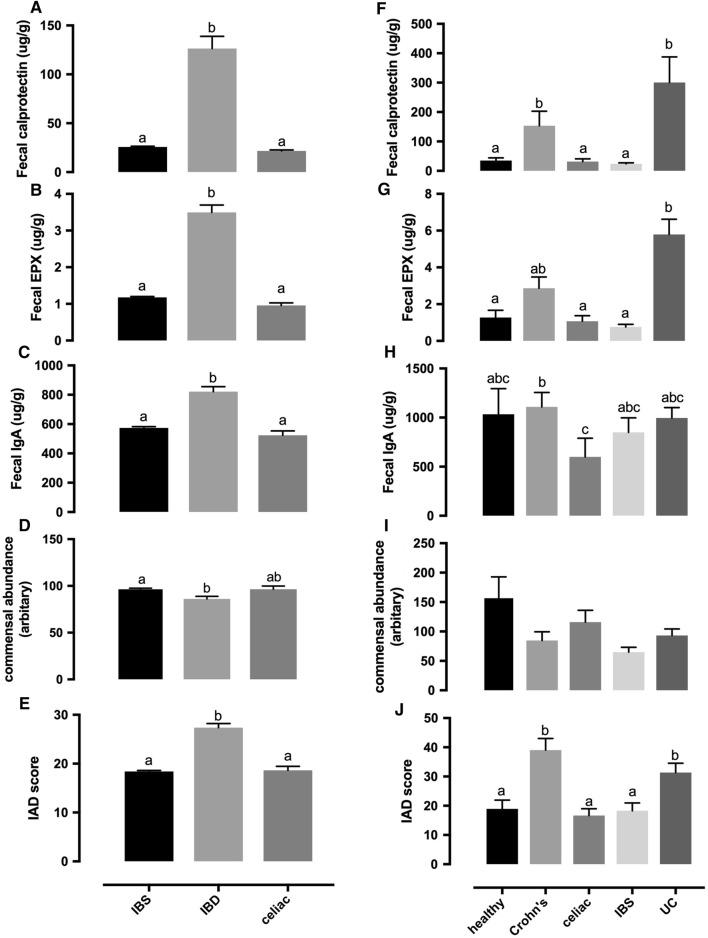
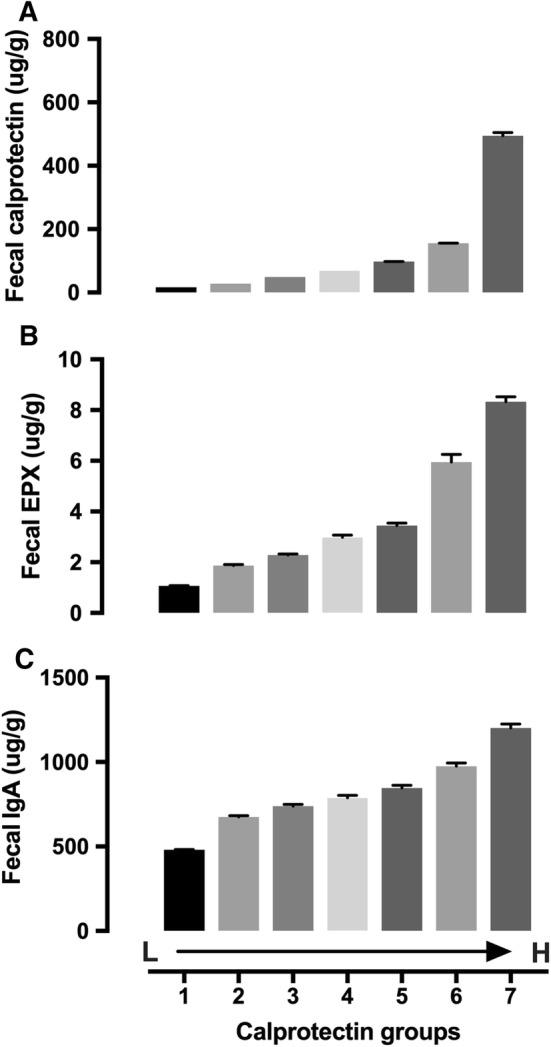
The current study was conducted using a large data set (n = 173,221) of nonselective incoming patients' test results from a stool test. The data set included assays for the detection of 24 selected commensal microorganisms and multiple biomarkers in feces. Patients were grouped based on their levels of inflammation biomarkers such as calprotectin, eosinophil protein X, and IgA. Group mean values of biomarkers and commensal microbes were used in an exploratory-pattern analysis for association from which an index score for intestinal inflammation-associated dysbiosis (IAD) was developed. The IAD score was evaluated in one questionnaire-based study (n = 7263) and one prospective case series study (n = 122) with patients of inflammatory bowel disease (IBD), irritable bowel syndrome (IBS), and celiac disease.
RESULTS
We identified a microbial profile strongly associated with fecal inflammation biomarkers. Developed on the pattern of the microbial profile, the IAD score demonstrated a strong association with fecal inflammation biomarkers and was significantly different between patients with IBD and those with IBS or celiac disease.
CONCLUSION
Using real-world data, we have developed a method to predict gut dysbiosis associated with different GI disease conditions. It may help clinicians simplify the process of interpreting gut microbial status and provide gut health assessment and treatment evaluation.
背景
肠道微生物群在人类健康中发挥着重要作用。然而,肠道微生物组在常规临床实践中的应用受到个体差异和检测结果复杂性的限制。
假设
利用基于大数据的探索性模式分析有可能解决个体差异问题。
方法
本研究使用了来自一项粪便检测的非选择性入院患者检测结果的大数据集(n = 173221)。该数据集包括对24种选定共生微生物和粪便中多种生物标志物的检测分析。患者根据其炎症生物标志物水平进行分组,如钙卫蛋白、嗜酸性粒细胞蛋白X和免疫球蛋白A。生物标志物和共生微生物的组均值用于关联的探索性模式分析,据此开发了肠道炎症相关生态失调(IAD)指数评分。在一项基于问卷的研究(n = 7263)和一项前瞻性病例系列研究(n = 122)中,对炎症性肠病(IBD)、肠易激综合征(IBS)和乳糜泻患者的IAD评分进行了评估。
结果
我们确定了一种与粪便炎症生物标志物密切相关的微生物谱。基于该微生物谱模式开发的IAD评分与粪便炎症生物标志物显示出强烈关联,且在IBD患者与IBS或乳糜泻患者之间存在显著差异。
结论
利用真实世界数据,我们开发了一种预测与不同胃肠道疾病状况相关的肠道生态失调的方法。它可能有助于临床医生简化解释肠道微生物状态的过程,并提供肠道健康评估和治疗评估。



 Zotero 插件